Joint effusion, often described as swelling inside a joint, happens when excess fluid builds up in the tissues that surround it. The knee is the joint most likely to be affected, but ankle, elbow, shoulder, and wrist involvement is also common. This guide explains what joint effusion is, its main causes, the symptoms to watch for, how doctors diagnose it, and which treatments can bring relief.
What Is Joint Effusion?
Joint effusion is the medical term for an abnormal accumulation of fluid inside the joint capsule. The joint capsule is a sealed, tough membrane that contains synovial fluid, which normally lubricates the joint and helps it move smoothly. When this fluid increases beyond its usual amount, the joint looks swollen and feels tight.
Effusion is not a disease by itself. It is a physical finding that points to an underlying problem, such as an injury, arthritis, or infection.
Common Causes of Joint Effusion
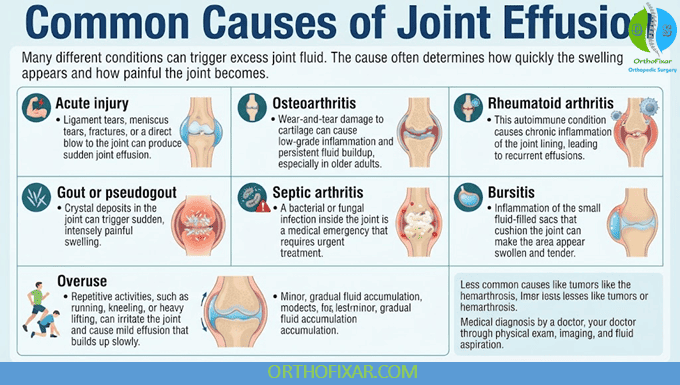
Many different conditions can trigger excess joint fluid. The cause often determines how quickly the swelling appears and how painful the joint becomes.
- Acute injury: Ligament tears, meniscus tears, fractures, or a direct blow to the joint can produce sudden joint effusion.
- Osteoarthritis: Wear-and-tear damage to cartilage can cause low-grade inflammation and persistent fluid buildup, especially in older adults.
- Rheumatoid arthritis: This autoimmune condition causes chronic inflammation of the joint lining, leading to recurrent effusions.
- Gout or pseudogout: Crystal deposits in the joint can trigger sudden, intensely painful swelling.
- Septic arthritis: A bacterial or fungal infection inside the joint is a medical emergency that requires urgent treatment.
- Bursitis: Inflammation of the small fluid-filled sacs that cushion the joint can make the area appear swollen and tender.
- Overuse: Repetitive activities, such as running, kneeling, or heavy lifting, can irritate the joint and cause mild effusion that builds up slowly.
“Joint effusion is rarely the problem itself — it is usually the alarm signal your joint sends when something else is wrong.”
Symptoms You May Notice
The symptoms of joint effusion depend on the amount of fluid and the cause behind it. Some people experience only mild tightness, while others struggle to put weight on the affected joint.
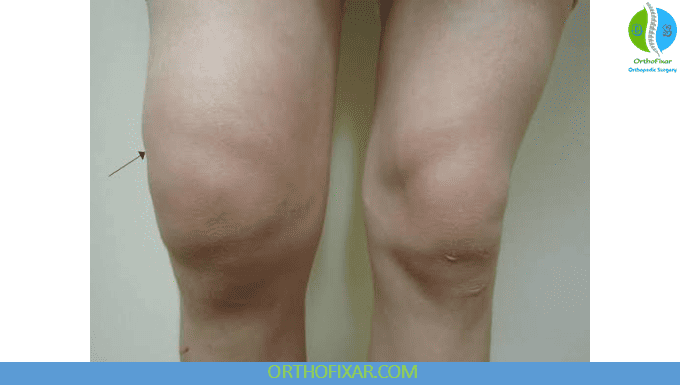
- Visible swelling around the joint, which may be soft or firm to the touch.
- Stiffness, especially after sitting still for a while or waking up in the morning.
- Pain that ranges from a dull ache to a sharp sensation during movement.
- Reduced range of motion, making it hard to fully bend or straighten the joint.
- A feeling of weakness or instability when you try to use the joint.
- Warmth and redness over the skin, which may indicate infection or active inflammation.
If the effusion appears within a few hours after an injury, it often means there is bleeding inside the joint or significant tissue damage. Slower swelling over days is more typical of arthritis or overuse.
How Joint Effusion Is Diagnosed
A proper diagnosis matters because joint effusion has many possible causes and the treatment can differ a lot. Your doctor will usually start with a physical examination and then may recommend further tests.
- Medical history and physical exam: The doctor will look at the joint, press around it, and check how well it moves.
- Imaging: An X-ray can show fractures or bone damage, while ultrasound and MRI can detect fluid, ligament tears, and cartilage problems.
- Joint aspiration: A needle is inserted into the joint to draw out fluid. This procedure can relieve pressure and provides a sample for analysis.
- Laboratory tests: The removed fluid is examined for white blood cells, bacteria, or crystals, which helps confirm or rule out infection and gout.
- Blood tests: These can help identify inflammatory markers or antibodies linked to rheumatoid arthritis or other systemic conditions.
The table below summarizes the main types of joint effusion and what makes them different.
| Type | Typical Cause | Signs | Treatment Direction |
|---|---|---|---|
| Traumatic | Sprain, fracture, ligament tear | Sudden swelling, bruising, sharp pain | RICE, bracing, sometimes surgery |
| Inflammatory | Rheumatoid arthritis, gout | Warmth, redness, morning stiffness | Anti-inflammatory drugs, disease-modifying medication |
| Degenerative | Osteoarthritis | Mild chronic swelling, pain with activity | Physical therapy, weight management, joint injections |
| Infectious | Septic arthritis | Fever, severe pain, hot skin, rapid swelling | Emergency drainage and antibiotics |
Treatment Options for Joint Effusion
Treatment for joint effusion depends on the cause, the severity of the swelling, and how much the joint is affected. The goal is always the same: to control inflammation, restore movement, and treat the condition that caused the fluid buildup in the first place.
Conservative care and rest
For mild cases, the RICE method is the first step. Rest the joint, apply ice for 15 to 20 minutes every few hours, use a compression bandage, and keep the joint elevated whenever possible. Anti-inflammatory pain relievers such as ibuprofen or naproxen can reduce both pain and swelling.
Joint aspiration
Removing a large amount of fluid with a needle often provides immediate relief because it lowers the pressure inside the joint. The procedure is usually done in the clinic under local anesthesia. If the fluid reappears quickly, your doctor will look more closely for infection, gout, or an active inflammatory condition.
Injections and medication
Corticosteroid injections can help quiet severe inflammation for several weeks or months, especially when arthritis or bursitis is the cause. For gout, medications like colchicine or allopurinol may be prescribed to lower uric acid levels. If an infection is confirmed, intravenous antibiotics are necessary, often in a hospital setting.
Physical therapy and surgery
Once the acute swelling begins to settle, physical therapy can strengthen the muscles around the joint and improve mobility. In some cases, such as a torn ligament or repeated joint effusion that does not respond to other treatment, arthroscopic surgery might be recommended to repair the damage inside the joint.
“Analyzing the fluid removed from a swollen joint can provide definitive clues about whether the cause is traumatic, inflammatory, or infectious.”
Home Care and Self-Management Tips
While you are waiting for treatment or recovering from an injury, there are several things you can do at home to keep joint effusion from getting worse.
- Use a compression sleeve or bandage, but do not wrap it so tight that it causes numbness or tingling.
- Avoid activities that put weight on the affected joint until the swelling has noticeably gone down.
- Elevate the joint above the level of your heart while you rest.
- Apply an ice pack for short intervals during the first one to two days after an injury.
- Gradually reintroduce gentle movement once the worst pain has subsided, as complete stillness can make the joint even stiffer.
- Consider using a cane or crutches temporarily if the joint feels unstable or painful when walking.
Remember that home care does not replace a medical evaluation if the swelling is severe, appears after trauma, or is accompanied by a fever.
When to See a Doctor
Not every swollen joint requires an emergency visit, but certain red flags should not be ignored.
- The joint is visibly swollen, warm, and you also have a fever or chills.
- You cannot bear weight or move the joint through a normal range of motion.
- The swelling appeared suddenly after a fall, twist, or other injury.
- The joint becomes numb or turns pale or blue below the swelling.
- The effusion keeps coming back even after rest and anti-inflammatory medicine.
If you are not sure what caused the fluid buildup, seeking medical advice is the safest option. Early diagnosis can prevent joint damage and lead to faster recovery.
Joint effusion is a common clinical finding that can range from a mild nuisance to a serious medical emergency. Knowing the cause behind it is the key to treating it correctly and preventing long-term damage. Home care measures, medication, aspiration, and physical therapy each have their place, and combined they help most people recover fully.
Frequently Asked Questions
What is joint effusion?
Joint effusion is the abnormal buildup of fluid inside the joint capsule. It is a sign of inflammation, injury, or infection that can occur in any joint.
Is joint effusion the same as water on the knee?
Yes. “Water on the knee” is the common way people describe joint effusion when it affects the knee. The medical term remains the same regardless of which joint is involved.
Can joint effusion heal on its own?
Mild joint effusion caused by a small injury or overuse may improve on its own with rest, ice, compression, and elevation. However, swelling caused by infection, gout, or a ligament tear will not resolve without proper medical treatment.
How long does joint effusion last?
The duration depends on the cause. A minor sprain may cause swelling for a few days, while arthritic effusions can last for weeks or become a recurring problem. Septic arthritis requires aggressive treatment over many days, usually in a hospital.
What does fluid in a joint indicate?
Fluid in a joint usually indicates inflammation. The body produces excess synovial fluid in response to injury, arthritis, or infection. The exact composition of the fluid is what tells doctors the true underlying cause.
Is joint aspiration painful?
Joint aspiration is not usually painful. Your doctor will numb the skin before inserting the needle. You may feel some pressure or mild discomfort while the fluid is being drawn out, but most patients tolerate the procedure well.
Can joint effusion be prevented?
Some causes of joint effusion, such as arthritis, cannot be fully prevented. But you can lower your risk of trauma-related effusion by wearing appropriate protective gear during sports, strengthening your muscles, and using proper techniques for lifting and movement.
What is the difference between joint effusion and edema?
Joint effusion refers specifically to fluid inside a joint capsule. Edema is swelling in the softer tissues around the joint or elsewhere in the body. You can have both at the same time, but they affect different anatomical spaces.
When should I go to the emergency room?
Go to the emergency room if your joint is suddenly swollen and painful, especially if you have a fever, cannot move the joint, or you have recently injured it. Septic arthritis and acute fractures need immediate care.
Does joint effusion always mean arthritis?
No. Joint effusion can also result from a recent injury, overuse, infection, or crystal deposits such as gout. Arthritis is only one of several possible causes.