If you are dealing with sudden back pain that shoots into your leg, you may be wondering whether you have a herniated disc. This practical guide explains the main symptoms, how a herniated disc is diagnosed, which treatment options are available, and what recovery usually looks like so you can walk into your next doctor’s appointment with confidence.
What Is a Herniated Disc?
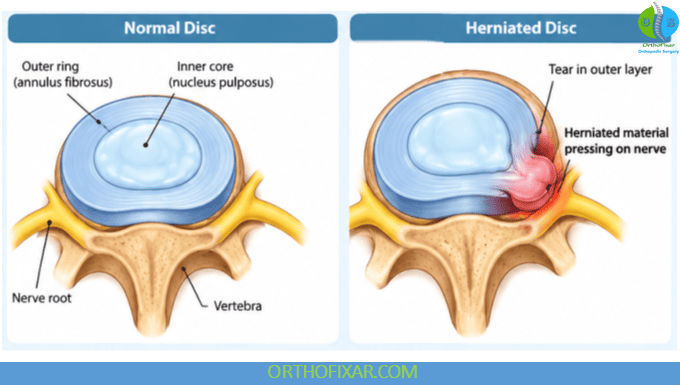
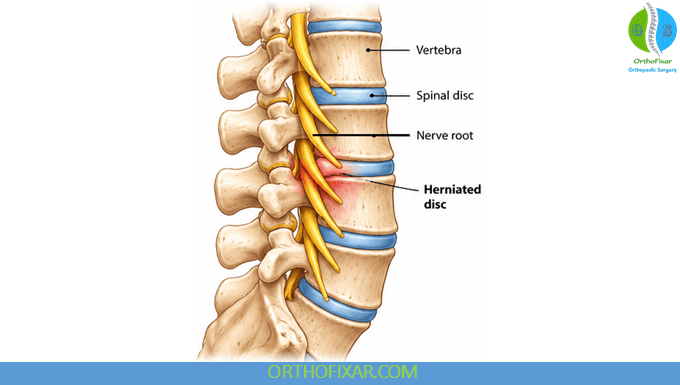
A herniated disc happens when the soft inner core of a spinal disc pushes out through a tear in the tougher outer layer. When that displaced material presses against a nearby nerve, it can cause pain, numbness, or weakness in another part of your body.
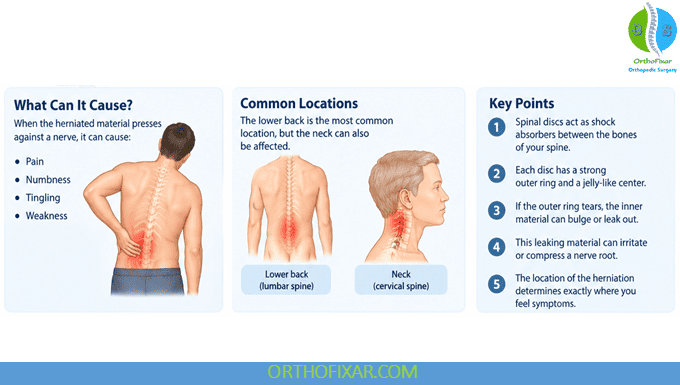
Doctors sometimes call this condition a slipped disc or ruptured disc. The lower back is the most common location, but the neck can also be affected.
- Spinal discs act as shock absorbers between the bones of your spine.
- Each disc has a strong outer ring and a jelly-like center.
- If the outer ring tears, the inner material can bulge or leak out.
- This leaking material can irritate or compress a nerve root.
- The location of the herniation determines exactly where you feel symptoms.
Not every herniated disc causes symptoms. Some people discover they have one only after an imaging test is done for an unrelated reason.
Common Symptoms To Watch For
Symptoms depend on where the herniated disc is located and which nerve is affected. In the lower back, the sciatic nerve is often involved, which creates pain that follows a clear path down the leg.
One useful example is coughing or sneezing: many people with a lumbar herniated disc notice that these actions briefly make the shooting pain worse because they increase pressure inside the spinal canal.
- Sharp pain in the lower back, buttock, or down one leg.
- Burning or tingling sensations that travel past the knee.
- Numbness in parts of your foot or toes.
- Muscle weakness that makes lifting the front of your foot difficult.
- Loss of ankle reflexes in some cases.
- Neck herniations can cause shooting pain down the arm into the hand.
- Hand grip weakness or trouble with fine movements can also appear.
Symptoms are usually felt on only one side of the body, though a large herniation can affect both sides. If your symptoms are severe or constantly getting worse, do not wait too long before seeking medical advice.
How Doctors Diagnose the Condition
Your doctor will start by asking about your medical history and the exact pattern of your pain. Then they will perform a physical exam that includes checking your strength, reflexes, and sensation.
During the exam, certain movements may reproduce your pain, which gives the doctor valuable clues about which disc is involved. You may also be asked to walk on your heels and toes to assess nerve function.
- A straight leg raise test is commonly used to check for lumbar nerve irritation.
- An MRI is the most detailed imaging test for visualising a herniated disc.
- X-rays cannot show herniated discs, but they can rule out fractures or bone problems.
- Nerve conduction studies may be used if the diagnosis is unclear.
- Most doctors prefer MRI because it shows both the disc and the affected nerve.
Your doctor will try to connect the image findings with your symptoms. This is important because many people without pain also show disc changes on an MRI.
Conservative and Medical Treatment Options
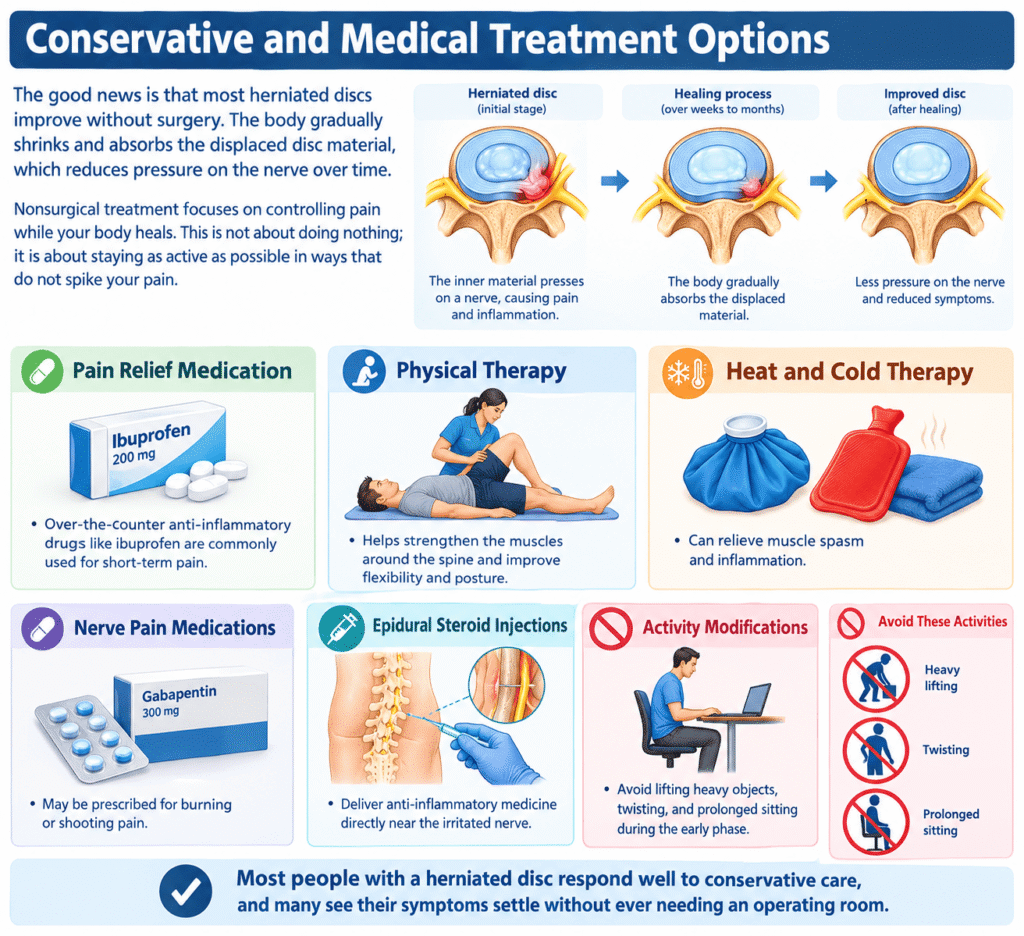
The good news is that most herniated discs improve without surgery. The body gradually shrinks and absorbs the displaced disc material, which reduces pressure on the nerve over time.
Nonsurgical treatment focuses on controlling pain while your body heals. This is not about doing nothing; it is about staying as active as possible in ways that do not spike your pain.
- Over-the-counter anti-inflammatory drugs like ibuprofen are commonly used for short-term pain.
- Physical therapy helps strengthen the muscles around the spine.
- Heat and cold therapy can relieve muscle spasm and inflammation.
- Nerve pain medications may be prescribed for burning or shooting pain.
- Epidural steroid injections deliver anti-inflammatory medicine directly near the irritated nerve.
- Avoid lifting heavy objects, twisting, and prolonged sitting during the early phase.
Most people with a herniated disc respond well to conservative care, and many see their symptoms settle without ever needing an operating room.
When Surgery May Be Considered
Surgery is not the first choice for most patients, and it is usually reserved for specific situations. The decision to operate is based on your symptoms, your response to treatment, and the results of your imaging tests.
For example, if you have already tried several weeks of conservative care without progress, you may be a candidate for a microdiscectomy. This procedure removes the small fragment of disc that is pressing on the nerve.
- Urgent surgery is needed for cauda equina syndrome, which affects bladder and bowel control.
- Progressive weakness in a leg or arm may also require earlier surgical intervention.
- Pain that remains severe after 4 to 6 weeks of treatment can be discussed with a surgeon.
- A microdiscectomy is the most common operation for a lumbar herniated disc.
- Most disc surgeries are minimally invasive and involve a short hospital stay.
Surgery can bring fast pain relief, but it does not guarantee that another disc problem will never happen. That is why long-term strengthening and good movement habits are part of the plan either way.
What Recovery Looks Like
Recovery is rarely a straight line. Some days you will feel noticeably better, and other days a simple movement may remind you that the nerve is still sensitive.
Understanding the general healing phases can help you set realistic expectations. Your personal timeline will depend on the size of the herniation, your age, your activity level, and how consistently you follow your treatment plan.
- Leg pain often improves before back pain does.
- Numbness can take longer to fade than sharp pain.
- Strength usually returns gradually as the nerve heals.
- Returning to normal activity too quickly can slow your progress.
- Working with a physical therapist reduces the chance of repeat episodes.
| Recovery Stage | Typical Experience | Helpful Approach |
|---|---|---|
| Early phase (days to 2 weeks) | Sharp pain, stiffness, and difficult bending | Short walks, gentle positioning, avoid heavy lifting |
| Healing phase (2 to 6 weeks) | Gradual reduction in leg and back pain | Physical therapy, nerve glides, core exercises |
| Strengthening phase (6 weeks and beyond) | Near-normal movement with occasional flare-ups | Progressive strength training, posture work, activity planning |
Pain relief is not a straight line, so it helps to celebrate small improvements instead of measuring your day against your best day.
Most people are able to return to desk work within a few days or weeks, while jobs that involve heavy lifting may require a longer recovery period. The key is to listen carefully to your body.
Everyday Habits That Support Healing
You do not need an elaborate plan to support spinal healing, but you do need consistent daily choices. Small movements repeated throughout the day matter more than one intense workout.
If you have a sedentary job, standing up every 30 to 45 minutes can make a meaningful difference. Lying on your side with a pillow between your knees is another simple strategy that keeps your spine in a neutral position while you sleep.
- Walk regularly, even if the early walks are short and slow.
- Use a lumbar roll or small pillow while sitting in a chair.
- Avoid bending forward to lift; use a squatting position instead.
- Quit smoking if you smoke, because smoking reduces blood flow to spinal tissues.
- Practice gentle core and glute strengthening exercises.
- Maintain a healthy weight to reduce long-term stress on the spine.
Nobody expects you to become perfect at all of these habits overnight. Pick one change you can begin this week and build from there.
Understanding your herniated disc is the first step toward taking mindful action rather than feeling stuck. Most cases improve with time, conservative treatment, and gradual movement, while surgery remains a reliable option for the right candidates. Use this information to ask better questions at your appointment and to feel more confident