Psoriatic arthritis (PsA) is a chronic inflammatory autoimmune disease that affects the joints and entheses (sites where tendons and ligaments attach to bone). It occurs in some individuals with psoriasis, a skin condition characterized by red, scaly patches.
Psoriatic arthritis can cause joint pain, swelling, stiffness, and progressive joint damage if left untreated. The disease may affect small joints of the hands and feet, larger joints, the spine, and surrounding soft tissues.
Early diagnosis and treatment are essential to prevent permanent joint destruction and disability.
Epidemiology of Psoriatic Arthritis
Psoriatic arthritis affects approximately 20–30% of patients with psoriasis. The condition commonly develops between the ages of 30 and 50 years, although it can occur at any age.
Men and women are affected equally, though some disease patterns differ between sexes.
Causes of Psoriatic Arthritis
The exact causes of psoriatic arthritis remain unclear. Current evidence suggests that genetic, immunologic, and environmental factors contribute to disease development.
Genetic Factors
Several genetic markers have been associated with PsA, including:
- HLA-B27
- HLA-B38
- HLA-B39
- HLA-Cw6
A family history of psoriasis or psoriatic arthritis significantly increases risk.
Immune System Dysfunction
Psoriatic arthritis develops when the immune system mistakenly attacks healthy tissues, causing inflammation within joints, tendons, ligaments, and skin.
Important inflammatory mediators include:
- Tumor necrosis factor-alpha (TNF-α)
- Interleukin-17 (IL-17)
- Interleukin-23 (IL-23)
Environmental Triggers
Potential triggers include:
- Physical trauma
- Infections
- Obesity
- Smoking
- Psychological stress
See Also: Reiter’s Syndrome (Reactive Arthritis): Symptoms, Causes & Treatment
Psoriatic Arthritis Symptoms
Psoriatic arthritis symptoms vary greatly among individuals.
Common Symptoms
- Joint pain and tenderness
- Joint swelling
- Morning stiffness lasting longer than 30 minutes
- Fatigue
- Reduced range of motion
- Warmth around affected joints
Early Signs of Psoriatic Arthritis
Recognizing the early signs of psoriatic arthritis can help prevent irreversible joint damage.
Common early manifestations include:
- Painful swollen fingers or toes
- Persistent morning stiffness
- Heel pain
- Nail abnormalities
- Unexplained joint discomfort in patients with psoriasis
Signs of Psoriatic Arthritis in the Hands
The hands are frequently involved and may develop:
- Swollen fingers
- Joint deformities
- Reduced grip strength
- Pain in finger joints
Signs of Psoriatic Arthritis in the Feet
Psoriatic arthritis feet involvement often includes:
- Heel pain
- Achilles tendon inflammation
- Plantar fasciitis
- Swollen toes (dactylitis)
- Midfoot pain
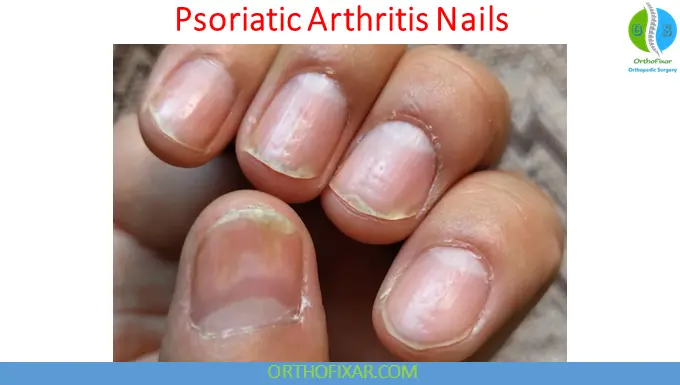
Psoriatic Arthritis Nails
Nail disease is a hallmark feature of psoriatic arthritis.
Typical nail changes include:
- Nail pitting
- Onycholysis
- Nail thickening
- Discoloration
- Crumbling nails
The presence of nail psoriasis increases the likelihood of developing psoriatic arthritis.
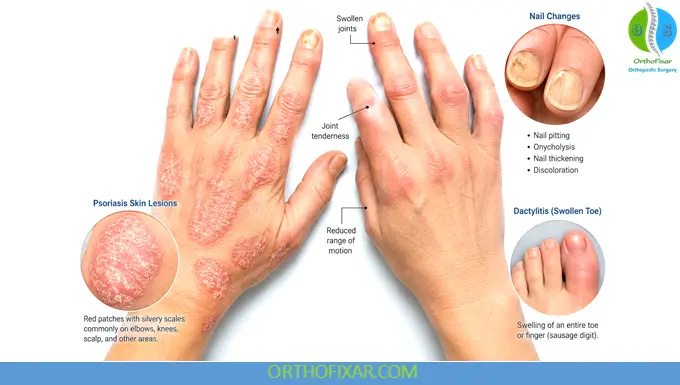
Psoriatic Arthritis Rash
Many patients develop psoriasis skin lesions before joint symptoms appear.
Common characteristics include:
- Red plaques
- Silvery scales
- Itching
- Scalp involvement
- Elbow and knee lesions
Types of Psoriatic Arthritis
Five major patterns have been described.
Symmetric Polyarthritis
Affects similar joints on both sides of the body and resembles rheumatoid arthritis.
Asymmetric Oligoarthritis
Involves fewer joints and often occurs asymmetrically.
Distal Interphalangeal Predominant Disease
Primarily affects finger joints closest to the nails.
Spondylitis
Involves the spine and sacroiliac joints.
Arthritis Mutilans
A rare but severe destructive form causing major joint deformities.
Psoriatic Arthritis Diagnosis
No single test confirms psoriatic arthritis.
Diagnosis is based on clinical evaluation, laboratory studies, and imaging findings.
Medical History and Physical Examination
Physicians evaluate:
- Joint symptoms
- Skin psoriasis
- Nail abnormalities
- Family history
Laboratory Tests
Common tests include:
- C-reactive protein (CRP)
- Erythrocyte sedimentation rate (ESR)
- Rheumatoid factor (RF)
- Anti-CCP antibodies
These tests help exclude other inflammatory arthritides.
Imaging Studies
X-rays
Can demonstrate:
- Joint erosions
- New bone formation
- Pencil-in-cup deformities
Ultrasound
Useful for detecting:
- Synovitis
- Enthesitis
- Tendon inflammation
MRI
Provides excellent visualization of:
- Early inflammatory changes
- Bone marrow edema
- Soft tissue involvement
Psoriatic Arthritis Treatment
Modern psoriatic arthritis treatment focuses on controlling inflammation, relieving symptoms, and preventing joint damage.
Nonsteroidal Anti-Inflammatory Drugs (NSAIDs)
Examples include:
- Ibuprofen
- Naproxen
These medications provide symptomatic relief but do not prevent disease progression.
Conventional DMARDs
Disease-modifying antirheumatic drugs include:
- Methotrexate
- Sulfasalazine
- Leflunomide
These agents help suppress inflammation and slow disease progression.
Biologic Therapies
Biologics target specific inflammatory pathways.
Examples include:
- Adalimumab
- Etanercept
- Infliximab
- Secukinumab
- Ixekizumab
- Ustekinumab
Biologic therapy has significantly improved long-term outcomes.
Targeted Synthetic DMARDs
Newer oral therapies include:
- Apremilast
- Tofacitinib
- Upadacitinib
Corticosteroids
Short-term corticosteroid use may help control severe flares but is generally used cautiously.

Psoriatic Arthritis Diet
Although no specific diet cures psoriatic arthritis, healthy dietary habits may reduce inflammation.
Recommended Foods
- Fatty fish
- Fruits
- Vegetables
- Whole grains
- Olive oil
- Nuts
Foods to Limit
- Processed foods
- Sugary beverages
- Excess alcohol
- Refined carbohydrates
Weight management can significantly improve disease control and treatment response.
Exercise and Lifestyle Management
Regular physical activity helps:
- Improve joint mobility
- Reduce stiffness
- Enhance muscle strength
- Maintain healthy weight
Recommended activities include:
- Walking
- Swimming
- Cycling
- Stretching exercises
- Physical therapy programs
Smoking cessation is strongly advised.
Complications of Psoriatic Arthritis
Without adequate treatment, complications may include:
- Permanent joint damage
- Joint deformity
- Disability
- Cardiovascular disease
- Metabolic syndrome
- Depression
- Reduced quality of life
Prognosis
The prognosis has improved dramatically with early diagnosis and modern biologic therapies.
Patients who receive prompt treatment often achieve:
- Reduced disease activity
- Improved function
- Better quality of life
- Prevention of structural joint damage
Frequently Asked Questions
What are the first signs of psoriatic arthritis?
Common early symptoms include morning stiffness, swollen fingers or toes, nail changes, heel pain, and joint tenderness.
Can psoriatic arthritis occur without psoriasis?
Yes. Some individuals develop joint symptoms before noticeable skin lesions appear.
Is psoriatic arthritis hereditary?
Genetics play an important role, and a family history increases risk.
Can psoriatic arthritis be cured?
There is currently no cure, but effective treatments can control symptoms and prevent joint damage.
What is the best treatment for psoriatic arthritis?
Treatment depends on disease severity. Options include NSAIDs, DMARDs, biologics, and targeted therapies.
Key Points
- Psoriatic arthritis is a chronic inflammatory autoimmune disease associated with psoriasis.
- Common psoriatic arthritis symptoms include joint pain, swelling, stiffness, nail changes, and fatigue.
- Early diagnosis is crucial to prevent irreversible joint damage.
- Modern psoriatic arthritis treatment includes DMARDs, biologics, and targeted therapies.
- Lifestyle modifications and a healthy psoriatic arthritis diet can support overall disease management.
References & More
- Deeb M, Maher L. Psoriatic Arthritis. [Updated 2026 Apr 19]. In: StatPearls [Internet]. Treasure Island (FL): StatPearls Publishing; 2026 Jan-. Available from: https://www.ncbi.nlm.nih.gov/books/NBK547710/
- Azuaga AB, Ramírez J, Cañete JD. Psoriatic Arthritis: Pathogenesis and Targeted Therapies. Int J Mol Sci. 2023 Mar 3;24(5):4901. doi: 10.3390/ijms24054901. PMID: 36902329; PMCID: PMC10003101. Link
- Liu JT, Yeh HM, Liu SY, Chen KT. Psoriatic arthritis: Epidemiology, diagnosis, and treatment. World J Orthop. 2014 Sep 18;5(4):537-43. doi: 10.5312/wjo.v5.i4.537. PMID: 25232529; PMCID: PMC4133459. Link