A lot of people assume storage is a last-mile problem: get the boxes out of the way, park the extra equipment somewhere, and move on. That sounds harmless until recovery gets slower, supplies go missing, or a family member has to work around a bad handoff on the very day mobility matters most.
In health and technology contexts, the real issue is not where things sit. It is whether the setup reduces friction for recovery planning, protects equipment that supports daily movement, and keeps the next step from turning into a delay. Once that gets overlooked, small oversights start to compound.
I have seen weak vendors create this kind of drift before. The unit looked fine on day one, but the reporting was thin, access rules were awkward, and no one owned the escalation when something was damaged or hard to reach. That is when a simple storage decision starts affecting appointments, downtime, and patient confidence.
For patients, caregivers, and anyone coordinating a temporary recovery period, the challenge is practical. The things being stored are not random extras. They are often part of a routine that keeps someone moving, connected to treatment, or able to manage daily tasks with less strain.
Why the wrong setup becomes expensive later
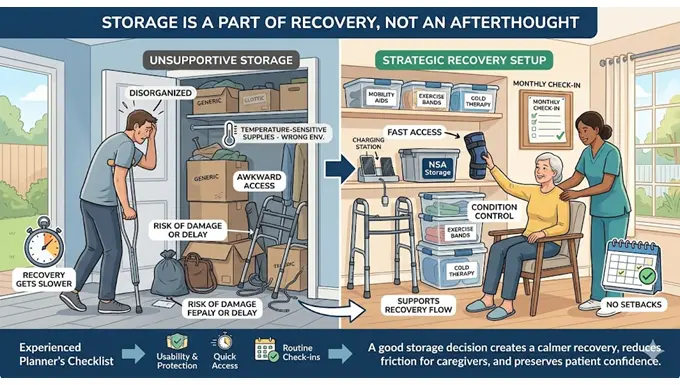
For patients and caregivers, storage is often part of the recovery system whether anyone labels it that way or not. Crutches, walkers, braces, mobility aids, exercise bands, cold therapy devices, and backup supplies all need a place that matches how often they are used and how quickly they may be needed again.
A bad decision here usually does not fail loudly. It fails through slow erosion: a forgotten item, a wet box, a missed reporting issue, or a cumbersome access process that makes people leave equipment in the car. One cheap shortcut can become expensive when replacement costs, downtime, and extra clinic visits pile up. A common example is putting a temperature-sensitive recovery supply in the wrong environment and finding out too late that it no longer works as intended.
For US readers balancing work, family, and treatment schedules, the practical question is not whether storage exists. It is whether the setup supports mobility, keeps critical items visible, and gives enough accountability that a problem can be caught before it becomes a setback.
This matters even more when recovery is not a single event. People often move from the first few days after an injury into weeks of gradual rebuilding. Equipment that felt temporary can become part of a daily routine, and that means storage decisions should support both short-term access and longer-term stability.
What experienced planners actually check
Good judgment here is less about appearance and more about failure modes. The questions worth asking are often the ones people skip because they seem too operational.
The strongest setups account for three realities: items need to stay usable, access may need to be quick, and no one wants to discover a problem in the middle of a rushed morning. That is why planning should focus on how the gear will actually be handled, not just how neatly it fits in a unit or closet. In practice, this is where attention shifts toward NSA Storage that can handle real usage without friction.
Access should match real recovery timing:
If a person may need a brace, walker, or backup charger on short notice, the storage setup has to respect that reality. Long detours, unclear access hours, or too much dependence on a single person create avoidable delay. During recovery, delay is not neutral; it can affect therapy adherence and confidence.
Access also has to fit the person using the equipment. A caregiver lifting a heavy bin every few days may be fine on paper, but if that bin sits too high, too low, or too deep, the setup creates strain. Good planning reduces physical effort as well as scheduling friction.
- Can the item be reached without extra lifting or awkward transfers?
- Is the access process simple enough for a tired caregiver?
- Will the arrangement still work if one person is unavailable?
Condition control is about prevention, not polish:
Climate, cleanliness, and basic protection sound like surface concerns until you deal with moisture, dust, battery wear, or warped packaging. Health-related gear often has a longer useful life when it is stored in a stable environment. That matters if the item is expensive, hard to replace, or needed again after the current episode ends.
This is especially important for powered devices and digital health accessories. Batteries degrade faster when neglected, cables get lost, and small accessories disappear into mixed containers. A little structure can preserve both function and confidence in the equipment.
The hidden cost of treating every item the same:
One of the easiest mistakes is lumping recovery equipment in with general clutter. That creates a blind spot. Something important gets buried, a battery is left uncharged, or a medication-adjacent supply is packed where no one can verify it quickly. The result is usually not a dramatic failure; it is a small oversight that forces an unnecessary purchase, a rushed replacement, or a frustrating handoff between family members.
Another common issue is failing to label what needs to stay together. If a device, its charger, replacement parts, and instructions are separated, someone eventually spends time hunting for the missing piece. That is avoidable with a little more organization upfront.
A calmer way to set it up
The best approach is to think in terms of use, not just placement. If the setup cannot support the next two weeks of movement, appointments, and backup needs, it is not organized enough yet.
A useful rule is to build around the person’s current limitations. If bending, carrying, or reaching is difficult, the system should minimize those demands instead of asking someone in recovery to adapt to the storage arrangement.
- Sort recovery-related items by frequency of use. Put everyday supports where they can be reached quickly, and move seasonal or backup items into a separate category so they do not create confusion.
- Check for failure points before you store anything. Look for moisture risk, charging needs, label drift, and any item that could be damaged if boxed too tightly or left too long without inspection.
- Create one simple reporting routine. A monthly check-in is usually enough to catch damage, missing pieces, or access issues before they force a delay or escalation.
The real value is fewer surprises
Health planning gets easier when storage is treated as part of the recovery workflow, not as a dumping ground for equipment you hope not to think about. That is especially true when technology is involved. Chargers, monitors, smart devices, and accessories all bring their own small points of failure, and each one adds risk if nobody owns the upkeep.
The lesson is pretty plain: the less time people spend searching, improvising, or re-buying what should have been protected, the more room they have for actual recovery. Good storage judgment does not eliminate stress, but it does reduce the number of times a preventable oversight turns into a real problem.
There is also a mental benefit that gets overlooked. When people can see where important items are, they feel less pressure to keep everything in working memory. That matters during injury recovery, when fatigue, pain, and disrupted routines already make daily planning harder than usual.
A practical choice, not an afterthought
Mobility recovery and everyday health planning work best when the system around them is simple, visible, and reliable. That includes how equipment, supplies, and backup items are organized when they are not in active use.
The strongest setups are usually not the flashiest. They are the ones that lower friction, protect what matters, and leave less room for drift. In practice, that means making decisions with the next handoff, the next appointment, and the next possible delay in mind. A little structure now can save time, preserve equipment, and make the recovery process feel more manageable later.