Muscle tone is a fundamental part of human movement and posture. Abnormal muscle tone may affect infants, children, and adults, leading to weakness, stiffness, movement disorders, or developmental delays. Understanding muscle tone helps clinicians identify neurological and muscular disorders early and guide proper treatment.
What Is Muscle Tone?
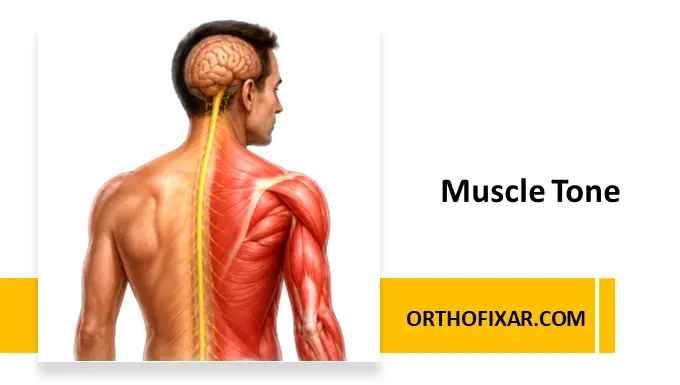
Muscle tone refers to the continuous and passive partial contraction of muscles while the body is at rest. It is controlled primarily by the nervous system and helps maintain posture, balance, and readiness for movement.
The term neurological tone is often used because the brain, spinal cord, and peripheral nerves regulate muscle tone through complex reflex pathways.
Normal tone allows muscles to respond quickly and smoothly to movement demands.
Types of Muscle Tone
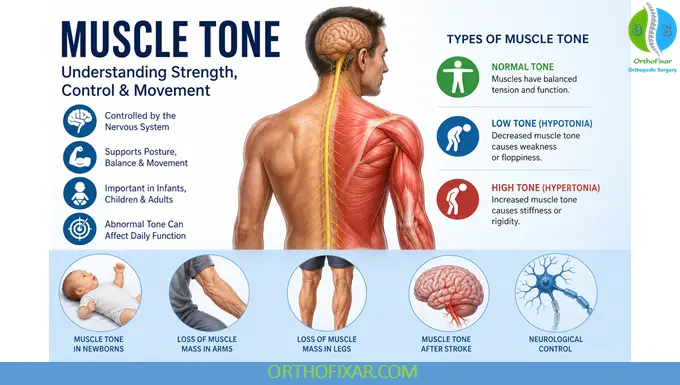
Normal Muscle Tone
Healthy muscles maintain mild tension without stiffness or weakness. Normal tone supports coordinated movement and posture.
Low Muscle Tone (Hypotonia)
Low muscle tone means decreased resistance to passive movement. Individuals with hypotonia often appear “floppy” or weak.
Other related terms include:
- Hypotonic muscle
- Hypotonic muscle tone
- Weak muscle tone
- Low tone
- Loss of muscle tone
Symptoms may include:
- Poor posture
- Delayed motor milestones
- Difficulty walking
- Fatigue
- Poor balance
- Muscles weakening and losing tone
High Muscle Tone (Hypertonia)
High tone occurs when muscles are excessively stiff or resistant to movement.
Forms include:
Spastic Tone
Spastic tone or spastic muscle tone is velocity-dependent increased tone caused by upper motor neuron disorders.
Common causes:
- Stroke
- Cerebral palsy
- Multiple sclerosis
- Brain injury
- Spinal cord injury
Rigid Muscle Tone
Rigid muscle tone causes constant stiffness independent of movement speed and is commonly associated with Parkinsonian disorders.
How the Nervous System Controls Muscle Tone
Muscle tone depends on intact communication between:
- Brain
- Spinal cord
- Peripheral nerves
- Muscles
- Reflex arcs
Damage anywhere along these pathways can alter tone.
Important brain structures involved include:
- Motor cortex
- Basal ganglia
- Cerebellum
- Brainstem
- Spinal reflex pathways
Causes of Low Muscle Tone
In Infants and Newborns
Poor muscle tone in newborn, low muscle tone in newborn, and decreased muscle tone newborn are important pediatric findings.
Related terms include:
- Low tone newborn
- Decreased muscle tone in infants
- Weak muscle tone in infants
- Infant muscle tone
- Muscle tone in newborn
Common causes include:
- Prematurity
- Cerebral palsy
- Genetic syndromes
- Down syndrome
- Spinal muscular atrophy
- Muscular dystrophy
- Hypoxic brain injury
- Metabolic disorders
In Adults
Low muscle tone in adults may result from:
- Stroke
- Peripheral neuropathy
- Multiple sclerosis
- Parkinson disease
- Muscular dystrophy
- Malnutrition
- Aging-related sarcopenia
- Prolonged immobilization
Muscle Tone and Muscle Mass Loss
Patients may describe:
- Lost muscle mass in arms
- Lost leg muscle mass
- Lost muscle mass in legs
Loss of muscle mass often accompanies reduced muscle tone and weakness.
Common contributing factors:
- Neurological disease
- Chronic illness
- Disuse atrophy
- Aging
- Protein deficiency
- Hormonal disorders
Muscle Tone in Infants
Muscle tone assessment is a major part of newborn and infant neurological examination.
Signs of Low Tone in Infants
Infants with hypotonia may show:
- Poor head control
- Floppy limbs
- Delayed rolling or sitting
- Weak cry
- Feeding difficulties
Signs of Increased Tone in Infants
Increased muscle tone in infants or high muscle tone in infants may cause:
- Stiff limbs
- Scissoring posture
- Difficulty relaxing muscles
- Delayed motor development
These findings may indicate cerebral palsy or other neurological disorders.
Muscle Tone After Stroke
Muscle tone stroke abnormalities commonly develop after damage to upper motor neurons.
Stroke survivors may experience:
- Initial flaccidity
- Later spasticity
- Muscle stiffness
- Painful spasms
- Contractures
Spasticity often affects the arm flexors and leg extensors.
Multiple Sclerosis and Muscle Tone
MS muscle tone abnormalities are common in multiple sclerosis.
Patients may develop:
- Spasticity
- Muscle tightness
- Painful spasms
- Weakness
- Fatigue
- Balance problems
Spasticity severity may fluctuate with infections, fatigue, or heat exposure.
Face Muscle Tone
Face muscle tone abnormalities can occur with:
- Bell palsy
- Stroke
- Parkinson disease
- Neuromuscular disorders
- Facial nerve injuries
Symptoms may include:
- Facial drooping
- Reduced expression
- Difficulty speaking
- Problems chewing or swallowing
Clinical Evaluation of Muscle Tone
Doctors evaluate tone using:
- Physical examination
- Passive limb movement
- Reflex testing
- Neurological assessment
Common clinical findings:
| Finding | Possible Condition |
|---|---|
| Floppiness | Hypotonia |
| Velocity-dependent stiffness | Spasticity |
| Uniform rigidity | Parkinsonism |
| Weakness with atrophy | Neuromuscular disease |
Additional tests may include:
- MRI
- EMG and nerve conduction studies
- Genetic testing
- Blood tests
- Metabolic screening
Muscle Tone Treatment
Muscle tone treatment depends on the underlying cause.
Treatment for Low Muscle Tone
Management may include:
- Physical therapy
- Occupational therapy
- Strength training
- Nutritional support
- Orthotics
- Early developmental intervention
Treatment for Spastic Muscle Tone
Treatment options include:
- Stretching programs
- Physical therapy
- Oral antispastic medications
- Botulinum toxin injections
- Intrathecal baclofen pumps
- Surgical procedures in severe cases
Common medications:
- Baclofen
- Tizanidine
- Diazepam
- Dantrolene
Prognosis
The outlook depends on the cause and severity.
Favorable Outcomes
Mild hypotonia caused by prematurity or benign congenital hypotonia may improve significantly.
Chronic Conditions
Neurological disorders such as cerebral palsy, multiple sclerosis, or Parkinson disease often require long-term management.
Early diagnosis and rehabilitation improve outcomes substantially.
Prevention and Rehabilitation
Although many neurological causes cannot be prevented, supportive measures help preserve function:
- Regular exercise
- Balanced nutrition
- Fall prevention
- Early rehabilitation
- Neurological follow-up
- Physical therapy
Key Takeaways
- Muscle tone is the resting tension present in muscles.
- Abnormal tone may be low (hypotonia) or high (hypertonia).
- Spasticity and rigidity are major forms of increased tone.
- Infants with abnormal tone require early neurological evaluation.
- Stroke and multiple sclerosis commonly alter muscle tone.
- Physical therapy plays a central role in treatment.
Frequently Asked Questions
What does loss of muscle tone mean?
Loss of muscle tone refers to reduced muscle tension at rest, often causing weakness or floppiness.
What causes low muscle tone in adults?
Neurological diseases, aging, muscle disorders, stroke, and prolonged inactivity are common causes.
Is low muscle tone serious?
It can range from mild to severe depending on the underlying condition.
Can muscle tone improve?
Yes. Physical therapy, rehabilitation, and treating the underlying disorder often improve function.
What causes spastic muscle tone?
Spasticity results from upper motor neuron damage involving the brain or spinal cord.
References
- Ganguly J, Kulshreshtha D, Almotiri M, Jog M. Muscle Tone Physiology and Abnormalities. Toxins (Basel). 2021 Apr 16;13(4):282. doi: 10.3390/toxins13040282. PMID: 33923397; PMCID: PMC8071570. Pubmed
- Ganguly J, Kulshreshtha D, Almotiri M, Jog M. Muscle Tone Physiology and Abnormalities. Toxins (Basel). 2021 Apr 16;13(4):282. doi: 10.3390/toxins13040282. PMID: 33923397; PMCID: PMC8071570. Pubmed