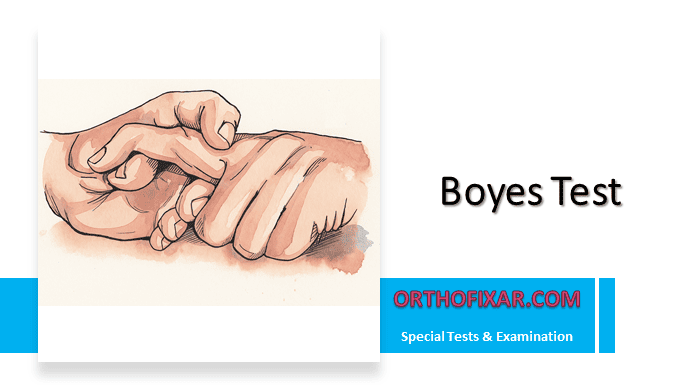
The Boyes Test is a specialized orthopedic examination technique used to evaluate the integrity of the central slip of the extensor hood in finger injuries. This clinical assessment is essential for healthcare professionals, particularly those working in emergency medicine, orthopedics, and hand surgery.
How to Perform the Boyes Test?
Ensure the patient is comfortable with their hand accessible for examination. Hold the finger to be examined in slight extension at the proximal interphalangeal (PIP) joint. Ask the patient to flex the distal interphalangeal (DIP) joint while you maintain the PIP position. Observe the patient’s ability to perform this movement
See Also: Elson Test for Central Slip Injuries
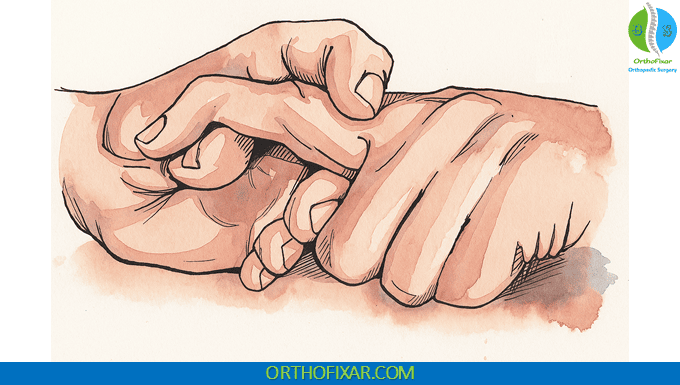
What is Positive Boyes Test?
Boyes Test is considered positive in these cases:
- Patient is unable to flex the DIP joint
- Patient experiences significant difficulty flexing the DIP joint
- This indicates potential central slip injury
Boyes Test is considered negative in these cases:
- Patient can easily flex the DIP joint
- Normal range of motion is maintained
- Central slip is likely intact
Common Mistakes to Avoid
- Applying excessive force during examination
- Failing to stabilize the PIP joint properly
- Misinterpreting partial movement as negative
- Neglecting to test adjacent fingers
Clinical Significance
The central slip of the extensor hood is crucial for proper finger function. When injured, it can lead to:
- Boutonnière deformity development
- Loss of finger extension capability
- Chronic pain and disability
- Reduced grip strength
When to Use the Boyes Test
Healthcare providers should consider performing the Boyes Test in cases of:
- Finger trauma or injury
- Suspected tendon damage
- Post-surgical evaluation
- Chronic finger pain or dysfunction
- Sports-related hand injuries
Differential Diagnosis Considerations
While performing the Boyes Test, clinicians should also consider:
- Mallet finger injuries
- Swan neck deformity
- Fractures of the middle phalanx
- Ligamentous injuries
Evidence-Based Practice
Recent studies have shown that the Boyes Test demonstrates:
- High sensitivity for central slip injuries
- Reliable reproducibility between examiners
- Cost-effective screening capability
- Minimal patient discomfort
References & More
- Orthopedic Physical Assessment by David J. Magee, 7th Edition.
- Elson RA. Rupture of the central slip of the extensor hood of the finger: a test for early diagnosis. J Bone Joint Surg Br. 1986;68:229–231. PubMed
- Boyes J. Bunnell’s Surgery of the Hand. Philadelphia: JB Lippincott; 1970.