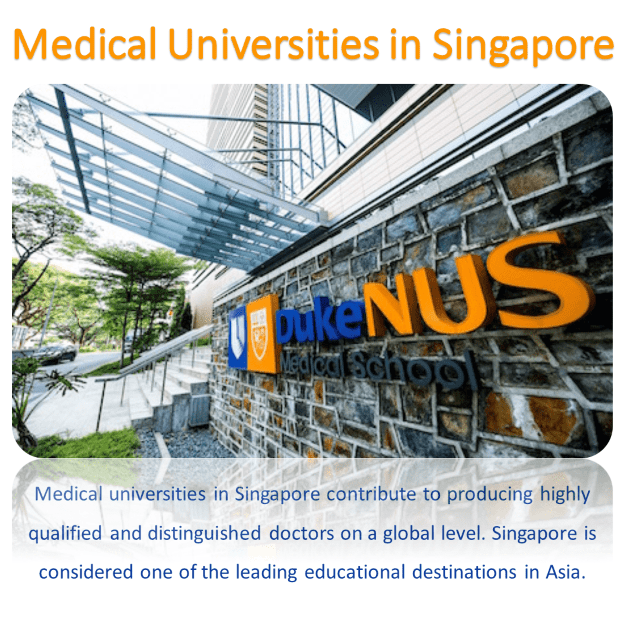
Singapore has a small, tightly regulated medical education sector, and its medical schools are among the most selective in Asia. Doctors are trained through a handful of publicly funded university programmes, each with its own admissions route, entrance requirements, and clinical training model. This guide explains how medical education in Singapore is structured, what each school offers, how entry works, what it costs, and how international students fit into the picture.
Because medical training in Singapore is closely governed, the list of schools is shorter than many applicants expect. Understanding that structure early helps you prepare for the right application rather than spreading effort across programmes that do not match your qualifications. It also helps you plan realistically: each school has a distinct entry level, curriculum style, and clinical network, and those differences matter far more than any ranking when you are deciding where to apply.
How Medical Education Is Structured in Singapore
Singapore follows a British-influenced model. Students typically enter medical school straight after pre-university or high school qualifications and complete a combined undergraduate medical degree, rather than a separate pre-med track followed by graduate medical school.
Two public universities award the primary medical degrees recognised for registration as a doctor in Singapore: the National University of Singapore (NUS) and Nanyang Technological University (NTU). A third institution, Duke-NUS Medical School, offers a graduate-entry Doctor of Medicine (MD) programme for students who already hold a bachelor’s degree.
All medical graduates who wish to practise must be registered with the Singapore Medical Council, the statutory body that governs medical registration and professional standards. Registration is a separate step from graduation, and it involves supervised practice before full registration. In other words, a degree gets you to the starting line; registration is what allows you to practise.
The Main Medical Schools in Singapore
The institutions below are the ones that award primary medical degrees in Singapore. Each entry focuses on what the school actually offers rather than rankings, which shift from year to year and vary by methodology.
1. NUS Yong Loo Lin School of Medicine
The Yong Loo Lin School of Medicine at the National University of Singapore is the country’s oldest medical school. It offers the undergraduate Bachelor of Medicine and Bachelor of Surgery (MBBS) programme, delivered across the NUS campus and its affiliated teaching hospitals.
Key features include:
- An undergraduate MBBS designed for school leavers with strong science backgrounds
- Clinical training at the National University Hospital and partner sites
- Opportunities for research through NUS Medicine’s research centres and institutes
- A structured admissions process involving academic results, a situational judgement test, and an interview
Applicants should review the NUS Medicine MBBS programme page for current admission criteria and application timelines.
2. NTU Lee Kong Chian School of Medicine
The Lee Kong Chian School of Medicine at Nanyang Technological University runs a joint MBBS programme with Imperial College London. It is known for an integrated curriculum that blends biomedical science with early clinical exposure.
The school emphasises:
- Team-based and case-based learning from the early years
- Clinical placements across the National Healthcare Group and other partner hospitals
- Interprofessional education alongside nursing and allied health students
- Research opportunities in areas such as population health and medical innovation
Details on entry requirements and the selection process are published on the Lee Kong Chian School of Medicine website.
3. Duke-NUS Medical School
Duke-NUS is a graduate medical school established through a partnership between Duke University and the National University of Singapore. Its Doctor of Medicine (MD) programme is aimed at graduates who already hold a bachelor’s degree in any discipline.
What sets it apart:
- A graduate-entry model, so applicants bring prior degrees in science or other fields
- A curriculum built around team-based learning rather than traditional lectures
- A strong research component, with a dedicated year for a scholarly project
- Clinical training at Singapore General Hospital and other SingHealth institutions
Prospective students can check the Duke-NUS admissions page for programme requirements and application guidance.
4. Other Institutions Offering Medical-Related Pathways
Beyond the three main medical schools, several institutions offer related programmes that students sometimes confuse with medical degrees. These include nursing, pharmacy, and biomedical science degrees at universities such as the National University of Singapore and Nanyang Technological University.
These are valuable qualifications in their own right, but they do not lead directly to registration as a medical doctor. If your goal is an MBBS or MD, focus on the three schools above.
Comparison Table: Medical Schools in Singapore
| Institution | Degree Awarded | Entry Level | Typical Duration | Key Partnership |
|---|---|---|---|---|
| NUS Yong Loo Lin School of Medicine | MBBS | Undergraduate | Five years | National University Hospital |
| NTU Lee Kong Chian School of Medicine | MBBS | Undergraduate | Five years | Imperial College London |
| Duke-NUS Medical School | MD | Graduate | Four years | Duke University and SingHealth |
Durations and structures can change, so always confirm details on each school’s official programme page before applying.
Admission Requirements for Medical Schools in Singapore
Admission to any medical school in Singapore is competitive. The exact criteria vary by institution and by whether you are applying as a school leaver, a polytechnic graduate, or an international student.
Across the schools, common expectations include:
- Strong academic results in science subjects, particularly biology and chemistry
- Performance in a university clinical aptitude or situational judgement test where required
- Evidence of relevant experience, such as volunteering or healthcare exposure
- Successful completion of an interview or multiple mini-interview stage
Academic Qualifications
Undergraduate applicants typically present Singapore-Cambridge A-Levels, the International Baccalaureate, or an equivalent recognised qualification. Graduate applicants to Duke-NUS need a completed bachelor’s degree with a solid academic record.
Each school publishes its own subject prerequisites and minimum grades. Because these requirements are updated regularly, check the official admissions pages rather than relying on older information.
Entrance Tests and Interviews
Many medical schools in Singapore use standardised tests as part of the selection process. These may include a clinical aptitude test or a situational judgement assessment, depending on the institution and intake.
The interview stage matters as much as the test score. Schools look for communication skills, ethical reasoning, motivation for medicine, and awareness of the healthcare system. Preparation should include reflecting on your own experiences and being able to discuss why medicine specifically, not just why healthcare in general.
Application Process Step by Step
The application journey is similar across institutions, though deadlines and portals differ. A sensible approach looks like this:
- Confirm your eligibility against each school’s published requirements
- Register for any required entrance test well ahead of the deadline
- Prepare supporting documents, including transcripts and personal statements
- Submit your application through the official university portal
- Prepare for interviews by reflecting on your motivation and experience
- Respond to offers within the stated deadline
For students applying through the centralised system, the NUS Office of Admissions application page and the NTU undergraduate admissions page provide the official submission routes.
Tuition Fees and Financial Support
Tuition at Singapore’s public medical schools is subsidised for eligible students, but medicine remains one of the more expensive programmes. Fees differ significantly between Singapore citizens, permanent residents, and international students.
Common sources of financial support include:
- Government tuition grants for eligible students, with service obligations attached in some cases
- University scholarships and bursaries awarded on merit or need
- Healthcare-linked sponsorships offered by hospitals and public health clusters
- External scholarships from organisations that fund medical study
Because fee structures and bond conditions change, verify the current figures and obligations directly with each university’s finance office. The Ministry of Education financial matters pages explain the tuition grant framework and its conditions.
Studying Medicine in Singapore as an International Student
International students can apply to Singapore’s medical schools, but places are limited and priority is generally given to citizens and permanent residents. Competition for the small number of international seats is intense.
If you are applying from abroad, keep these points in mind:
- Check whether the specific programme accepts international applicants in the relevant intake
- Confirm the visa and student pass process through the Immigration and Checkpoints Authority student pass page
- Budget for higher international tuition fees and living costs in Singapore
- Review any service obligations attached to tuition grants or sponsorships
Living Costs and Practical Considerations
Singapore is an expensive city, and medical students should plan for accommodation, transport, and study materials on top of tuition. On-campus housing is available at some universities but is not guaranteed.
Medical study is demanding, with long clinical hours in later years. Students should factor in the time commitment when planning finances and living arrangements.
Practising Medicine After Graduation
Graduating from a Singapore medical school is the first step. To practise, you must complete registration requirements set by the Singapore Medical Council, which typically include a period of supervised practice.
Useful steps after graduation:
- Apply for provisional registration through the Singapore Medical Council
- Complete the required supervised clinical practice year
- Progress to full registration once requirements are met
- Consider specialisation through residency programmes if desired
The Singapore Medical Council registration page sets out the current framework for provisional and full registration.
How to Choose the Right Medical School
Choosing between Singapore’s medical schools comes down to your entry level, learning style, and career goals rather than prestige. Each institution has a distinct curriculum and clinical network.
Questions worth asking yourself:
- Am I applying straight from school or after a degree?
- Do I prefer team-based learning or a more traditional structure?
- Which teaching hospitals and clinical networks appeal to me?
- How important is a dedicated research year to my plans?
Visiting open days and reading official programme materials gives a clearer picture than rankings alone.
Conclusion
Singapore’s medical schools are few but well regarded, with clear pathways for both school leavers and graduates. The NUS and NTU undergraduate MBBS programmes suit students entering after pre-university study, while Duke-NUS offers a graduate MD route. Admission is competitive, fees vary by residency status, and international places are limited. The most reliable next step is to read each school’s official admissions page and confirm requirements before you apply.
Frequently Asked Questions
How many medical schools are there in Singapore?
There are three main institutions that award primary medical degrees recognised for practice in Singapore: NUS Yong Loo Lin School of Medicine, NTU Lee Kong Chian School of Medicine, and Duke-NUS Medical School. Other universities offer related health programmes but not medical degrees.
Can international students study medicine in Singapore?
Yes, international students can apply, but places are limited and priority is generally given to citizens and permanent residents. You should confirm whether the specific programme accepts international applicants and review visa requirements through the official immigration portal.
How long does it take to become a doctor in Singapore?
Undergraduate MBBS programmes typically take five years, while the graduate-entry MD at Duke-NUS takes four years. After graduation, you must complete supervised practice and registration requirements before practising independently.
What exams are required for medical school in Singapore?
Requirements vary by institution and may include a clinical aptitude or situational judgement test alongside academic qualifications. Always check the official admissions page for the exact tests required for your intake.
Is medical school in Singapore expensive?
Medicine is one of the more expensive programmes, and fees differ for citizens, permanent residents, and international students. Government tuition grants and scholarships can reduce costs, though some carry service obligations.
Do I need a bachelor’s degree to study medicine in Singapore?
Not for the undergraduate MBBS programmes at NUS and NTU, which accept school leavers. Duke-NUS, however, requires a completed bachelor’s degree for its MD programme.
What is the difference between MBBS and MD in Singapore?
MBBS is an undergraduate medical degree taken after pre-university study, while the MD at Duke-NUS is a graduate-entry degree for students who already hold a bachelor’s degree. Both lead to registration pathways with the Singapore Medical Council.
How competitive is admission to Singapore medical schools?
Admission is highly competitive, with strong academic results, entrance tests, and interviews all playing a role. International applicants face particularly limited places.
Can I practise in Singapore after graduating from a foreign medical school?
Yes, but registration requirements differ for international medical graduates and are set by the Singapore Medical Council. You should review the official registration framework to understand the process and any additional assessments.
Where can I find official application deadlines?
Deadlines are published on each university’s official admissions page and can change between intakes. Check the NUS, NTU, and Duke-NUS admissions pages directly for the most current information.