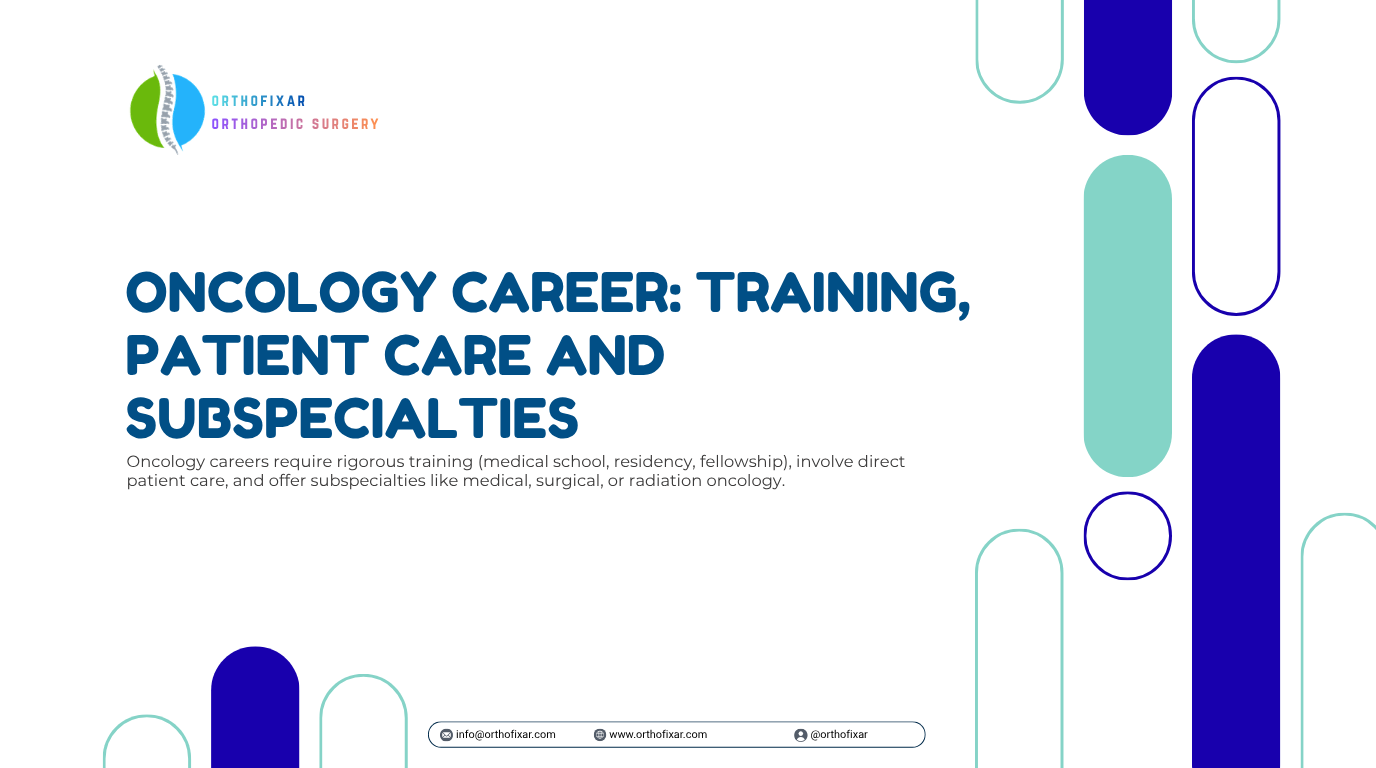
An oncology career combines clinical reasoning, emotional resilience, and scientific curiosity. If you are exploring this path, you need a clear map of training, daily responsibilities, and options for specialization. This guide gives you that roadmap without fluff.
What Does an Oncology Career Look Like?
An oncologist is a physician who diagnoses and treats cancer. The work goes beyond prescribing medication—it involves coordinating care, supporting families, and guiding patients through complex decisions.
- Reviewing pathology and imaging reports to confirm cancer type and stage.
- Designing treatment plans that may include surgery, chemotherapy, radiation, or immunotherapy.
- Managing side effects and adjusting treatments based on patient response.
- Discussing prognosis and goals of care with patients and their families.
- Collaborating with surgeons, radiologists, nurses, and palliative care specialists.
- Participating in tumor boards and clinical research meetings.
Most oncologists work in hospitals, academic cancer centers, or community clinics. Some split their time between patient care and research. Others focus on a specific cancer type or a particular treatment modality.
Educational Pathway to Oncology
Becoming an oncologist takes many years of structured training. The route is demanding but logical, and each step builds on the last.
Medical School and Residency
Start with a medical degree from an accredited institution. During medical school, you will rotate through internal medicine, which is the foundation for most oncology careers.
- Complete core clerkships in internal medicine, surgery, pediatrics, and family medicine.
- Seek oncology electives early to confirm your interest.
- Pass the required licensing exams and apply for residency.
- Match into an internal medicine residency program, typically lasting three years.
- Build a strong foundation in diagnosing complex conditions and managing chronic illness.
Residency is where you learn to care for seriously ill patients. You will manage electrolyte imbalances, infections, and urgent complications—skills you will use daily as an oncologist.
Fellowship Training
After residency, you apply for a hematology-oncology fellowship. This is a specialized training period focused on blood disorders and cancer.
- Choose between combined hematology-oncology or single-discipline programs.
- Train in chemotherapy administration, immunotherapy, and targeted agents.
- Learn to interpret bone marrow biopsies, molecular tests, and flow cytometry.
- Develop skills in clinical trial design and research ethics.
- Gain experience in both inpatient consult services and outpatient continuity clinics.
Fellowship typically lasts three to four years. During this time, you will gradually take on more independent decision-making and may choose a subspecialty focus.
Core Skills for Oncology Practice
Technical knowledge alone is not enough in oncology. You also need skills that help you communicate clearly and think flexibly under pressure.
- Breaking bad news with empathy and clarity.
- Explaining complex treatment options in plain language.
- Managing uncertainty and knowing when to ask for second opinions.
- Interpreting genetic and molecular data to guide targeted therapies.
- Leading multidisciplinary care teams and resolving conflicts.
- Maintaining detailed documentation for both clinical and billing purposes.
- Practicing self-care and seeking peer support when needed.
These skills are not always taught in lectures. You will refine them through direct patient contact, feedback from senior colleagues, and deliberate reflection on difficult cases.
Patient Care in Oncology
Cancer care is not just about treating the disease. It is about caring for the person who has the disease. Oncologists often develop deep, lasting relationships with patients because treatment spans months or years.
“Patients remember how you made them feel, not just the drugs you prescribed. Empathy is a clinical skill.”
- Hold honest discussions about treatment goals, including when aggressive therapy may not help.
- Coordinate symptom management and palliative care from diagnosis onward.
- Support survivors through long-term follow-up and late effects screening.
- Involve family members in decisions, while respecting patient autonomy.
- Connect patients with social workers, financial counselors, and support groups.
Effective communication can improve treatment adherence and reduce patient distress. A strong patient-care routine also makes your work more satisfying.
Subspecialties in Oncology
Oncology is not a single uniform field. Many physicians choose to focus on one cancer type or a specific treatment approach. Subspecializing allows you to go deeper and often leads to better outcomes for your patients.
| Subspecialty | Focus Area | Typical Patient Population |
|---|---|---|
| Medical Oncology | Chemotherapy, immunotherapy, targeted therapy | Adults with solid tumors or blood cancers |
| Radiation Oncology | External beam radiation, brachytherapy, radiosurgery | Patients with localized tumors |
| Surgical Oncology | Cancer surgery, debulking, sentinel node biopsy | Patients with resectable tumors |
| Hematologic Oncology | Leukemia, lymphoma, myeloma, bone marrow transplant | Patients with blood disorders |
| Gynecologic Oncology | Ovarian, uterine, cervical, and vulvar cancers | Women with reproductive tract cancers |
| Pediatric Oncology | Cancers in children and adolescents | Patients under 18, often with rare tumors |
| Neuro-Oncology | Brain and spinal cord tumors | Patients with primary or metastatic neurological tumors |
| Thoracic Oncology | Lung cancer, mesothelioma, esophageal cancer | Patients with chest tumors |
You may also focus on areas like cancer genetics, palliative oncology, or geriatric oncology. These niches allow you to address specific patient needs and research gaps.
- Consider which disease sites genuinely interest you.
- Seek mentorship in that subspecialty during fellowship.
- Look for fellowship tracks that offer focused clinical and research exposure.
- Think about your ideal balance between research, teaching, and direct patient care.
Work Environment and Career Opportunities
Oncologists can practice in many settings, and the ideal match depends on your personality and lifestyle goals. The demand for oncology services continues to grow as the population ages.
- Academic medical centers offer research time, teaching roles, and access to clinical trials.
- Community practices provide more predictable schedules and close patient relationships.
- VA hospitals and safety-net systems serve diverse populations with complex needs.
- Industry roles involve drug development, medical affairs, or regulatory work.
- Tele-oncology is expanding, enabling remote consultations for rural patients.
Job stability is strong, and many oncologists negotiate flexible schedules or part-time arrangements. Still, be prepared for occasional on-call duties and high-stakes emergencies.
Challenges and Rewards
Oncology is emotionally demanding. You will face patients who do not respond to treatment, and you must help them navigate end-of-life decisions. These moments are hard, but they also make the specialty deeply meaningful.
“You cannot cure everyone, but you can support everyone. That support is part of the treatment.”
- Manage burnout by building a sustainable pacing strategy and using peer debriefing.
- Celebrate small victories, such as a patient returning to work or a successful transplant.
- Find purpose in long-term survivor relationships and research breakthroughs.
- Balance clinical duty with learning new technologies and targeted therapies.
- Remember that multidisciplinary teamwork distributes both workload and emotional burden.
The rewards include gratitude from patients, intellectual challenge, and the chance to be present during pivotal life moments. For many oncologists, the sense of purpose outweighs the difficulties.
Conclusion
An oncology career is a serious commitment that offers profound professional fulfillment. You will need strong training, excellent communication skills, and a clear understanding of the subspecialty landscape. Start by building clinical experience, seeking mentorship, and staying open to the many ways you can make a difference in cancer care.
Frequently Asked Questions
How long does it take to become an oncologist?
The path generally takes four years of medical school, three years of internal medicine residency, and three or more years of fellowship. That is about ten years after starting medical school, depending on your country and specialty.
What is the difference between medical oncology and hematology-oncology?
Medical oncology focuses on solid tumors and systemic therapies. Hematology-oncology covers both blood cancers and benign blood disorders. Many oncologists complete combined training in both areas.
Can I work in oncology without becoming a physician?
Yes. You can contribute as an oncology nurse, pharmacist, research coordinator, genetic counselor, social worker, or data scientist. These roles are essential to cancer care.
Do oncologists perform surgery?
Medical oncologists do not perform surgery. Surgical oncologists are general surgeons who specialize in removing tumors. Radiation oncologists use radiation rather than scalpels.
What is a tumor board?
A tumor board is a regular meeting where specialists from different fields review complex patient cases. It helps ensure every patient receives a well-rounded, evidence-based treatment plan.
Is oncology a demanding career in terms of workload?
Yes, it can be demanding. You will manage complex patients and occasionally work long hours. However, many oncologists arrange flexible schedules, especially after fellowship.
How important is research in an oncology career?
Research is central to academic oncology, but not mandatory in community practice. Even community oncologists often contribute to clinical trials and adopt new evidence as it emerges.
Can oncologists work in palliative care?
Many oncologists develop skills in palliative care, and some choose to specialize in it. You can also collaborate closely with palliative teams to improve symptom management and goals-of-care discussions.
What subspecialty is most in demand?
Lung cancer and gastrointestinal oncology are growing areas, as are hematologic oncology and adolescent/young adult cancer care. Demand varies by region and practice setting.
How do I decide which oncology path is right for me?
Gain exposure early through electives and shadowing. Talk to oncologists in different subspecialties, observe their daily routines, and reflect on which patient populations and treatment modalities energize you.