Why Finding a Medical Mentor Matters More Than You Think
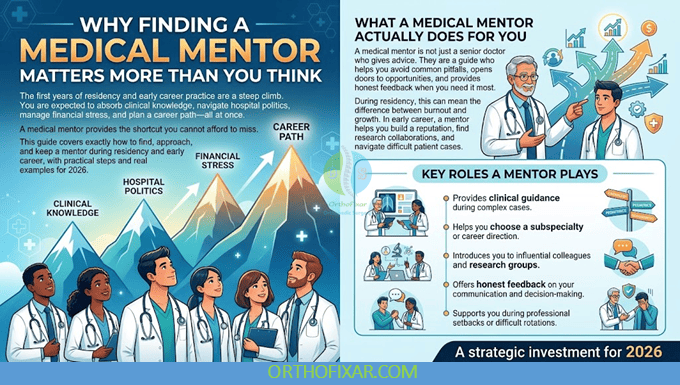
The first years of residency and early career practice are a steep climb. You are expected to absorb clinical knowledge, navigate hospital politics, manage financial stress, and plan a career path—all at once. A medical mentor provides the shortcut you cannot afford to miss. This guide covers exactly how to find, approach, and keep a mentor during residency and early career, with practical steps and real examples for 2026.
What a Medical Mentor Actually Does for You
A medical mentor is not just a senior doctor who gives advice. They are a guide who helps you avoid common pitfalls, opens doors to opportunities, and provides honest feedback when you need it most. During residency, this can mean the difference between burnout and growth. In early career, a mentor helps you build a reputation, find research collaborations, and navigate difficult patient cases.
Key Roles a Mentor Plays
- Provides clinical guidance during complex cases.
- Helps you choose a subspecialty or career direction.
- Introduces you to influential colleagues and research groups.
- Offers honest feedback on your communication and decision-making.
- Supports you during professional setbacks or difficult rotations.
Where to Find a Medical Mentor During Residency
Finding a mentor does not have to feel like a formal search. Many strong mentoring relationships start naturally through daily interactions. The key is to be intentional about recognizing potential mentors in your environment.
Best Places to Look
- Your own residency program: Attendings, chief residents, and senior fellows are the most accessible mentors.
- Hospital grand rounds and conferences: Approach speakers or experts who present topics you care about.
- Professional medical societies: Join committees or interest groups in your specialty. Many societies offer formal mentorship matching programs.
- Online platforms: LinkedIn, Doximity, and specialty-specific forums allow you to connect with mentors outside your institution.
- Research collaborations: If you are working on a project, ask a senior author or principal investigator to mentor you through the process.
“The best mentors I found were not assigned to me. They were the attendings who took an extra five minutes to explain their reasoning during rounds.” — Dr. Leila H., Internal Medicine Residency Graduate, 2025
How to Approach a Potential Mentor (Without Awkwardness)
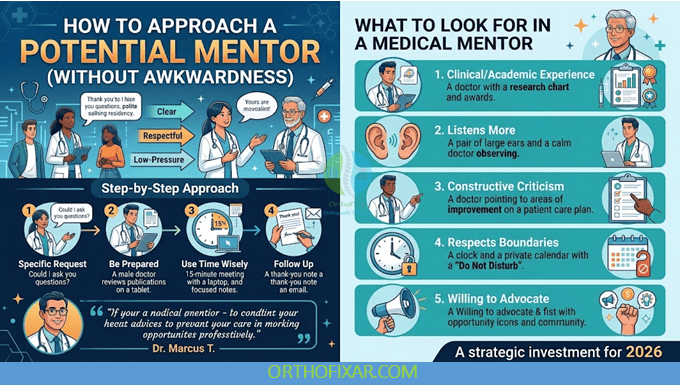
Approaching a potential mentor can feel intimidating, but it does not have to be. Most senior clinicians are genuinely interested in helping motivated trainees. Use a clear, respectful, and low-pressure approach.
Step-by-Step Approach
- Start with a specific request: Instead of “Can you be my mentor?” say “I really admired how you managed that complex case. Could I ask you a few questions about your approach?”
- Be prepared: Show that you have done your homework. Read their recent publications or know their clinical interests.
- Use their time wisely: Keep initial meetings to 15–20 minutes. Ask focused questions.
- Follow up: Send a thank-you note within 24 hours. Mention something specific you learned from them.
“I asked my mentor if she had 15 minutes to review my approach to a difficult patient. That one conversation turned into a three-year mentoring relationship.” — Dr. Marcus T., Second-Year Fellow, Cardiology
What to Look for in a Medical Mentor
Not every senior doctor is suited to be a mentor. Look for someone who demonstrates genuine interest in your growth, not just their own reputation. A good mentor is approachable, honest, and willing to invest time.
Qualities of an Effective Mentor
- Has clinical or academic experience relevant to your goals.
- Listens more than they talk.
- Gives constructive criticism without being dismissive.
- Respects your boundaries and time.
- Is willing to advocate for you when opportunities arise.
How to Maintain a Productive Mentoring Relationship
Once you have found a mentor, the relationship requires ongoing effort from both sides. Regular check-ins, clear communication, and mutual respect are essential. A mentoring relationship should feel like a partnership, not a one-way flow of advice.
Practical Tips for Long-Term Success
- Schedule periodic meetings (every 4–6 weeks is ideal).
- Come to each meeting with an agenda or specific questions.
- Share your wins and challenges honestly.
- Offer something back—help with a project, share a resource, or express gratitude.
- Know when to transition or end the relationship if it no longer serves your growth.
Common Challenges and How to Overcome Them
Even the best mentoring relationships face obstacles. Time constraints, personality clashes, or mismatched expectations can derail progress. Recognizing these challenges early helps you address them constructively.
Frequent Issues and Solutions
| Challenge | Solution |
|---|---|
| Mentor is too busy to meet regularly | Propose shorter check-ins (10–15 minutes) or email updates instead. |
| Mentor gives generic advice | Ask more specific questions about your unique situation. |
| Personality mismatch | Seek a secondary mentor who complements your style. |
| Lack of clear goals | Define what you hope to achieve in 3, 6, and 12 months. |
| Fear of asking for help | Remember that most mentors enjoy helping; they were once in your shoes. |
When to Seek More Than One Mentor
One mentor rarely covers all your needs. You may benefit from multiple mentors who specialize in different areas. For example, a clinical mentor for patient care, a research mentor for publications, and a career mentor for professional development.
Building a Mentorship Network
- Identify your top three needs (clinical, research, career).
- Approach one mentor for each area.
- Keep each relationship focused on its specific domain.
- Introduce your mentors to each other when appropriate.
- Rotate your primary mentor as your career evolves.
Conclusion
Finding a medical mentor during residency and early career is not a luxury—it is a strategic investment in your future. Start by looking in your immediate environment, approach potential mentors with respect and preparation, and nurture the relationship with consistent effort. One good mentor can accelerate your growth, protect you from burnout, and open doors you never knew existed. The time to start looking is now, even if it feels awkward at first. Your future self will thank you.
Frequently Asked Questions (FAQ)
1. How do I find a medical mentor if I am shy or introverted?
Start small. Send a short, professional email to an attending whose work you admire. Ask a single, specific question about a clinical topic. This low-pressure approach can lead to a conversation without requiring you to be outgoing.
2. Is it okay to have a mentor who is younger than me?
Yes. Mentorship is about experience and perspective, not age. A senior fellow or advanced practice nurse may have valuable insights into your specialty or institution that a more senior doctor lacks.
3. What if my mentor does not respond to my follow-up messages?
Send one polite reminder after one week. If there is no response, it may mean the mentor is overwhelmed or not a good fit. Move on and try someone else without taking it personally.
4. Should I ask my program director to assign me a mentor?
Formal mentorship programs can be helpful, but the best relationships often develop organically. Use assigned mentors as a starting point, but also look for natural connections on your own.
5. How often should I meet with my mentor?
For most relationships, meeting every 4 to 6 weeks works well. During busy rotations, even a monthly email update can keep the connection alive.
6. Can a medical mentor help me with burnout?
Absolutely. A good mentor recognizes signs of burnout and can offer perspective, resources, or simply a listening ear. They may also help you adjust your workload or advocate for better support.
7. What if my mentor gives advice I disagree with?
Respectfully thank them and consider their perspective. You do not have to follow every piece of advice. If the disagreement is significant, consider seeking a second opinion from another mentor.
8. How do I know when it is time to change mentors?
If you consistently feel unheard, undervalued, or that the relationship is no longer aligned with your goals, it is time to transition. Thank the mentor for their support and move on professionally.
9. Can I have more than one mentor at the same time?
Yes. Many successful professionals maintain a network of mentors. Just be clear about the focus of each relationship to avoid confusion.
10. What is the most important thing to remember about mentorship?
Mentorship is a two-way street. Show gratitude, respect your mentor’s time, and be open to feedback. The best relationships grow when both parties invest effort and trust.