Total knee replacement is a well-established operation that removes damaged bone and cartilage from the knee and caps the ends with metal and plastic components. Patients who do best are rarely the ones who simply “wait and see.” They are the ones who understand what the procedure involves, prepare their home and their body beforehand, and commit to a structured rehabilitation plan afterward. This article walks you through the procedure itself, what recovery actually looks like over time, the real risks to weigh, and the results you can reasonably expect.
What Total Knee Replacement Actually Involves
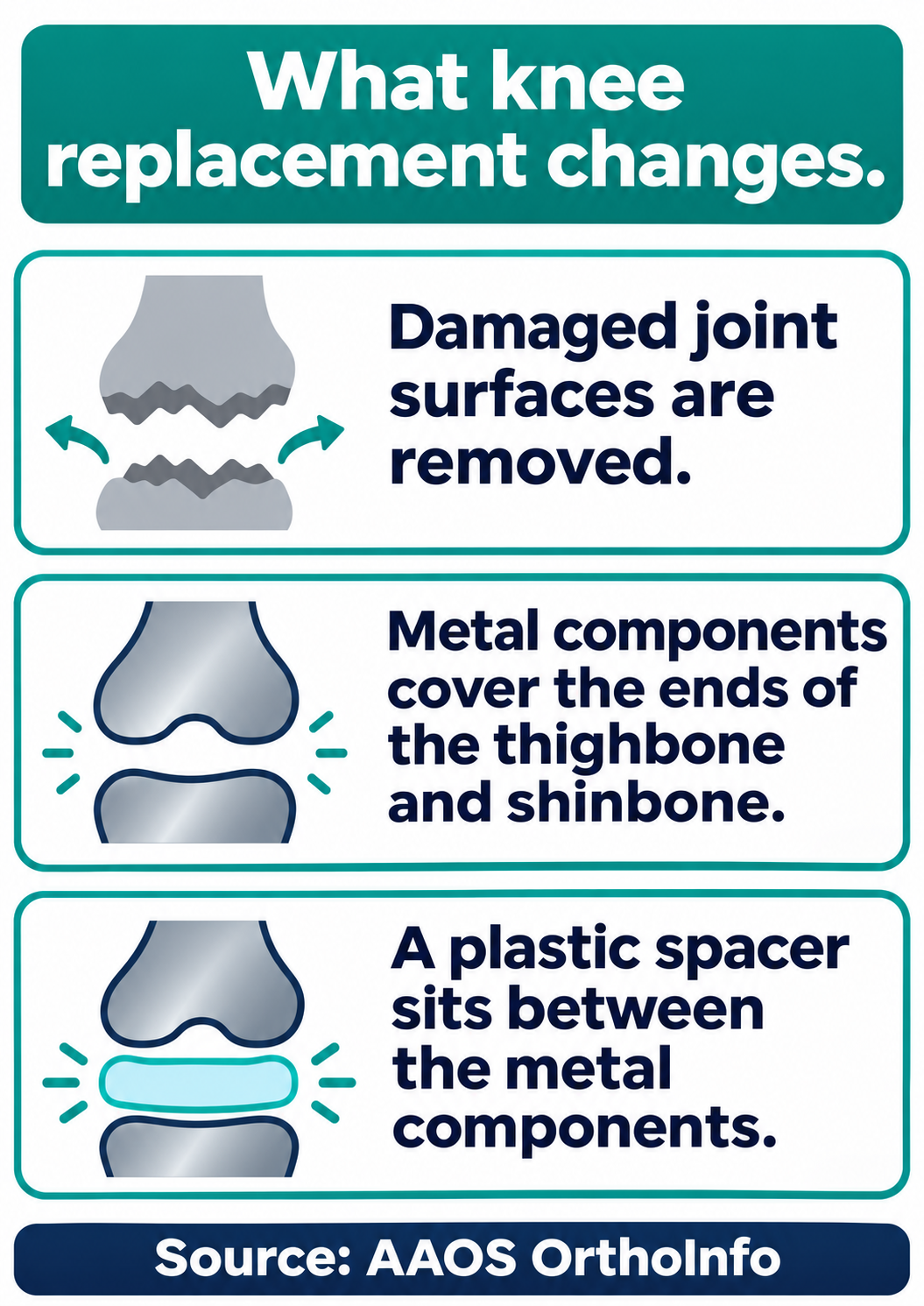
The surgeon resurfacing your knee is not removing the joint and leaving a gap. The procedure replaces the worn surfaces of the femur (thigh bone), tibia (shin bone), and often the back of the kneecap with smooth implants. The surrounding ligaments and muscles are preserved where possible, which is why rehabilitation matters so much—those tissues must relearn how to control the new joint.
Most patients are under spinal or general anesthesia, and the operation typically takes somewhere in the range of one to two hours. Many people are surprised to learn that the bone cuts are guided by precise instrumentation, sometimes including patient-specific guides or computer-assisted navigation. Your surgeon will explain which approach suits your anatomy.
Who Is a Candidate for Surgery
Surgery is generally considered when knee arthritis pain and stiffness interfere with daily life and non-surgical measures have stopped helping. That said, candidacy is a clinical judgment, not a checklist, and it varies by surgeon and by patient.
- Persistent pain that limits walking, stairs, or sleep despite medication, therapy, and injections.
- Advanced arthritis visible on imaging that matches your symptoms.
- Knee deformity or instability that affects your ability to bear weight safely.
- Overall health that makes surgery and anesthesia reasonably safe.
- Realistic expectations and willingness to participate in rehabilitation.
Body weight, diabetes control, smoking status, and prior infections are factors surgeons weigh carefully, because they influence healing and infection risk. If you are unsure where you stand, ask your surgeon directly what would make you a better candidate.
Preparing Before the Operation
Preparation is where patients often gain the most control. In practice, the patients who arrive stronger and better organized tend to leave the hospital sooner and progress faster in the first month.
Physical and Medical Preparation
- Complete pre-operative strengthening of the quadriceps, glutes, and hip muscles; even a few weeks of targeted exercise helps.
- Practice walking with crutches or a walker before surgery so it feels familiar afterward.
- Review all medications with your care team, especially blood thinners and anti-inflammatory drugs.
- Address dental issues and any skin infections before surgery, since infection risk is a genuine concern.
- Stop smoking where possible; it affects wound healing and infection rates.
Home Preparation
- Clear walking paths and remove loose rugs to reduce fall risk.
- Set up a recovery station with a chair of appropriate height, phone, water, and medications.
- Arrange transport home and help for the first week or two.
- Consider a raised toilet seat and shower chair if your bathroom setup makes transfers difficult.
The Day of Surgery and Hospital Stay
Most knee replacements involve a hospital stay of roughly one to three days, though some centers offer same-day or next-day discharge for selected patients. You will typically begin moving with assistance within hours of surgery, because early mobilization reduces the risk of blood clots and stiffness.
Pain control usually combines regional nerve blocks, oral medication, and icing. Expect to work with a physical therapist in the hospital who will teach you how to get in and out of bed, walk with a device, and perform basic exercises. Discharge planning—whether to home or a rehabilitation facility—depends on your home setup, support, and functional progress.
Recovery Timeline: What to Expect Over Time
Recovery is not a straight line, and comparing yourself to another patient is rarely useful. Still, a general timeline helps you plan realistically. Individual progress varies with age, pre-surgery strength, and complications.
| Phase | Typical Timeframe | Common Goals |
|---|---|---|
| Immediate post-op | First 1–3 days | Stand and walk with assistance, manage pain, begin gentle range of motion |
| Early recovery | Weeks 1–6 | Regain knee bending and straightening, walk with less support, reduce swelling |
| Strengthening phase | Weeks 6–12 | Build quadriceps and hip strength, improve balance and gait |
| Functional return | Months 3–6 | Return to most daily activities, stairs, and light recreational activity |
| Long-term adjustment | Months 6–12 and beyond | Refine strength, endurance, and confidence in the joint |
Physical Therapy After Surgery
Rehabilitation is not optional—it is the engine of your recovery. The first goals are getting the knee fully straight and regaining enough bend to walk and climb stairs safely. Swelling control and quadriceps activation are equally important early on.
- Early exercises: quad sets, straight-leg raises, heel slides, and ankle pumps.
- Progression: seated knee extensions, mini squats, step-ups, and balance work.
- Later stages: stationary cycling, resistance training, and gait retraining.
- Home program: short, frequent sessions often work better than one long session.
Many patients ask how much therapy they need. The honest answer is that it varies by surgeon protocol, insurance, and your progress; your therapist will adjust frequency based on measurable goals. The American Physical Therapy Association offers patient resources that explain what to expect from rehabilitation, and your surgeon’s office can confirm any specific protocol they follow.
Risks and Complications to Weigh
Total knee replacement is generally safe, but no surgery is risk-free. Knowing the common and serious risks helps you recognize problems early and discuss them honestly with your care team.
- Blood clots: reduced with early movement, compression, and sometimes medication.
- Infection: uncommon but serious; watch for increasing redness, warmth, or fever.
- Stiffness: a knee that will not bend or straighten enough can limit function.
- Implant problems: loosening or wear over time, which may eventually require revision.
- Nerve irritation: numbness or tingling around the incision is common and often improves.
- Persistent pain: a minority of patients report ongoing discomfort despite a technically successful operation.
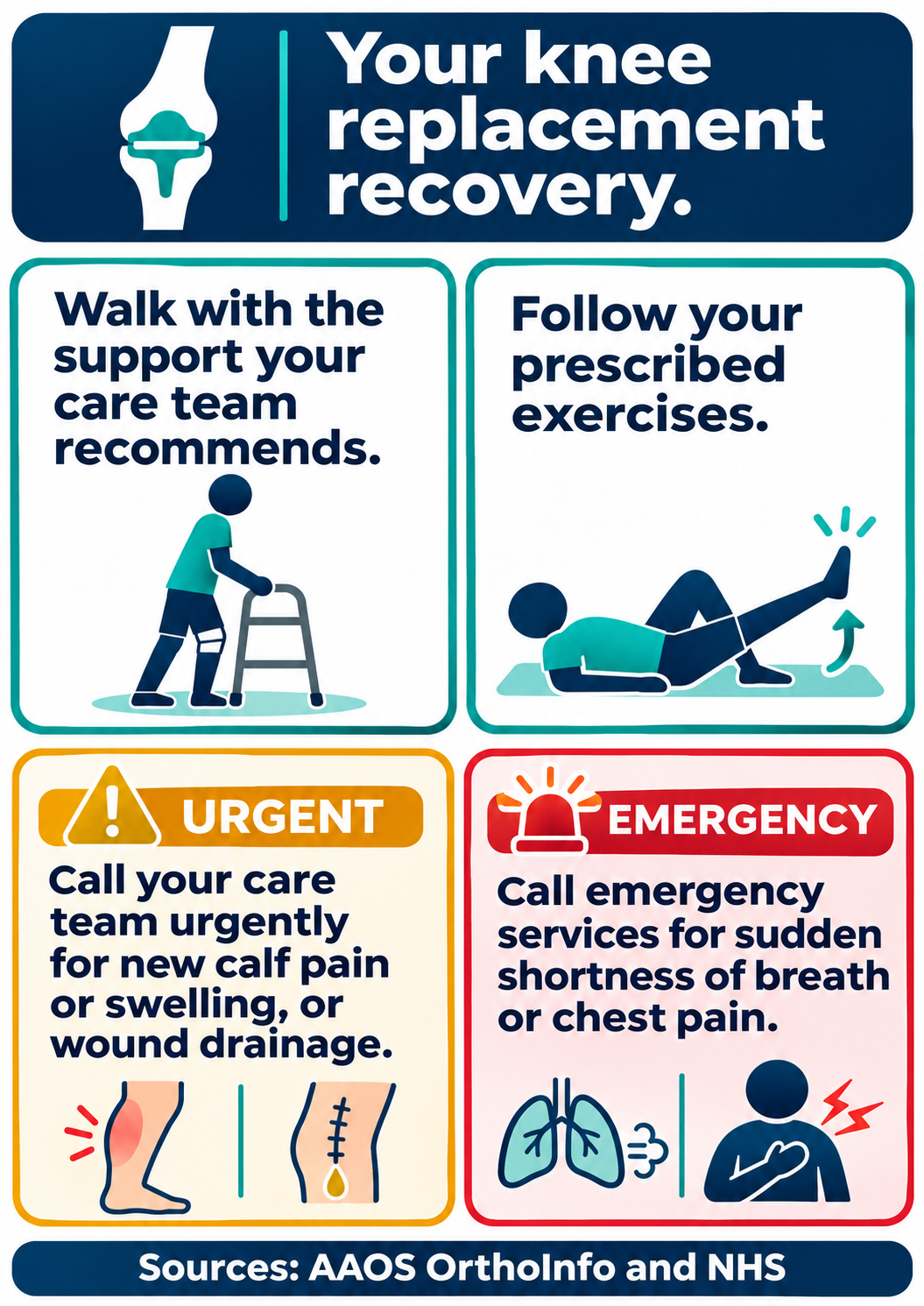
If you notice calf swelling, chest pain, shortness of breath, or a wound that looks worse rather than better, seek medical attention promptly rather than waiting for your next appointment.
Results: What the Surgery Can and Cannot Do
Most patients experience meaningful relief from arthritis pain and improved ability to walk, climb stairs, and perform daily tasks. The implant is designed to last many years, though longevity depends on activity, body weight, and implant type.
What surgery will not do is restore a young athlete’s knee. High-impact running and contact sports are generally discouraged, and some patients continue to notice clicking, stiffness, or reduced bend. Setting expectations with your surgeon before surgery—based on your specific knee and goals—is the most reliable way to judge whether the result will meet your needs.
When to Call Your Care Team
Some symptoms are normal early on; others warrant a call. Use this as a practical guide, not a substitute for your surgeon’s instructions.
- Fever, chills, or a wound that is increasingly red, hot, or draining.
- Sudden calf pain, swelling, or shortness of breath.
- Chest pain or an irregular heartbeat.
- Inability to bear weight that worsens rather than improves.
- Severe pain not controlled by your prescribed medication.
Conclusion
Total knee replacement is a reliable operation for advanced arthritis, but the outcome depends heavily on what happens around the surgery—not only in the operating room. Prepare your body and home, follow a structured rehabilitation plan, recognize warning signs early, and keep expectations grounded in your own anatomy and goals. Patients who treat recovery as an active project, rather than something that happens to them, generally navigate the process with more confidence and fewer surprises.
Frequently Asked Questions
How long does it take to recover from a total knee replacement?
Most people regain the ability to walk and manage daily tasks within six to twelve weeks, but full strength and confidence often take six months to a year. Recovery speed varies with age, pre-surgery fitness, and complications, so treat timelines as guidance rather than deadlines.
Is total knee replacement painful?
Yes, some pain is expected, especially in the first weeks, but modern pain management—nerve blocks, medication, and icing—keeps it manageable for most patients. Pain typically decreases steadily, though occasional flare-ups after activity are normal.
How long will the new knee last?
Modern implants are designed to last many years, and longevity depends on activity level, body weight, and implant design. Your surgeon can give you a realistic estimate based on the specific implant and your circumstances.
Can I climb stairs after surgery?
Yes, most patients learn to climb stairs safely within the first few weeks with guidance from a physical therapist. You will typically go up with the good leg first and down with the operated leg first, using a rail for support.
When can I drive again?
Driving depends on which knee was operated on, your pain medication, and your reaction time. Many surgeons advise waiting until you can brake safely and are off strong pain medication; confirm the specific timing with your surgeon.
Will I need physical therapy, and for how long?
Physical therapy is a standard part of recovery and usually continues for several weeks to a few months, depending on progress and insurance coverage. Your therapist will adjust the program based on measurable goals like range of motion and strength.
Can I return to sports after a knee replacement?
Low-impact activities such as walking, swimming, and cycling are generally encouraged once healed. High-impact and contact sports are usually discouraged because they can increase wear on the implant.
What is the risk of infection?
Infection is uncommon but serious, which is why surgeons take precautions like antibiotics and careful wound care. Report increasing redness, warmth, drainage, or fever promptly so it can be evaluated early.
Is a partial knee replacement an option instead?
Partial replacement may be appropriate when arthritis is confined to one part of the knee, but it is not suitable for everyone. Your surgeon will assess your imaging and symptoms to determine which procedure fits your knee.
How do I know if I am ready for surgery?
Readiness is a combination of symptom severity, failed non-surgical treatment, and your overall health and expectations. A candid conversation with an orthopedic surgeon—covering your goals, risks, and recovery plan—is the best way to decide.