
Spina bifida is a lifelong condition that does not vanish once a person reaches adulthood. While much of the medical literature focuses on children, adults living with spina bifida face unique challenges related to aging, shifting care needs, and long‑term complications. This article covers the most common symptoms, potential health issues, and practical care strategies for adults, with a special emphasis on navigating daily life after childhood.
Understanding Spina Bifida in Adults
Spina bifida is a neural tube defect that occurs very early in pregnancy, leaving the spinal cord and nerves exposed or damaged. In adults, the condition is usually the result of a milder form (like spina bifida occulta) or the long‑term consequences of a more severe form that was surgically repaired in infancy. The key difference between childhood and adulthood is that the body has already grown, and many systems (urinary, bowel, musculoskeletal) may show wear and tear.
Adults often need to switch from a pediatric to an adult‑oriented medical team, which can be a difficult transition.
“I spent most of my life seeing pediatric specialists. Turning 18 felt like being dropped into a new country without a map. The care I needed as an adult was completely different.”
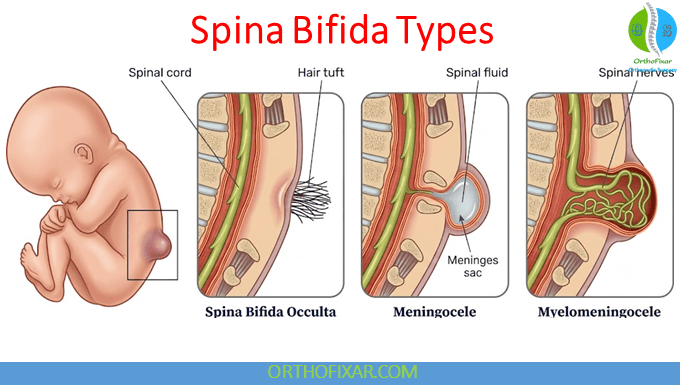
Types of Spina Bifida
- Spina bifida occulta – often no visible symptoms; may be discovered incidentally.
- Meningocele – the meninges protrude but the spinal cord is usually normal.
- Myelomeningocele – the most severe form; spinal cord and nerves are exposed.
Common Symptoms in Adults
Not all adults with spina bifida experience the same symptoms, but several patterns emerge over time. The type and severity depend on the level of the spinal defect and any secondary conditions such as Chiari malformation or tethered cord syndrome.
Neurological Changes
Numbness, tingling, or weakness in the legs may slowly increase. Some adults report a loss of sensation that makes it harder to detect injuries or pressure sores.
- Reduced lower‑limb strength
- Changes in bladder or bowel control
- Worsening balance or coordination
Pain and Discomfort
Chronic back pain is common, especially if the spinal cord is tethered. Adults with a history of multiple surgeries may experience scar‑related pain or muscle spasms.
- Lower back pain that worsens with activity
- Leg pain (sciatic‑type) or burning sensations
- Joint pain from abnormal gait or wheelchair use
Bladder and Bowel Issues
Most adults with myelomeningocele use a catheter or have a bowel program. Over time, the muscles of the bladder may become less compliant, increasing the risk of urinary tract infections.
- Frequent UTIs
- Leakage or inability to empty fully
- Constipation or fecal incontinence
Potential Complications to Watch For
Adults with spina bifida are at higher risk for several health problems that require proactive monitoring. Early detection can prevent serious disability.
Pressure Sores (Pressure Injuries)
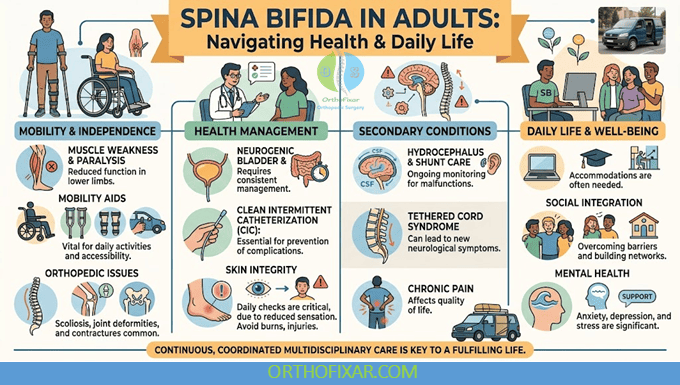
Reduced sensation in the lower body means that a small cut or prolonged sitting can lead to a sore that might not be felt until it is deep. Adults who use wheelchairs should inspect their skin daily.
- Check heels, buttocks, and back of the head daily
- Use pressure‑relieving cushions
- Learn to reposition every 15–30 minutes
Latex Allergy
Many individuals with spina bifida develop an allergy to latex (natural rubber) because of repeated surgical exposure during childhood. This can range from mild rashes to life‑threatening anaphylaxis.
- Use latex‑free gloves, catheters, and medical supplies
- Inform all healthcare providers about the allergy
- Carry an epinephrine auto‑injector if prescribed
Osteoporosis and Fractures
Low weight‑bearing activity and sometimes poor nutrition lead to reduced bone density. Adults with spina bifida are more likely to break a leg or hip from a minor fall.
- Get a DEXA scan for bone density
- Ensure adequate vitamin D and calcium intake
- Consider weight‑bearing exercise if possible
| Complication | Risk Factors | Prevention Strategy |
|---|---|---|
| Pressure sores | Numbness, prolonged sitting | Daily skin checks, pressure cushions |
| Latex allergy | Multiple surgeries | Latex‑free supplies |
| Osteoporosis | Non‑ambulatory status, low vitamin D | Bone density scan, supplements |
| Urinary tract infections | Catheter use, incomplete emptying | Clean technique, adequate fluid intake |
| Tethered cord syndrome | Previous surgery, scar tissue | MRI if symptoms change |
Daily Care and Management Strategies
Managing spina bifida in adults requires a consistent routine that addresses bladder, bowel, skin, and mobility. A team approach—often involving a urologist, neurologist, physical therapist, and primary care doctor—is ideal.
Bladder Management
Clean intermittent catheterization (CIC) remains the gold standard. Adults may need to catheterize every 4–6 hours. Medications like oxybutynin or mirabegron can help relax the bladder muscle.
- Use a new catheter each time (or properly cleaned reusable ones)
- Drink enough water to flush bacteria
- Watch for signs of infection: fever, cloudy urine, back pain
Bowel Program
A consistent bowel routine can prevent accidents and constipation. Many adults use digital stimulation, suppositories, or enemas at the same time every day.
- Choose a time after a meal to use the gastrocolic reflex
- Stay hydrated and eat fiber‑rich foods
- Consider a transanal irrigation system if simple methods fail
Mobility and Exercise
Even adults who use a wheelchair should perform range‑of‑motion exercises to prevent contractures. Swimming and hand‑cycling are excellent low‑impact options.
- Stretch hamstrings and hip flexors daily
- Use assistive devices (walkers, crutches) if they reduce fall risk
- Join adapted sports groups for social connection
“I learned the hard way that skipping my bowel program for two days meant a week of misery. Routine is what keeps me healthy.”
Medical Treatments and Emerging Options
While there is no cure for spina bifida, several treatments can improve quality of life. Tethered cord release surgery, shunting for hydrocephalus, and bladder augmentation are still relevant into adulthood.
Surgical Interventions
Some adults develop a secondary tethering of the spinal cord (scar tissue pulling on the nerves). Surgery can relieve pain and prevent further neurological decline.
- Indications: new weakness, worsening bladder control, back pain
- Recovery usually includes several weeks of limited activity
- Not every tethered cord needs surgery
Medication Management
Pain (neuropathic) often responds to gabapentin or pregabalin. Overactive bladder can be treated with anticholinergics. Antibiotics are used only for confirmed infections, not for prophylaxis.
- Keep a list of all medications and doses
- Review with a pharmacist for interactions
- Never take muscle relaxants without consulting your doctor
Lifestyle Adjustments and Independence
Many adults with spina bifida live independently, work, and have families. Success often depends on adaptive equipment, home modifications, and a strong support network.
Home and Work Adaptations
- Wider doorways for wheelchair access
- Roll‑in shower or transfer bench
- Ergonomic desk setup for computer work
- Voice‑activated technology to reduce hand strain
Driving and Transportation
- Hand controls for driving
- Wheelchair‑accessible vehicles (vans with ramps)
- Public transit paratransit services
Emotional and Social Support
Depression and anxiety are more common in adults with chronic conditions. Connecting with peer groups (online or in‑person) that focus on spina bifida in adults can reduce isolation.
- Join a local or virtual spina bifida support group
- Talk to a therapist experienced with disability
- Educate friends and partners about your needs
Living with spina bifida as an adult means adapting to changes that happen over decades. With good self‑care, a trusted medical team, and realistic adjustments, many people lead full, active lives. The key is to stay informed, ask questions, and never assume that a new symptom is just “part of the condition” without checking it out.
Frequently Asked Questions
Does spina bifida get worse as you age?
For many adults, the condition itself does not progress, but secondary issues like tethered cord, arthritis, and decreased muscle strength can make symptoms feel worse. Regular monitoring helps catch changes early.
Can an adult with spina bifida have children?
Yes. Many women with spina bifida have successful pregnancies, though they are considered high‑risk and require care from a maternal‑fetal medicine specialist. Men with spina bifida can father children, though fertility may be affected if nerve damage interferes with ejaculation.
What is the life expectancy for adults with spina bifida?
With modern medical care, most adults with spina bifida live into their 60s and beyond. The most common causes of early mortality are preventable: infections, kidney failure, and complications from pressure sores.
How does tethered cord syndrome affect adults?
A tethered cord can cause new or worsening back pain, leg weakness, changes in bladder control, and sensory loss. It can occur years after the original repair and is diagnosed by MRI. Surgical release may be recommended.
Do adults need to see a specialist for spina bifida?
Yes. A multidisciplinary clinic (often called a spina bifida or spinal defects clinic) that treats adults is ideal. If one is not available, a neurologist or a physiatrist with experience in congenital spinal conditions is a good option.
What mental health challenges are common?
Anxiety about health changes, social isolation, depression, and body image issues are frequently reported. Counseling and peer support groups specifically for adults with spina bifida can be very helpful.
Can you develop a latex allergy as an adult?
Yes. Even if you did not have a reaction in childhood, repeated exposure to latex gloves or catheters can trigger an allergy at any age. Switching to latex‑free products is the safest approach.
How do you prevent urinary tract infections?
Drink plenty of water, catheterize on schedule using clean technique, and avoid holding urine too long. Some adults benefit from a daily low‑dose antibiotic or cranberry supplements, but this should be discussed with a urologist.
Is it safe to exercise with spina bifida?
Absolutely, with the right precautions. Low‑impact activities like swimming, hand‑cycling, and yoga are safe and beneficial. Avoid contact sports or any activity that could cause a fall if you have fragile bones or poor balance.
What should I tell a new doctor about my spina bifida?
Provide a summary of your type of spina bifida, any surgeries you have had (including shunts or tethered cord releases), your bladder and bowel regimen, allergies (especially to latex), and a list of current medications. This helps the doctor understand your baseline and avoid unnecessary tests.