Discitis is an infection inside the disc space between the bones of the spine. It can cause severe back or neck pain, fever, and nerve symptoms, and it needs medical care quickly. This guide explains the common signs, how doctors diagnose it, treatment options, and what recovery may involve.
What Is Discitis?
Discitis means infection and inflammation of an intervertebral disc. The disc is the cushion that sits between the vertebrae, the bones of the spine. When bacteria or other germs reach the disc, they can damage the disc and spread to nearby bone.
Some doctors use the term spondylodiscitis when both the disc and the adjacent vertebra are involved. This is a more complete description of what is happening in many cases.
- Discitis is uncommon, but it is a serious spinal infection.
- It can develop slowly, so symptoms may be mistaken for a muscle strain.
- It may affect the cervical, thoracic, or lumbar spine.
- Early treatment can help prevent lasting spine damage and nerve injury.
Types of Discitis and How It Starts
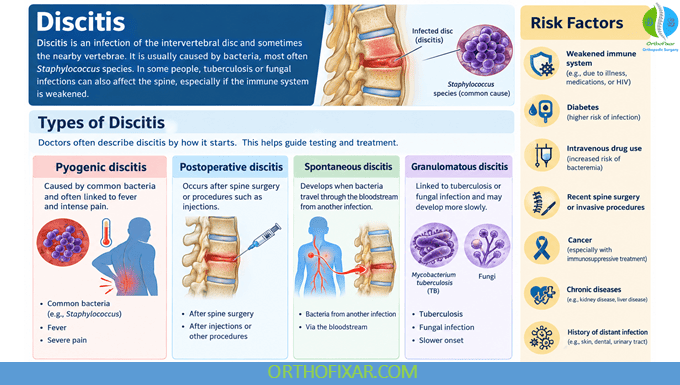
Discitis is usually caused by bacteria, most often Staphylococcus species. In some people, tuberculosis or fungal infections can also affect the spine, especially if the immune system is weakened.
Doctors often describe discitis by how it starts. This helps guide testing and treatment.
- Pyogenic discitis: caused by common bacteria and often linked to fever and intense pain.
- Postoperative discitis: occurs after spine surgery or procedures such as injections.
- Spontaneous discitis: develops when bacteria travel through the bloodstream from another infection.
- Granulomatous discitis: linked to tuberculosis or fungal infection and may develop more slowly.
Risk factors include recent spine surgery, bloodstream infection, IV drug use, diabetes, kidney failure, cancer treatment, and a weakened immune system. In older adults, discitis can sometimes occur without an obvious trigger.
Symptoms of Discitis
Discitis symptoms can vary. Some people feel very ill, while others mainly notice stubborn back pain. The pain is often worse at night or when the spine is moved.
- Deep, aching back or neck pain that does not improve with rest.
- Fever, chills, or night sweats.
- Pain that worsens with standing, walking, or bending.
- Muscle spasms near the spine.
- Stiffness that makes movement difficult.
- Numbness, weakness, or tingling in the arms or legs.
- Loss of bladder or bowel control in severe cases.
New back pain with fever is not something to wait out. Discitis can worsen over days or weeks, and early treatment matters.
Symptoms may appear gradually, which is why discitis can be mistaken for a disc injury or arthritis at first. If pain continues and you feel unwell, seek medical advice.
When to Seek Urgent Care
Some symptoms suggest a spinal infection or nerve compression. These need urgent medical attention, often in an emergency department.
- Back or neck pain with high fever or shaking chills.
- New weakness or numbness in the arms or legs.
- Difficulty walking or loss of balance.
- Loss of bladder or bowel control.
- Severe pain that gets worse despite rest and pain medicine.
- Back pain after spine surgery or a spinal injection, especially with fever.
If you have back pain plus fever, weakness, or bladder changes, do not drive yourself. Call emergency services or have someone take you to the hospital.
How Discitis Is Diagnosed
No single test confirms discitis on its own. Doctors combine the medical history, physical exam, blood tests, imaging, and sometimes a biopsy to make the diagnosis.
- Medical history: recent infections, spine procedures, IV drug use, and other health conditions.
- Physical exam: tenderness over the spine, limited movement, fever, and nerve testing.
- Blood tests: markers of inflammation such as CRP and ESR, plus blood cultures.
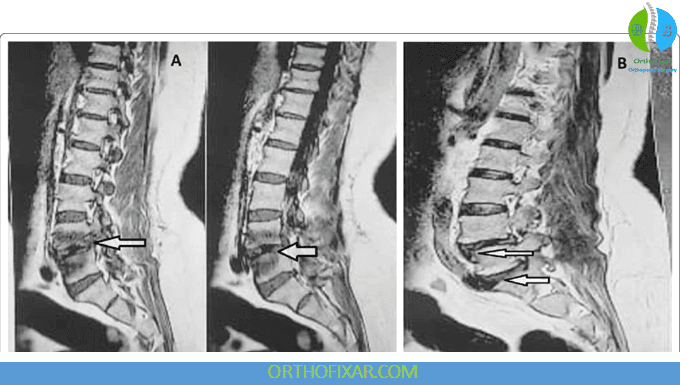
- Imaging: MRI is often the best test to show disc and bone infection.
- Biopsy: a sample of the disc or bone can identify the germ and guide antibiotic choice.
Common Tests and What They Check
| Test or Procedure | What It Checks | Why It Matters |
|---|---|---|
| MRI of the spine | Disc inflammation, bone involvement, abscess, and nerve compression | Helps confirm infection and show how much of the spine is affected |
| Blood cultures | Bacteria in the bloodstream | Can identify the germ without a biopsy in some cases |
| CRP and ESR blood tests | Inflammation levels | Helps support the diagnosis and track response to treatment |
| CT-guided biopsy | A tissue sample from the disc or vertebra | Gives the most specific information about the cause |
| X-ray | Bone changes and disc height loss | May be normal early, so a normal X-ray does not rule out discitis |
Treatment Options for Discitis
Treatment usually involves antibiotics, pain control, and close follow-up. The exact plan depends on the germ, the severity of infection, and whether nerves are compressed.
Many people need antibiotics through an IV at first. Later, they may switch to oral antibiotics. The full course can last several weeks or longer.
Antibiotics and Medicines
- IV antibiotics: often started in the hospital for severe infection.
- Oral antibiotics: may be used after IV treatment or for milder cases.
- Pain relievers: to manage pain and allow movement.
- Muscle relaxants: sometimes helpful for severe spasms.
- Anti-inflammatory medicines: used carefully and only as advised.
Surgery and Procedures
Surgery is not needed for every case, but it may be recommended when there is pressure on the spinal cord or nerves, a large abscess, spine instability, or failure of antibiotic treatment.
- Drainage: removes pus from an abscess.
- Debridement: removes infected tissue from the disc or bone.
- Spinal fusion: stabilizes the spine when bones are damaged.
- Biopsy: may also be part of the procedure to identify the germ.
Supportive Care
- A back brace may help support the spine and reduce pain.
- Physical therapy may begin after the infection is controlled.
- Good nutrition and blood sugar control support healing.
- Follow-up imaging and blood tests help confirm improvement.
Recovery and Outlook
Recovery from discitis takes time. Pain often improves before the infection is fully gone, so it is important to finish treatment and keep follow-up appointments.
- Antibiotic treatment may continue for weeks after you leave the hospital.
- Pain may improve gradually over weeks to months.
- Some people have lasting stiffness or mild pain.
- Nerve symptoms may recover slowly or may be permanent if damage was severe.
- Regular follow-up helps catch complications early.
Practical Tips for Daily Life
Living with discitis can be frustrating because rest alone does not cure it. These habits can make recovery safer and more comfortable.
- Take all antibiotics exactly as prescribed, even if you feel better.
- Keep gentle movement within your doctor’s advice.
- Use a brace if one was recommended for you.
- Avoid heavy lifting, twisting, and long periods of sitting without support.
- Ask for help with chores, driving, and childcare during severe pain.
- Track fever, new weakness, or numbness and report changes quickly.
Prevention and Risk Reduction
Not all cases of discitis can be prevented, but you can lower some risks. This is especially important after spine procedures or a bloodstream infection.
- Treat infections promptly, including urinary, skin, and dental infections.
- Follow wound care instructions after spine surgery or injections.
- Manage diabetes and other conditions that weaken immunity.
- Avoid sharing needles and seek help for substance use if needed.
- Tell your doctor about any prior spinal infection before future procedures.
Discitis is a serious spinal infection, but it is treatable when recognized early. The key is to take persistent back pain seriously, especially when it comes with fever, night sweats, or nerve symptoms. With the right tests, antibiotics, and follow-up, many people recover and return to their normal activities. If you are worried about your symptoms, contact a doctor rather than waiting for them to pass.
Frequently Asked Questions
Is discitis contagious?
Discitis itself is not spread from person to person. It develops when germs reach the disc space, often from the bloodstream or after a spine procedure.
Can discitis heal on its own?
No. Discitis usually needs antibiotic treatment. Waiting can allow the infection to spread to bone or nearby tissue and may increase the risk of nerve damage.
How long does discitis treatment last?
Antibiotic treatment often lasts several weeks. Some people need longer treatment, especially if the infection is severe, involves bone, or is caused by a hard-to-treat germ.
What is the most common symptom of discitis?
Severe back or neck pain is the most common symptom. Fever, night sweats, and pain that worsens with movement are also common.
Can discitis cause paralysis?
It can cause weakness, numbness, or paralysis if the infection or an abscess presses on the spinal cord or nerves. This is why nerve symptoms need emergency care.
How is discitis different from a herniated disc?
A herniated disc is a mechanical problem, while discitis is an infection. Discitis often causes fever, night sweats, and constant pain, and it shows different changes on MRI.
Do I need surgery for discitis?
Not always. Many people improve with antibiotics and supportive care. Surgery may be needed for a large abscess, spine instability, severe nerve compression, or when antibiotics are not working.
Can discitis come back?
It can return, especially if the original infection was not fully treated or if risk factors remain. Follow-up appointments and completing antibiotics help lower this risk.
What should I avoid during recovery?
Avoid heavy lifting, twisting, contact sports, and long car rides or sitting positions that increase pain. Follow your doctor’s advice about braces, movement, and physical therapy.
When can I return to work or exercise?
Returning to work and exercise depends on your symptoms, the spine level involved, and whether you had surgery. Ask your care team for a safe plan, and increase activity gradually.