Shoulder stiffness at night usually comes down to prolonged pressure on the joint, a sleeping position that twists the shoulder, or an underlying condition that reduces flexibility. The encouraging part is that small, consistent changes to your evening routine, sleep setup, and daytime habits often make morning stiffness noticeably better. This guide walks through five practical ways to reduce night-time shoulder stiffness, explains why the shoulder stiffens overnight, and covers the warning signs that mean you should see a doctor rather than manage it alone.
Why Your Shoulder Stiffens Overnight
Stiffness after sleep is common because the shoulder is the most mobile joint in the body. It is supported mainly by muscles, tendons, and ligaments rather than a deep, stable socket. When you hold one position for hours, circulation slows and the joint capsule and surrounding soft tissues become less pliable. That is why the first movements of the day often feel tight and reluctant.
Several everyday factors make this worse:
- Sleeping on the affected side compresses the joint and can trap soft tissue against the mattress.
- Stomach sleeping forces one or both arms overhead or under the chest, rotating the shoulder into an awkward position.
- A pillow that is too high or too flat leaves the neck and shoulder out of alignment.
- Low daytime activity allows the joint capsule to tighten gradually.
- Repetitive overhead work or heavy lifting irritates tendons that then stiffen during rest.
- Muscle tension from stress keeps the shoulders raised and tight, which can carry into sleep.
Occasionally, night shoulder stiffness is a symptom of something more than a poor sleeping position. Bone and joint conditions such as arthritis, rotator cuff problems, frozen shoulder, and metabolic bone diseases can all cause stiffness that is worse at rest. One example is osteomalacia, a condition in which bones soften because of poor mineralisation, usually related to vitamin D deficiency. It commonly causes dull, aching bone pain and muscle weakness, and discomfort can feel worse at night or after rest. If your stiffness comes with widespread bone pain, muscle weakness, or a known nutritional deficiency, mention it to a doctor rather than assuming it is only a sleep problem.
1. Adjust Your Sleeping Position and Pillow Setup
Position is the single biggest lever you have. The goal is to keep your neck and shoulder in a neutral line and take direct pressure off the sore joint.
Best positions for a stiff shoulder
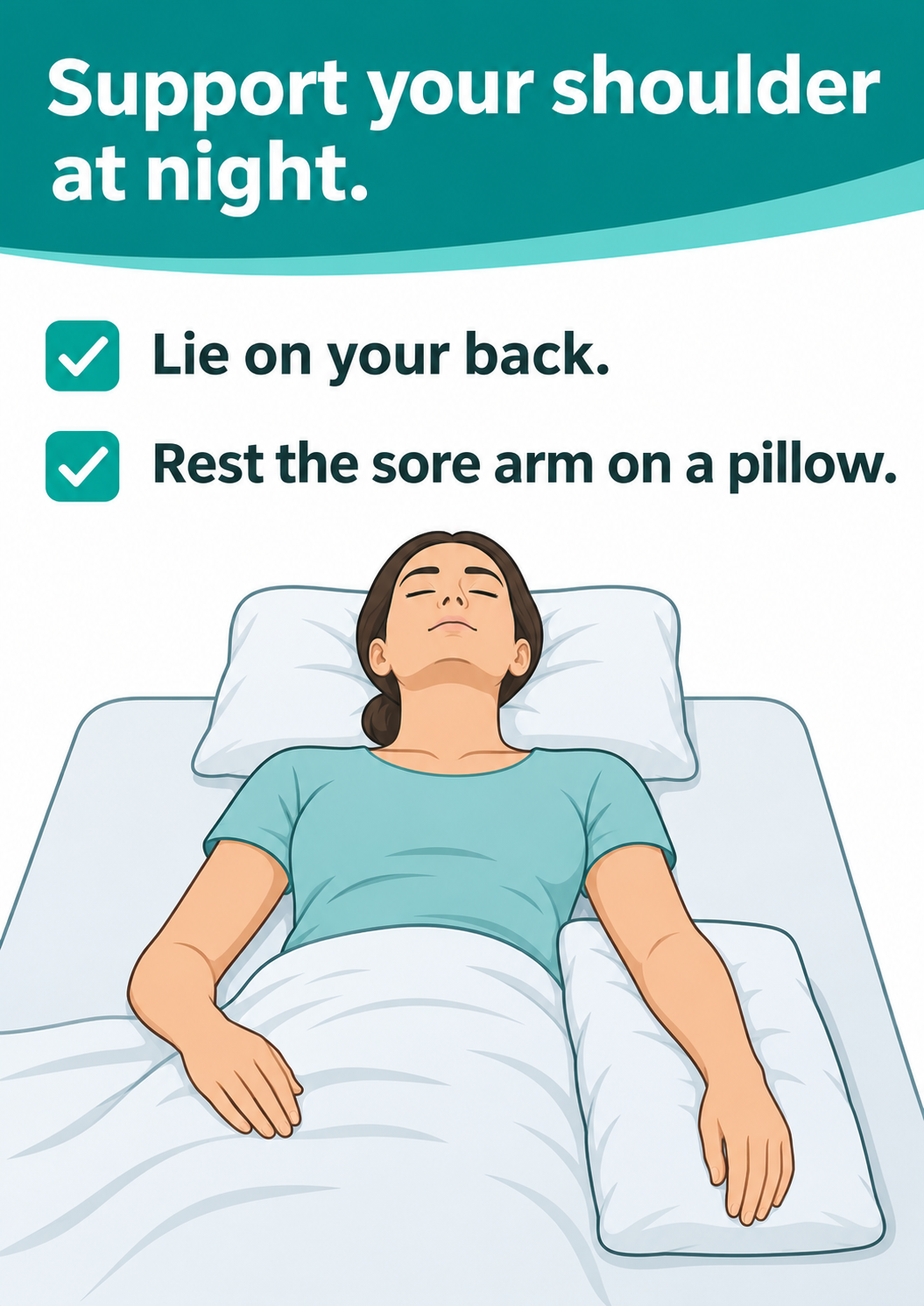
- Back sleeping: lie on your back with a small pillow under the affected arm to support it at shoulder height.
- Side sleeping on the opposite side: hug a firm pillow to your chest so the affected arm rests on it instead of dropping across your body.
- Slightly reclined sleeping: a wedge pillow that raises your upper body a little can reduce pressure on the shoulder for some people.
Pillow changes that make a difference
- Choose a pillow that fills the gap between your neck and the mattress so your head is not tilted up or down.
- Use a second pillow to support the affected arm rather than letting it hang.
- Avoid stacking several soft pillows, which push the head forward and round the shoulders.
- Replace pillows that have lost their shape; a flattened pillow offers no support.
Give any new setup at least a week before judging it. Small changes often feel strange on the first night but pay off once your body adapts.
2. Do Gentle Evening Mobility Work
Short, gentle movement before bed keeps the joint lubricated and reduces the tightness that builds during sleep. The aim is not a workout; it is a few minutes of controlled motion that leaves the shoulder feeling looser, not tired.
A simple five-minute evening routine
- Shoulder circles: make slow, small circles forward for ten repetitions, then backward.
- Pendulum swings: lean forward slightly and let the arm hang, swinging it gently in small circles.
- Wall walks: walk your fingers up a wall to a comfortable height and back down, five to eight times.
- Cross-body stretch: bring the affected arm across your chest and hold gently for 20 to 30 seconds.
- Doorway stretch: place your forearm on a door frame and lean forward slightly to open the chest.
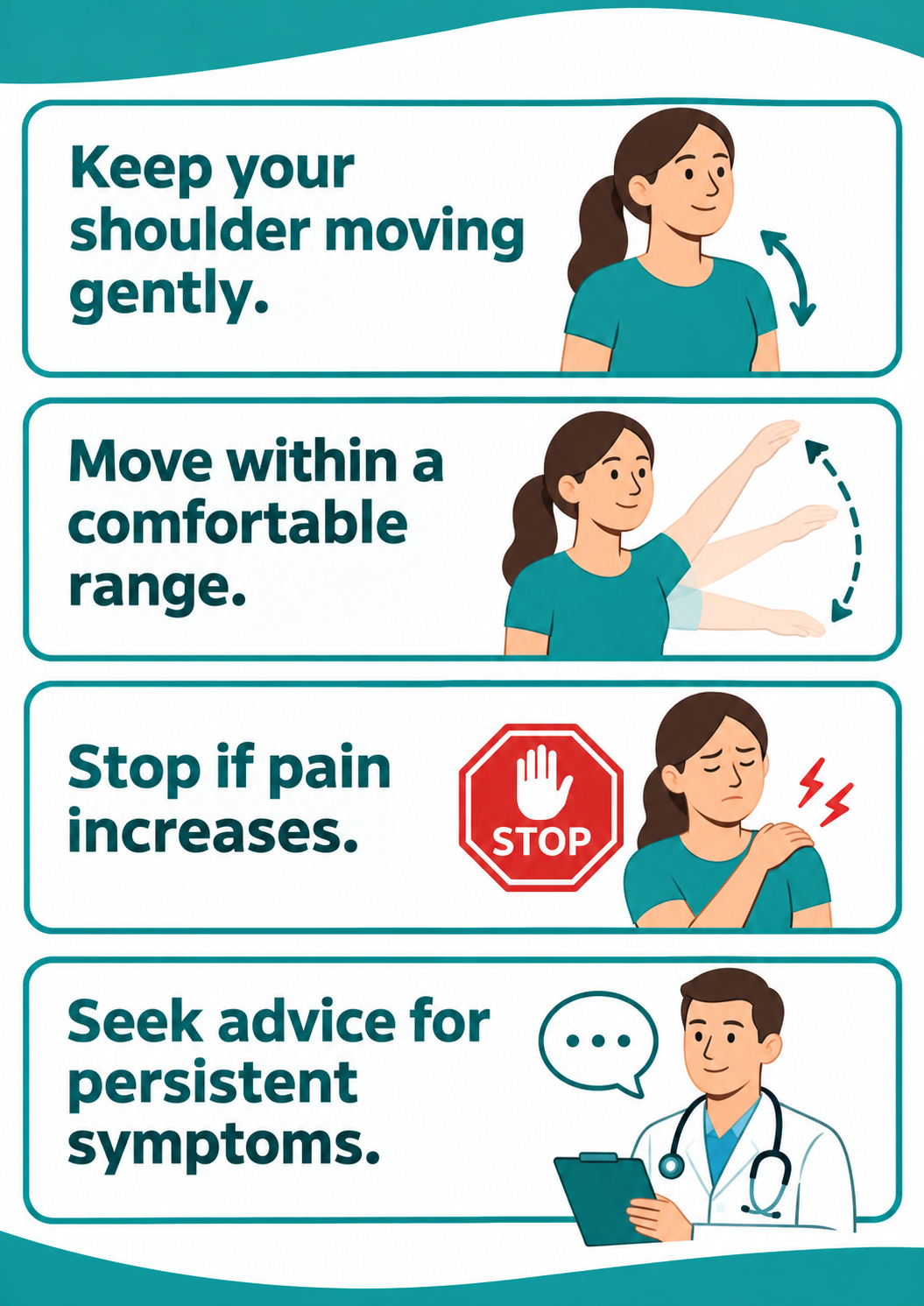
Move within a comfortable range. A mild stretch is fine; sharp pain is a signal to stop. If you have had a shoulder injury or surgery, check with a physiotherapist before starting new exercises. Organisations such as the American Physical Therapy Association provide general information on finding a qualified physiotherapist and understanding what physical therapy involves.
3. Apply Heat Before Bed and Manage Inflammation
Warmth relaxes muscle tissue and increases blood flow, which can ease stiffness that has built up during the day. A warm shower, a heat pack, or a wheat bag for 10 to 15 minutes before bed is a simple habit that many people find helpful.
- Wrap heat packs in a cloth to avoid skin irritation.
- Do not fall asleep with a heat pack on; remove it before you settle down.
- If your shoulder feels hot, swollen, or recently injured, use a cold pack instead of heat.
- Keep the room at a comfortable temperature; cold bedrooms make muscles tighten.
Over-the-counter pain relief may help some people, but check with a pharmacist or doctor first, especially if you take other medicines or have a long-term condition. Persistent night pain that disturbs your sleep is a reason to seek medical advice rather than rely on painkillers indefinitely.
4. Build Shoulder-Friendly Habits During the Day
Night stiffness often starts with daytime strain. How you sit, lift, and carry things during the day affects how the shoulder feels at night.
Everyday habits to review
- Keep your desk, keyboard, and mouse at a height that lets your shoulders relax rather than hunch.
- Take a short break every 30 to 45 minutes to roll your shoulders and stretch.
- Carry heavy bags on the forearm or in a backpack rather than hanging weight from one shoulder.
- Lift with your legs and keep loads close to your body to reduce shoulder strain.
- Avoid resting on the affected shoulder during the day, including on the sofa.
If you exercise, warm up properly and avoid sudden increases in overhead activity such as swimming, painting, or racket sports. Muscles that are overloaded one day often feel stiff the next morning. Regular, moderate movement keeps the joint mobile and the surrounding muscles strong, which supports better sleep comfort over time.
5. Address the Underlying Cause
If stiffness keeps returning despite good sleep habits, it is worth looking at why. Some causes are mechanical, but others are medical and need proper assessment.
Common causes of persistent night shoulder stiffness
| Cause | Typical pattern | What usually helps |
|---|---|---|
| Poor sleeping position | Stiffness on waking that eases within an hour | Pillow and position changes |
| Rotator cuff irritation | Pain when lifting the arm, worse at night | Rest, physiotherapy, medical assessment |
| Frozen shoulder | Progressive loss of movement in all directions | Medical diagnosis and guided exercise |
| Arthritis | Stiffness after rest, sometimes with swelling | Medical assessment and treatment plan |
| Osteomalacia or vitamin D deficiency | Dull bone pain, muscle weakness, discomfort at night | Medical testing and treatment of the underlying cause |
Osteomalacia is diagnosed through medical tests, typically including blood tests and sometimes imaging. It is not something you can confirm yourself from symptoms alone. If you suspect a nutritional or bone-related cause, the NHS overview of osteomalacia explains symptoms and when to seek help, and the National Institutes of Health vitamin D fact sheet covers recommended intake and food sources.
When to See a Doctor
Most occasional night stiffness responds to the steps above within a few weeks. Some situations need professional assessment sooner.
- Pain that wakes you repeatedly or stops you sleeping.
- Stiffness that lasts more than an hour every morning.
- Weakness, numbness, or tingling in the arm or hand.
- Visible swelling, redness, or warmth around the joint.
- Difficulty lifting the arm or reaching overhead.
- Widespread bone pain, muscle weakness, or a history of poor diet or limited sun exposure.
Book an appointment with your doctor if any of these apply. Early assessment makes it easier to identify treatable causes and start the right plan.
A Realistic Evening Routine That Works
Putting the pieces together matters more than any single tip. A simple routine might look like this:
- Finish overhead tasks and heavy lifting at least an hour before bed.
- Take a warm shower or apply a heat pack for 10 minutes.
- Do five minutes of gentle shoulder mobility exercises.
- Set up your pillow and arm support before lying down.
- Sleep on your back or on the opposite side, not on the sore shoulder.
Track how your shoulder feels each morning for a couple of weeks. That record helps you see which changes help and gives your doctor useful information if the problem continues.
Conclusion
Night shoulder stiffness is usually manageable with better sleeping positions, supportive pillows, gentle evening movement, warmth, and attention to daytime habits. If stiffness keeps returning or comes with bone pain, weakness, or other warning signs, get it checked. A short conversation with a doctor can rule out causes such as osteomalacia and point you toward the right treatment.
Frequently Asked Questions
Why is my shoulder stiffer at night than during the day?
Holding one position for hours reduces blood flow and lets the joint capsule and muscles tighten. Movement during the day keeps the joint loose, so stiffness is usually most noticeable on waking.
What is the best sleeping position for a stiff shoulder?
Sleeping on your back with a small pillow under the affected arm is often the most comfortable. If you sleep on your side, lie on the opposite side and hug a pillow so the sore arm is supported.
Can a bad pillow cause shoulder stiffness?
Yes. A pillow that is too high, too flat, or too soft can tilt the neck and round the shoulders, which strains the joint overnight. A pillow that keeps your head and neck in line with your spine usually helps.
Should I stretch a stiff shoulder in the morning?
Gentle movement after waking is usually helpful, but avoid forcing a cold, stiff joint into a deep stretch. Start with small circles and easy range-of-motion exercises, then stretch once the shoulder feels warmer.
Can osteomalacia cause shoulder stiffness at night?
Osteomalacia can cause dull bone pain and muscle weakness that may feel worse at night or after rest. It is diagnosed through medical tests, so see a doctor if you have widespread bone pain or weakness rather than assuming it is a sleep issue.
How long should I try home remedies before seeing a doctor?
If stiffness does not improve after two to three weeks of consistent position changes, gentle exercise, and good sleep habits, or if it is getting worse, arrange a medical assessment.
Does heat or ice work better for night shoulder stiffness?
Heat is generally better for stiffness and muscle tightness because it relaxes tissue and improves blood flow. Ice is more useful for recent injuries, swelling, or a hot, inflamed joint.
Can stress make shoulder stiffness worse?
Stress often leads to tense, raised shoulders and shallow breathing, which can increase muscle tightness. Relaxation techniques and short movement breaks during the day can help reduce that tension.
Is it normal to wake up with a stiff shoulder every day?
Occasional stiffness is common, but daily stiffness that lasts more than an hour or comes with pain, weakness, or reduced movement is not something to ignore. It is worth discussing with a doctor.
Can exercise during the day prevent night shoulder stiffness?
Regular, moderate movement keeps the shoulder joint mobile and the surrounding muscles strong. Avoid sudden increases in overhead activity, and warm up properly before exercise to reduce strain.