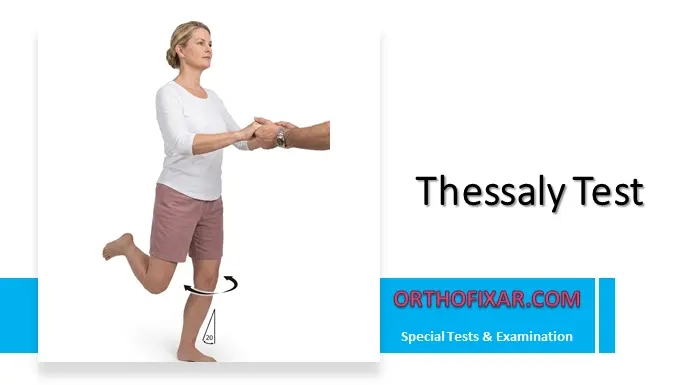
Thessaly test is used to detect lateral or medial meniscal tears of the knee joint. It is considered one of the most reliable dynamic meniscus tear because it reproduces rotational loading across the knee joint under weight-bearing conditions.
What Is the Thessaly Test?
The Thessaly test is a weight-bearing rotational test designed to identify tears of the knee meniscus. It evaluates the integrity of the medial and lateral menisci by reproducing stress transmission through the tibiofemoral joint.
Unlike static meniscal tests, the Thessaly maneuver simulates normal physiological loading and rotational forces experienced during daily activities and sports.
Clinical Purpose
The test is commonly performed to evaluate:
- Suspected medial meniscus tear
- Suspected lateral meniscus tear
- Mechanical knee symptoms
- Locking or catching sensation
- Joint line pain after twisting injuries
- Sports-related knee trauma
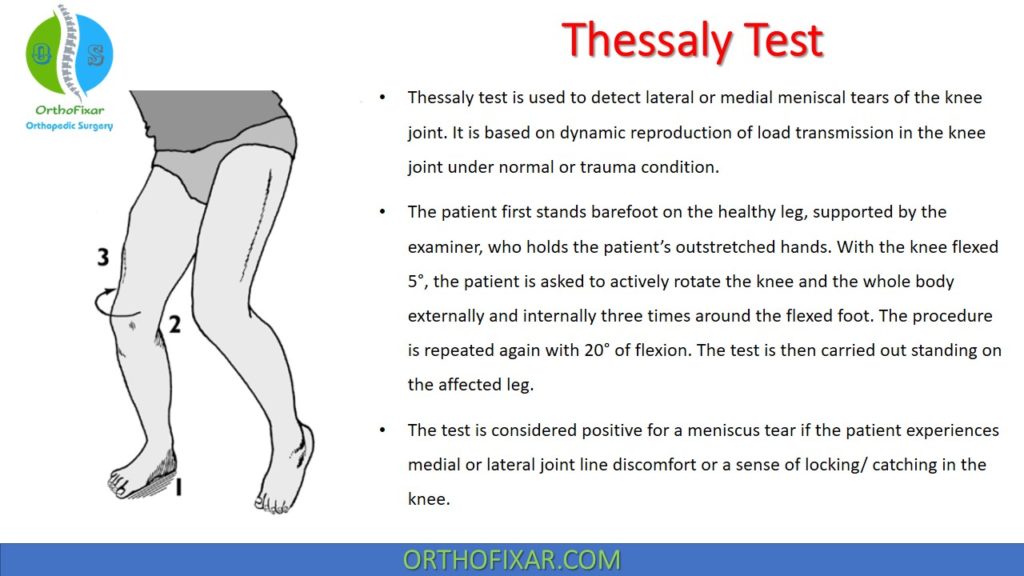
Anatomy of the Knee Menisci
The knee contains two crescent-shaped fibrocartilaginous structures:
- Medial meniscus
- Lateral meniscus
These structures lie between the femoral condyles and tibial plateaus and serve several important biomechanical functions.
Functions of the Menisci
The menisci contribute to:
- Load transmission
- Shock absorption
- Joint lubrication
- Nutritional support of articular cartilage
- Secondary knee stability
- Guidance of knee movement
- Prevention of excessive tibial translation
The posterior horn of the medial meniscus is particularly important in resisting anterior tibial translation.
Blood Supply of the Meniscus
The vascular supply of the meniscus arises from the:
- Medial genicular arteries
- Lateral genicular arteries
- Middle genicular arteries
Vascular Zones
- Outer 25–30% of the meniscus is vascularized
- Inner portion is relatively avascular
This vascular distribution is clinically important because healing potential is significantly greater in the peripheral vascular zone.
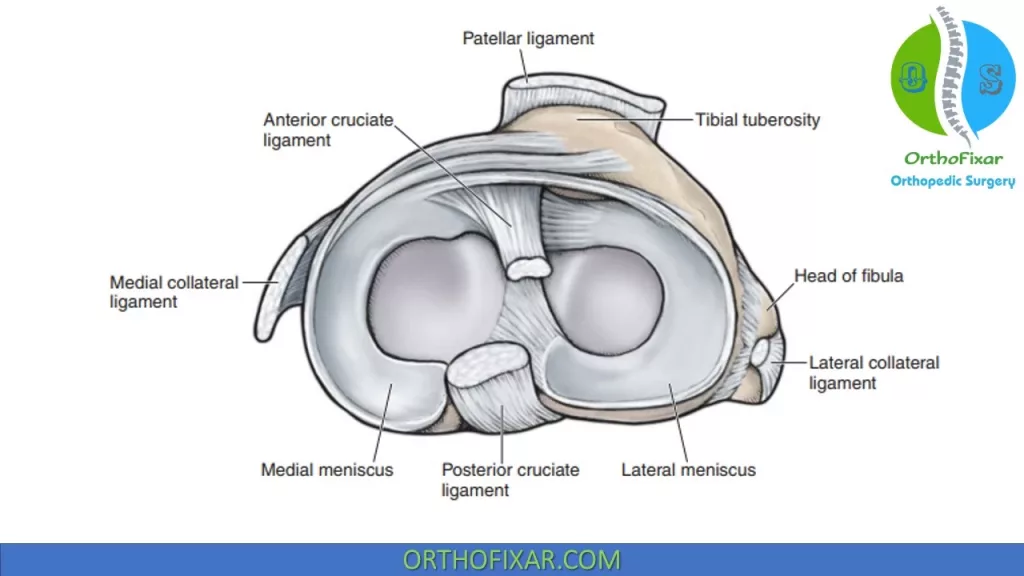
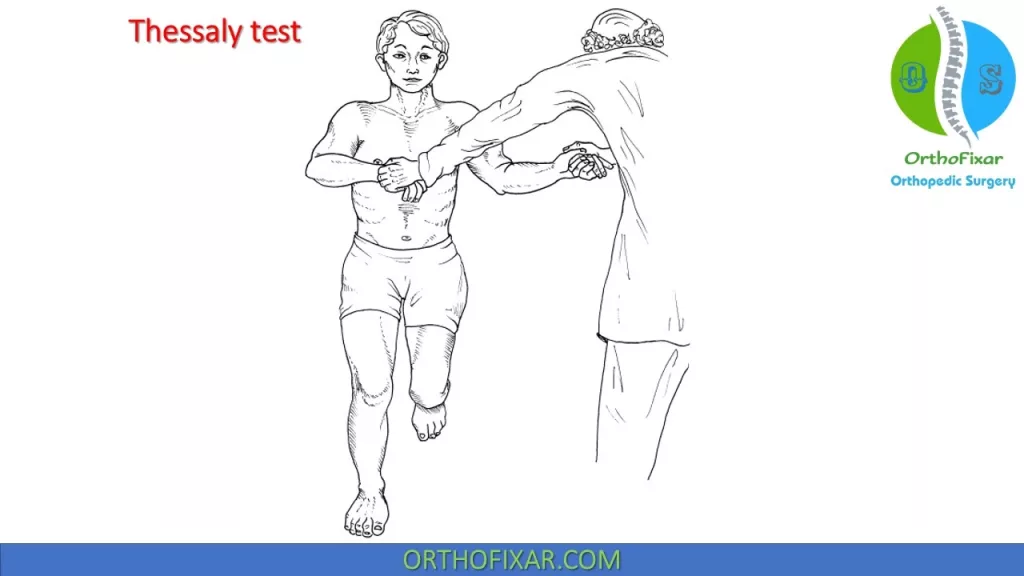
How to Perform the Thessaly Test
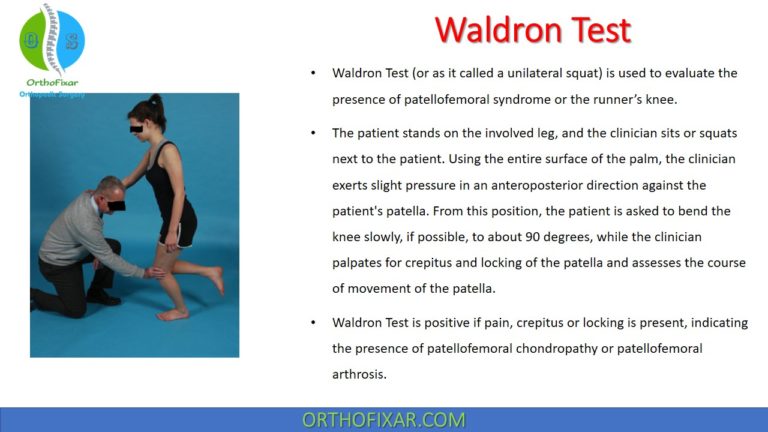
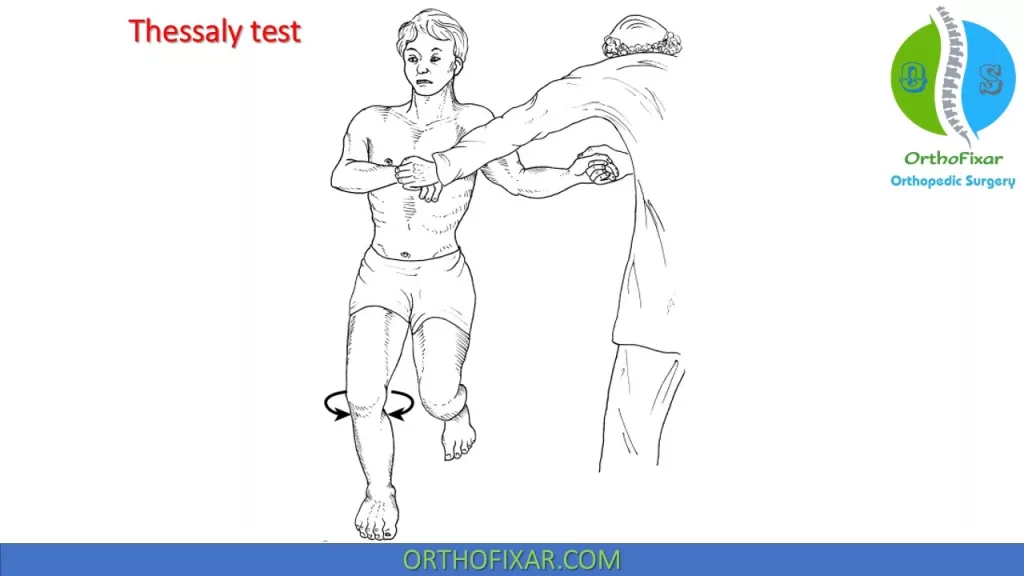
- The patient first stands barefoot on the healthy leg, supported by the examiner, who holds the patient’s outstretched hands.
- The patient first stands on the unaffected leg to become familiar with the maneuver.
- With the knee flexed 5 degrees, the patient is asked to actively rotate the knee and the whole body externally and internally three times around the flexed foot.
- The procedure is repeated again with 20 degrees of flexion.
- The test is then carried out standing on the affected leg.
What does a positive Thessaly test mean?
The Thessaly test is considered positive when the patient experiences:
- Medial joint line pain
- Lateral joint line pain
- Locking sensation
- Catching sensation
- Knee discomfort during rotation
Symptoms reproduced at 20° of knee flexion are particularly suggestive of a meniscal tear.
See Also: Knee Meniscus Tear
Is the Thessaly test accurate?
A Retrospective cohort study by Bradley K Harrison to assess the validity of the Thessaly test for detecting meniscal tears of the knee by comparing arthroscopic findings to a clinical examination finding, he found that the Sensitivity & Specificity of the test was:
- Sensitivity: 90.3 %
- Specificity: 97.7 %
Another study by Theofilos Karachalios found that the Thessaly test at 20 degrees of knee flexion had a high diagnostic accuracy rate of 94 % in the detection of tears of the medial meniscus and 96 % in the detection of tears of the lateral meniscus, and it had a low rate of false-positive and false-negative recordings.
A study by B Shekarchi to compare Thessaly Test with Joint Line Tenderness and McMurray Test in the Diagnosis of Meniscal Tears, he conclude that The Thessaly can be used to screen for medial meniscus tears. McMurray and joint-line tenderness should be used for suspected medial meniscus tears. For lateral meniscus, McMurray is appropriate for screening and all the tests are useful in clinic.
The test has a high degree of diagnostic accuracy when carried out at 20 degrees of flexion.
Limitations of the Thessaly Test
Despite its usefulness, the test has several limitations.
Potential Limitations
- Difficult in acute painful knees
- Challenging in elderly patients with balance problems
- Less reliable with severe osteoarthritis
- May provoke pain from other knee conditions
- Requires patient cooperation
Contraindications and Precautions
Avoid or use caution when performing the test in patients with:
- Acute knee instability
- Severe pain
- Recent fractures
- Advanced osteoarthritis
- Inability to bear weight
- Significant balance impairment
Thessaly Test vs McMurray Test
| Feature | Thessaly Test | McMurray Test |
|---|---|---|
| Weight-bearing | Yes | No |
| Dynamic rotation | Yes | Limited |
| Patient position | Standing | Supine |
| Functional loading | High | Moderate |
| Diagnostic accuracy | High | Moderate to high |
Conclusion
The Thessaly test is a highly valuable clinical examination maneuver for detecting medial and lateral meniscal tears. Its weight-bearing dynamic design closely reproduces functional knee biomechanics, making it one of the most reliable bedside orthopedic tests for meniscal pathology.
Evidence from multiple studies demonstrates high sensitivity, specificity, and diagnostic accuracy, especially when performed at 20 degrees of knee flexion. Despite some limitations, the Thessaly test remains an essential component of knee examination in orthopedic and sports medicine practice.
Key Points
- Thessaly test evaluates medial and lateral meniscal tears
- Performed in standing weight-bearing position
- Most accurate at 20° knee flexion
- Positive test causes joint line pain or locking
- High sensitivity and specificity reported in studies
- Useful in orthopedic, sports medicine, and physiotherapy settings
Reference & More
- Harrison BK, Abell BE, Gibson TW. The Thessaly test for detection of meniscal tears: validation of a new physical examination technique for primary care medicine. Clin J Sport Med. 2009 Jan;19(1):9-12. doi: 10.1097/ JSM.0b013e31818f1689. PMID: 19124977. Pubmed
- Karachalios T, Hantes M, Zibis AH, Zachos V, Karantanas AH, Malizos KN. Diagnostic accuracy of a new clinical test (the Thessaly test) for early detection of meniscal tears. J Bone Joint Surg Am. 2005 May;87(5):955-62. doi: 10.2106/ JBJS.D.02338. PMID: 15866956. Pubmed
- Shekarchi B, Panahi A, Raeissadat SA, Maleki N, Nayebabbas S, Farhadi P. Comparison of Thessaly Test with Joint Line Tenderness and McMurray Test in the Diagnosis of Meniscal Tears. Malays Orthop J. 2020 Jul;14(2):94-100. doi: 10.5704/MOJ.2007.018. PMID: 32983383; PMCID: PMC7513660. Pubmed
- Clinical Tests for the Musculoskeletal System 3rd Edition.
- Sarvdeep S. Dhatt, Sharad Prabhakar – Handbook of Clinical Examination in Orthopedics.
- Campbel’s Operative Orthopaedics 12th edition Book.
- Ronald McRae – Clinical Orthopaedic Examination 6th Edition Book.