You can keep lifting heavy objects with knee problems, but how you lift matters more than the weight itself. Poor lifting mechanics send force through the kneecap and the soft tissue around the joint, and that stress accumulates over time. This guide explains how to protect your knees while lifting, covering stance, hip mechanics, load management, warning signs, and how a condition like osteomalacia changes the picture.
Why Heavy Lifting Stresses the Knees
Your knee sits between two long levers: the thigh bone above and the shin bone below. When you bend and lift, the quadriceps muscle pulls on the kneecap, which presses against the thigh bone. Load travels through that joint every time you squat, kneel, or rise.
Two habits make this worse. First, bending mostly at the knees instead of the hips pushes the kneecap hard against the femur. Second, letting the knees drift inward, a pattern called knee valgus, concentrates force on the inner joint and the ligaments that stabilize it.
Weak hip and glute muscles add to the problem. When the hips cannot control the thigh, the knee takes over work it was not designed to do. That is why knee protection during lifting is really a whole-leg and hip project.
The Core Lifting Technique That Spares Your Knees
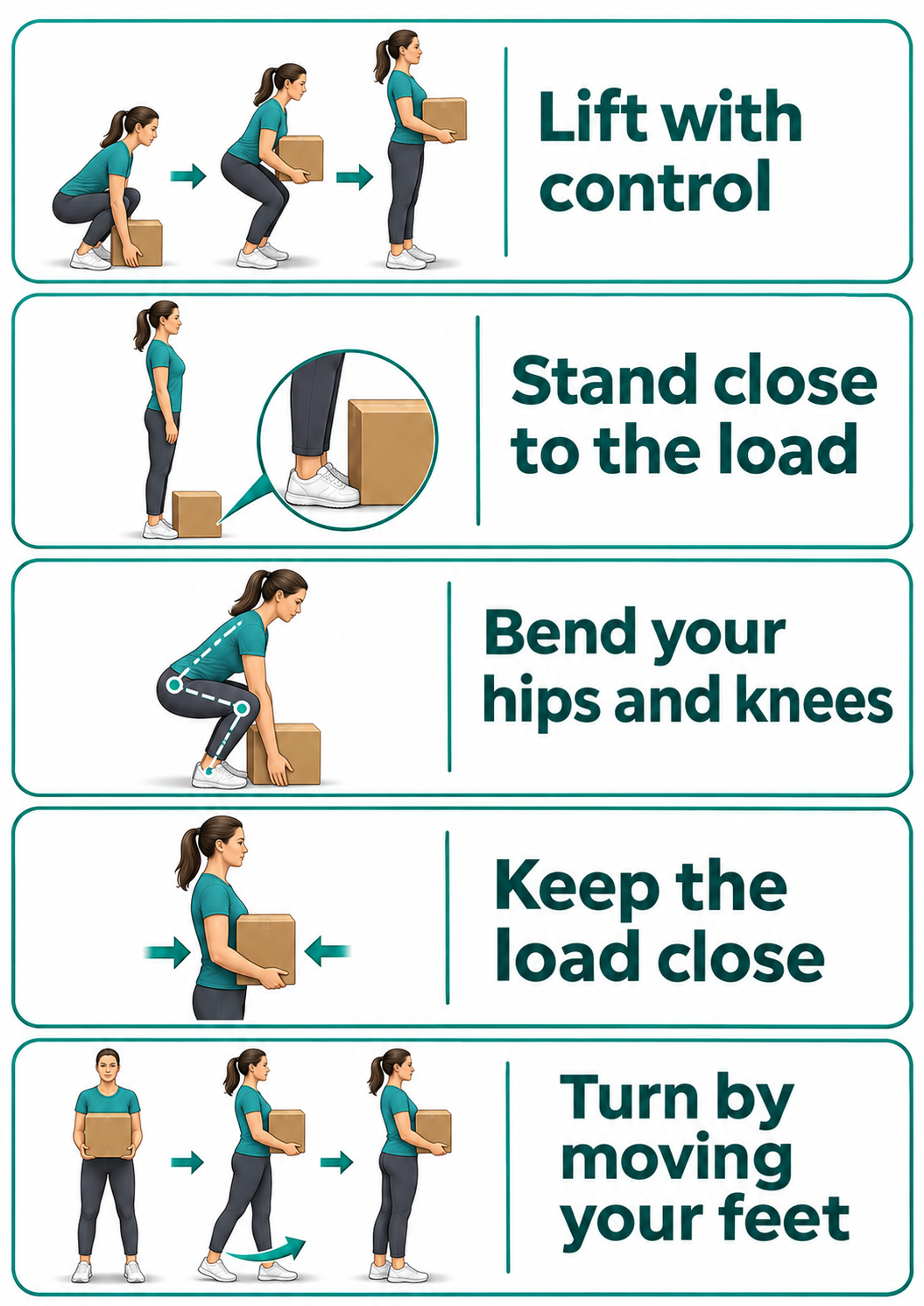
The safest lift loads the hips and keeps the knees tracking over the toes. Think of sitting back rather than dropping straight down. The following sequence works for boxes, furniture, grocery crates, and most everyday loads.
- Stand close to the object so it sits between your feet, not far in front.
- Set your feet about shoulder-width apart with toes turned slightly out.
- Push your hips back first, then bend your knees as you lower.
- Keep your chest lifted and your spine long rather than rounding forward.
- Grip the load firmly and pull it close to your body before you stand.
- Drive through your whole foot, pressing the floor away, and squeeze your glutes as you rise.
- Keep your knees pointing in the same direction as your toes throughout.
If you cannot keep your back long at the bottom, the object is too low or too heavy for that position. Raise it onto a platform, or get help.
Hip Hinge vs. Knee-Dominant Squat
Most heavy lifting from the floor is a hip hinge. You push your buttocks backward and let your torso tip forward while your shins stay fairly vertical. A knee-dominant squat, where the knees travel far forward, is better for lighter loads and for building quadriceps strength.
For protecting the kneecap, the hinge usually wins. It keeps the shin more upright and shifts the work to the hips and hamstrings. Use a hinge for heavy boxes and a controlled squat for lighter items at waist height.
Stance, Foot Position, and Knee Tracking
Small setup choices make a measurable difference in how the knee feels during and after a lift.
- Point your toes slightly outward, roughly 10 to 20 degrees, to match your hip rotation.
- Keep your weight spread across the whole foot, not just the heels or the toes.
- Avoid letting the knees collapse inward as you push up; actively press them out over the little toes.
- Do not lock your knees at the top; stop just short of full extension.
- Wear shoes with a stable, flat sole rather than thick cushioning that makes you wobble.
If one knee feels unstable, a slightly wider stance often improves control. Test it with a light load before trying anything heavy.
Reducing Load: Practical Strategies
Technique cannot overcome a load that is simply too much for your knees on a given day. Reducing the demand is a legitimate protection strategy, not a sign of weakness.
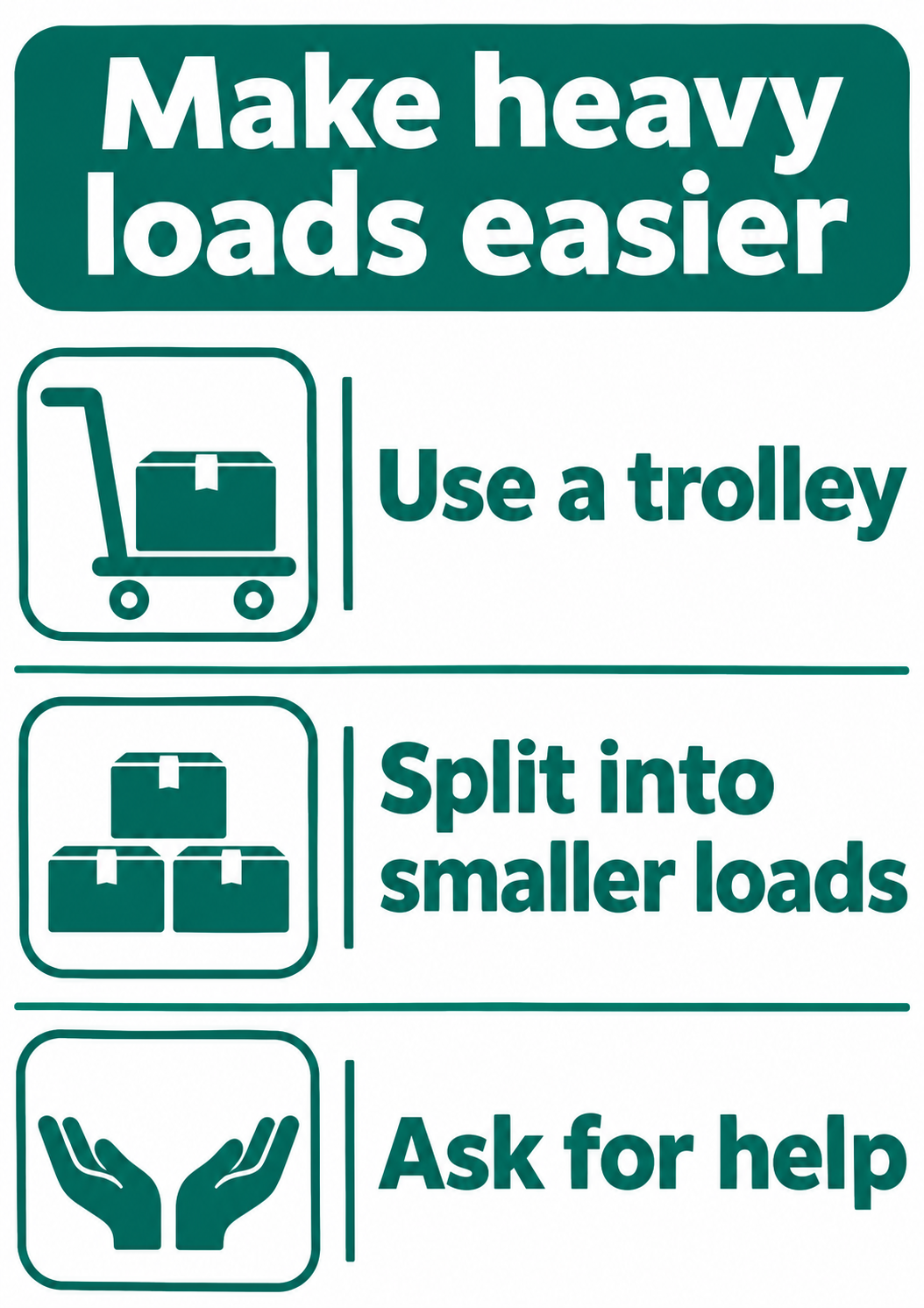
- Split heavy loads into several smaller trips instead of one maximal lift.
- Use a hand truck, dolly, or furniture sliders for bulky items.
- Slide objects along the floor rather than lifting them when possible.
- Raise the starting height by placing the object on a table or step.
- Ask for a second person on anything you would strain to lift alone.
- Push rather than pull whenever you have the choice.
Many workplace injuries happen when people try to save time with one awkward lift. A few extra trips cost less than a knee flare-up.
Strengthening the Muscles That Protect the Knee
Strong quadriceps, glutes, hamstrings, and calves share the load and keep the knee stable. Building them makes every lift safer, but progress should be gradual and pain-free.
- Bodyweight squats to a chair teach the hip-back pattern without heavy load.
- Step-ups onto a low box train single-leg control and glute strength.
- Glute bridges strengthen the hips that keep the knees from caving in.
- Hamstring curls support the back of the knee and the hinge pattern.
- Calf raises improve ankle stability, which feeds into knee alignment.
- Side-lying leg lifts target the hip abductors that control knee tracking.
Start with two or three sets of eight to twelve easy repetitions. Increase difficulty before adding weight. Sharp pain during an exercise means stop and reassess, not push through.
Warning Signs You Should Not Ignore
Some knee sensations are normal fatigue. Others signal that you should stop lifting and get assessed.
- Sharp or stabbing pain inside the joint during a lift.
- Swelling that appears within hours of activity.
- Clicking accompanied by pain, catching, or giving way.
- Locking, where the knee cannot fully straighten.
- Instability, or the feeling that the knee will buckle.
- Pain that persists at rest or wakes you at night.
Persistent symptoms deserve a proper examination. A physiotherapist or orthopedic clinician can identify whether the problem is muscular, ligamentous, or related to the joint surface itself.
Osteomalacia and Lifting: What Changes
Osteomalacia is a condition in which bones soften because of defective bone mineralization, most often due to vitamin D deficiency. Softened bone is less able to tolerate load, so heavy lifting carries different risks than it does for someone with healthy bone.
The National Institute of Arthritis and Musculoskeletal and Skin Diseases overview of osteomalacia explains the causes and symptoms in plain language. Bone pain, muscle weakness, and a waddling gait are common, and these directly affect lifting safety.
If you have osteomalacia, discuss lifting limits with your clinician before starting or continuing heavy work. General principles still apply, but the threshold for “too heavy” may be much lower until your bone health improves.
Bone Health Basics That Support Safe Lifting
- Ask your doctor about testing vitamin D and calcium levels rather than guessing.
- Follow prescribed supplementation and recheck levels as your clinician advises.
- Get sensible sun exposure according to your skin type and local guidance.
- Include calcium-rich foods such as dairy, fortified plant milks, and leafy greens.
- Avoid self-prescribing high-dose supplements without medical supervision.
The NIH Office of Dietary Supplements vitamin D fact sheet is a reliable reference for intake and deficiency information. It is written for health professionals but is accessible to general readers.
Lifting With Knee Pain or Existing Joint Problems
An aching knee does not automatically mean you must stop lifting. It does mean you should adjust how you lift and monitor the response.
- Warm up with five minutes of easy movement before lifting anything heavy.
- Keep loads lighter and repetitions lower on flare-up days.
- Avoid deep kneeling and full squats if they provoke pain; use a raised surface instead.
- Ice or elevate after activity if swelling is a pattern for you.
- Space heavy lifting days apart so the joint has recovery time.
- Track which movements trigger symptoms so you can change them deliberately.
Pain that steadily worsens over weeks is a signal to seek assessment rather than keep adapting alone.
Quick Reference: Lifting Situations and Safer Choices
| Situation | Risky Approach | Knee-Friendly Approach |
|---|---|---|
| Heavy box on the floor | Bend deeply at the knees, round the back | Hip hinge, chest up, load close to body |
| Groceries in a low bag | Twist while lifting | Turn feet first, lift with hips, no twisting |
| Moving furniture | Lift and carry alone | Use sliders or a dolly, or ask for help |
| Repetitive lifting at work | Rush through many lifts | Pace the task, rotate duties, take micro-breaks |
| Knee swelling after lifting | Ignore it and continue | Reduce load, elevate, and get assessed if it recurs |
| Osteomalacia or weak bones | Lift maximal loads | Confirm limits with your clinician first |
Workplace and Home Setup
Environment shapes behavior. A few changes reduce how often you have to lift awkwardly in the first place.
- Store heavy items between knee and shoulder height.
- Keep walkways clear so you are not stepping over clutter with a load.
- Use a stool or step to reach high shelves instead of stretching upward with weight.
- Arrange deliveries so boxes are dropped at a convenient height.
- Use anti-fatigue mats if you stand and lift for long periods.
Employers in many countries are required to assess manual handling risks. The UK Health and Safety Executive manual handling guidance is a useful reference for what a proper risk assessment involves, even outside the UK.
When to See a Professional
Book an appointment if knee pain lasts more than a few weeks, limits your daily activities, or comes with swelling, locking, or instability. If you have known osteomalacia or another bone condition, involve your clinician early rather than waiting for symptoms to escalate.
Physiotherapists can assess your lifting mechanics and prescribe targeted strengthening. Doctors can investigate underlying causes such as vitamin D deficiency or other metabolic bone problems. Getting the right diagnosis first prevents months of guesswork.
Conclusion
Protecting your knees while lifting comes down to a few reliable habits: hinge at the hips, keep the load close, track the knees over the toes, and reduce the load when the body signals it is too much. Strengthening the hips and legs makes every lift safer, and paying attention to warning signs prevents small problems from becoming serious ones. If you have osteomalacia or another bone condition, confirm your limits with a clinician before lifting heavy loads.
Frequently Asked Questions
Can I lift heavy objects if I have knee pain?
Often yes, with adjustments. Use a hip hinge, keep loads moderate, and avoid positions that provoke sharp pain. If pain persists or worsens, get assessed before continuing.
Is it better to squat or bend at the waist when lifting?
Neither extreme is ideal. A hip hinge with a long spine and knees tracking over the toes usually protects the knee best. A controlled squat works for lighter loads at waist height.
Does lifting heavy objects damage knee cartilage?
Appropriate loading generally supports joint health, but repeated poor mechanics and excessive loads can contribute to irritation. Technique and load management matter more than lifting itself.
How does osteomalacia affect lifting?
Softened bones tolerate load less well, so heavy lifting may carry extra risk. Discuss safe limits with your clinician, especially until vitamin D and bone health are addressed.
What muscles should I strengthen to protect my knees?
The quadriceps, glutes, hamstrings, and calves all contribute. Hip strength is particularly important because it controls knee alignment during lifting.
Should I wear a knee brace while lifting?
A brace can help some people feel more stable, but it is not a substitute for good mechanics or strength. Ask a physiotherapist whether a brace suits your situation.
How do I know if a load is too heavy?
If you cannot keep your back long, your knees track inward, or you feel sharp pain, the load is too heavy for that position. Split it, raise it, or get help.
Can knee pain after lifting be normal?
Mild soreness that settles within a day or two can be normal. Pain that lasts longer, swells, or limits movement should be assessed.
Is it safe to lift weights with osteomalacia?
It depends on severity and treatment status. Some loading may be beneficial, but the appropriate level should be set by your clinician rather than guessed.
What should I do if my knee swells after lifting?
Reduce the load, elevate the leg, and monitor the response. Recurring swelling or swelling with instability warrants a professional assessment.