If your back hurts when you reach into a cabinet, the usual cause is a combination of spinal extension, rotation, and load placed on muscles and joints that have become weak, stiff, or irritated. Reaching overhead and slightly behind you is one of the most mechanically demanding movements for the lower back, so pain during this motion is common and often has a clear explanation. This article covers the main reasons the back protests during overhead reaching, how osteomalacia and other bone-softening conditions fit in, what you can do about it, and when the symptom deserves medical attention.
Why Overhead Reaching Stresses the Back
Reaching into a cabinet is not a simple arm movement. The shoulder, rib cage, and spine work together as a linked system, and the lower back often has to arch and rotate to make up for limited shoulder or mid-back mobility.
When the upper back cannot extend or rotate well, the lumbar spine takes on extra motion. That extra motion compresses the small joints at the back of the spine and loads the soft tissues around them, which produces pain in many people.
Adding a load, such as a heavy plate or a bag of flour, multiplies the demand. The further the weight is from your body, the more leverage it creates on the spine. This is why the same reach that feels harmless with an empty hand can provoke sharp pain when you are lifting something out of a high cupboard.
Common Causes of Back Pain When Reaching Up
Most cases fall into a few recognizable patterns. Identifying which one matches your symptoms helps you choose the right next step and gives you a more useful conversation with a clinician.
Muscular Strain and Poor Overhead Mechanics
Muscles around the spine, ribs, and shoulder blades can be strained when they are asked to work beyond their current capacity. This often happens after a period of inactivity or a sudden increase in lifting and reaching.
- Pain that appears during or shortly after reaching and eases with rest
- Tenderness in the muscles beside the spine or between the shoulder blades
- Discomfort that improves when you keep loads closer to your body
- Stiffness in the mid-back that forces the lower back to arch more
Facet Joint Irritation
The facet joints are small paired joints at the back of each spinal segment. They are sensitive to extension and rotation, which is exactly the position the lower back moves into during an overhead reach.
People with facet irritation often feel a sharp or pinching pain on one side of the lower back that worsens when they lean backward or twist. Standing and walking may feel better than prolonged sitting or arching, and the pain is usually confined to the back rather than traveling down the leg.
Disc-Related Pain
Disc problems tend to cause pain that travels into the buttock or leg, sometimes with numbness or tingling. Reaching overhead can aggravate this because the spine extends and loads the disc from a different angle.
- Pain that radiates below the knee rather than staying in the back
- Numbness, tingling, or weakness in the leg or foot
- Symptoms that worsen with sitting, bending forward, or coughing
- Relief when lying down or changing position
Shoulder and Mid-Back Restrictions
A stiff shoulder or a thoracic spine that does not extend well forces compensation elsewhere. This is common in people who sit for long hours or have a history of shoulder injury.
If you cannot raise your arm overhead without arching your lower back, the shoulder or mid-back is likely contributing. A physiotherapist can assess this quickly with a few simple movements and identify which segment is limiting the reach.
How Osteomalacia Can Cause Back Pain with Reaching
Osteomalacia is a condition in which the bones become soft because of defective bone mineralization, most often due to vitamin D deficiency. Softened bones are weaker and can ache, and the spine and pelvis are common sites of discomfort.
Unlike osteoporosis, which causes bones to become porous and brittle, osteomalacia affects the quality of the bone material itself. The result is often a dull, deep bone pain that is felt at rest as well as with movement.
People with osteomalacia frequently describe:
- Dull, aching pain in the lower back, hips, or ribs that does not follow a clear injury
- Pain that is worse with weight-bearing or when the spine is loaded
- Muscle weakness, particularly in the thighs and shoulders
- Difficulty rising from a chair, climbing stairs, or lifting objects overhead
- Bone tenderness when pressure is applied to the shins, ribs, or pelvis
Because the bones are softer, the mechanical stress of reaching and arching can provoke pain more readily than it would in healthy bone. The pain may feel different from a typical muscle strain: more diffuse, deeper, and less clearly tied to a specific movement. A waddling gait and general fatigue are also recognized features of the condition.
Who Is at Higher Risk of Osteomalacia
Osteomalacia is often overlooked because its symptoms are vague and overlap with many other conditions. Certain groups are more likely to develop it.
- People with limited sun exposure, including those who cover their skin or stay indoors
- People with darker skin living in regions with less sunlight
- Older adults, who may have reduced vitamin D synthesis and intake
- People with malabsorption conditions affecting the gut, such as celiac disease or inflammatory bowel disease
- People who have had certain types of stomach or intestinal surgery
- People with kidney or liver disease that affects vitamin D metabolism
- People taking medications that interfere with vitamin D or phosphate metabolism
How Osteomalacia Is Diagnosed
Diagnosis usually involves a combination of blood tests, imaging, and sometimes a bone biopsy. Blood tests typically check vitamin D, calcium, phosphate, alkaline phosphatase, and kidney function.
Your doctor may also order X-rays or a bone density scan, though these are not always definitive for osteomalacia. A bone biopsy is the most reliable test but is rarely needed when other findings are clear.
For reliable background on bone health and related conditions, the National Institute of Arthritis and Musculoskeletal and Skin Diseases provides official information on bone diseases, and the NHS page on osteomalacia explains symptoms and treatment in plain language.
Comparing Common Causes of Reaching-Related Back Pain
The table below summarizes the main patterns to help you recognize which description fits your situation. It is not a substitute for a clinical assessment.
| Cause | Typical Pain Location | Pattern with Reaching | Other Clues |
|---|---|---|---|
| Muscular strain | Beside the spine, between shoulder blades | Sharp with movement, eases with rest | Tenderness, recent activity change |
| Facet joint irritation | One side of lower back | Pinching with extension and rotation | Better with walking, worse with arching |
| Disc-related pain | Lower back, buttock, leg | Worse with extension and load | Numbness, tingling, leg weakness |
| Shoulder or mid-back restriction | Lower back, shoulder | Pain only when reaching high | Limited shoulder raise, stiff upper back |
| Osteomalacia | Lower back, hips, ribs | Deep ache with load, also at rest | Muscle weakness, bone tenderness |
When to See a Doctor About Back Pain
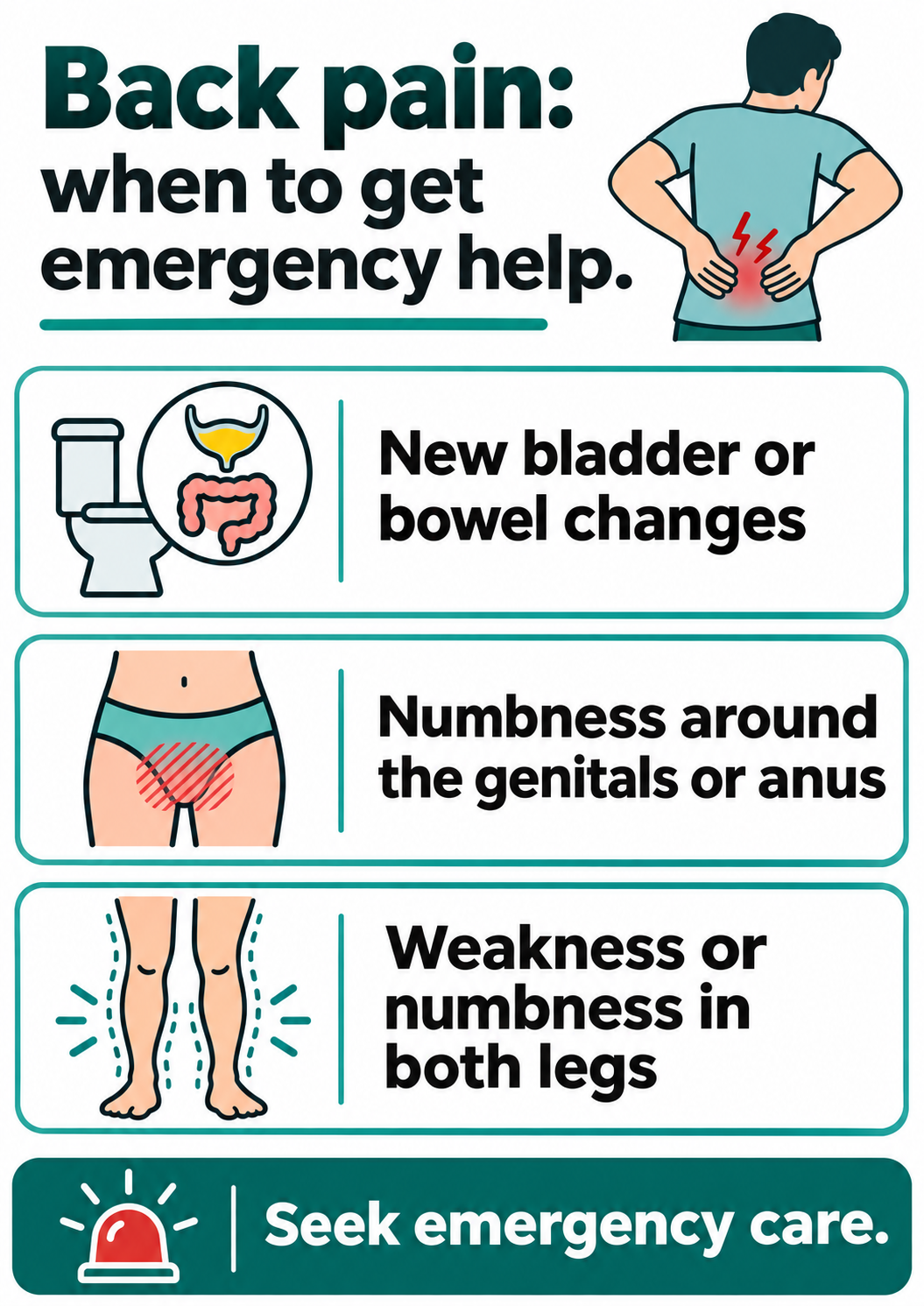
Most back pain improves within a few weeks, but some symptoms require prompt medical review. Seek care quickly if you notice any of the following.
- Pain that follows a fall or other significant injury
- Loss of bladder or bowel control
- Numbness in the groin or inner thighs
- Progressive weakness in one or both legs
- Unexplained weight loss or fever alongside back pain
- A history of cancer with new back pain
- Pain that is severe at night or does not improve with rest
- Bone pain combined with muscle weakness and a known risk of vitamin D deficiency
These signs do not always mean something serious, but they are reasons to have the pain assessed rather than managed at home. Loss of bladder or bowel control and groin numbness in particular can indicate a nerve emergency that needs urgent evaluation.
How to Reduce Pain When Reaching into Cabinets
Small changes in how you move and organize your space can make a real difference. The goal is to reduce the demand on the lower back while keeping the task manageable.
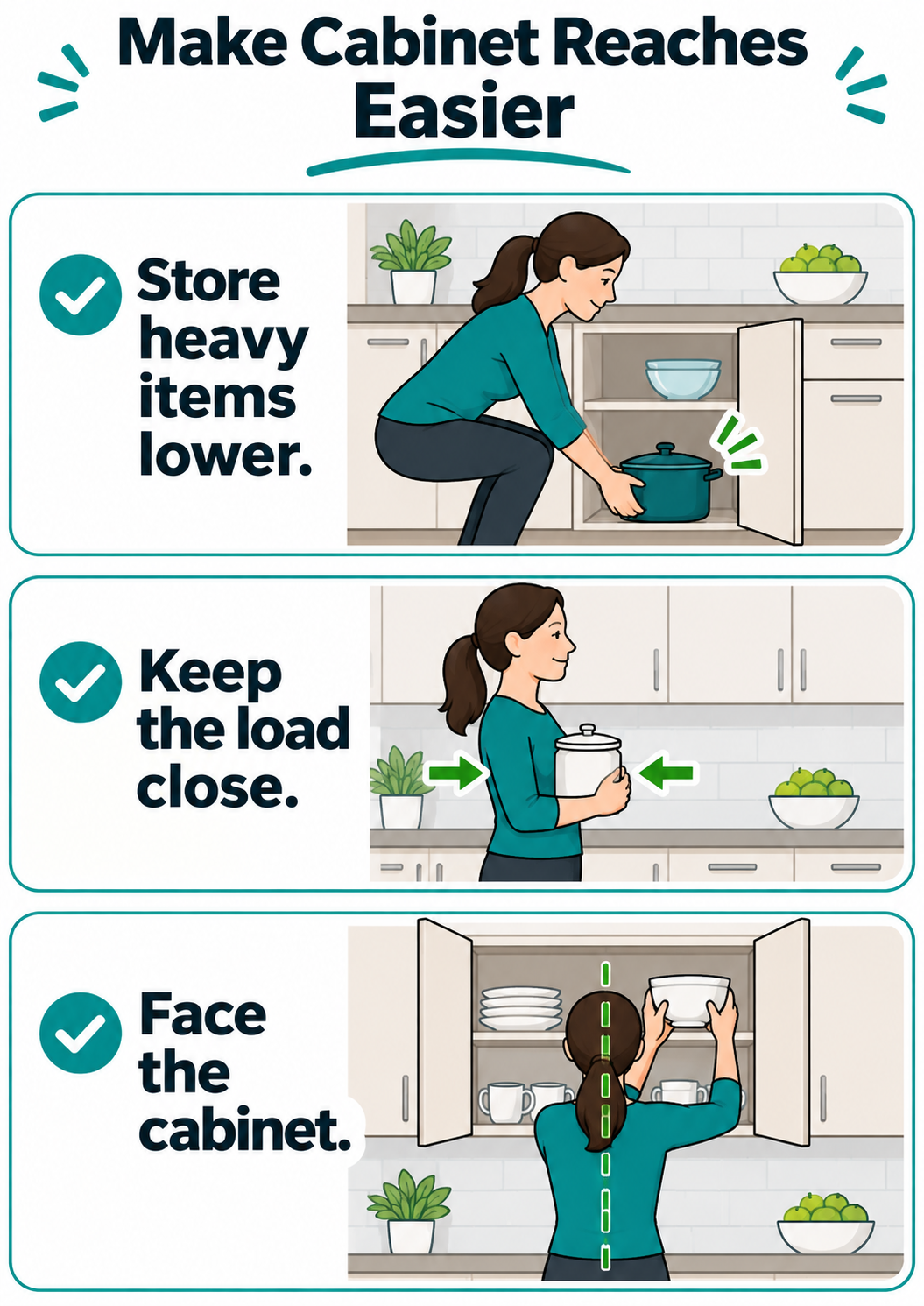
- Use a stable step stool so you can reach the item without stretching upward
- Keep frequently used items between waist and shoulder height
- Turn your whole body to face the cabinet rather than twisting
- Hold loads close to your chest before lifting them out
- Break heavy items into smaller, lighter portions
- Slide items forward before lifting them
- Warm up with gentle movement before a session of heavy kitchen work
If a specific cabinet is the problem, consider reorganizing it so the heaviest items sit lower. This simple change often removes the trigger entirely.
Exercises That May Help
Improving shoulder and mid-back mobility often reduces the amount of arching the lower back has to do. Strengthening the muscles that support the spine also helps the back tolerate reaching and lifting.
A physiotherapist can tailor a program to your symptoms, but the following categories are commonly useful.
- Thoracic extension over a rolled towel to improve mid-back mobility
- Shoulder flexion and wall slides to restore overhead reach
- Scapular retraction exercises to strengthen the muscles between the shoulder blades
- Gentle hip flexor stretching to reduce the pull that tilts the pelvis forward
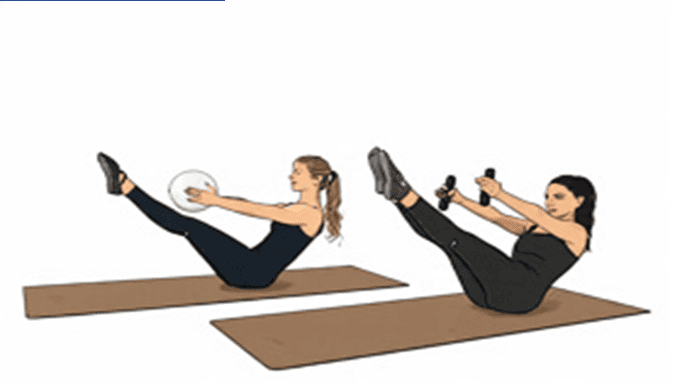
- Core and glute strengthening to support the spine during load
- Low-impact aerobic activity, such as walking, to maintain general conditioning
Stop any exercise that sharply increases pain or causes symptoms to travel down the leg. Progress gradually rather than pushing through discomfort, and expect improvements over weeks rather than days.
Nutrition and Bone Health Considerations
If osteomalacia or low vitamin D is part of the picture, treating the underlying deficiency is central to improving symptoms. Vitamin D and calcium intake, sun exposure, and any underlying medical conditions all matter.
The Office of Dietary Supplements provides evidence-based information on vitamin D, and the NHS guidance on vitamin D explains how to maintain adequate levels. Supplements should be discussed with a doctor, particularly at higher doses, because excess vitamin D can be harmful.
- Ask your doctor to check vitamin D, calcium, and phosphate levels if bone pain is persistent
- Discuss any malabsorption condition that could affect nutrient uptake
- Review medications that may affect bone metabolism with your prescriber
- Follow treatment advice consistently, since bone healing takes time
Practical Adjustments Around the Home
Changing the environment is often faster than changing the body. A few practical adjustments can reduce how often you put your spine into a painful position.
- Move heavy pans, jars, and appliances to lower shelves
- Store light, rarely used items in high cabinets
- Use a lightweight step stool with a handle
- Keep a small cart or basket for carrying multiple items
- Ask for help with tasks that require overhead lifting
Conclusion
Back pain when reaching into cabinets usually comes from a mix of spinal extension, rotation, and load, often made worse by limited shoulder or mid-back mobility. Muscle strain, facet irritation, and disc problems are common causes, but persistent bone pain with weakness and tenderness deserves a closer look at conditions such as osteomalacia. Adjusting how you reach, organizing your cabinets, and addressing any underlying bone health issue can ease symptoms and prevent recurrence. If pain is severe, persistent, or accompanied by warning signs, seek medical assessment.
Frequently Asked Questions
Why does my back hurt only when I reach overhead?
Overhead reaching requires the lower back to arch and rotate, and pain often appears only in that position because it loads the facet joints and soft tissues in a way that other movements do not. If your shoulder or mid-back is stiff, the lower back compensates more, which increases the strain.
Can osteomalacia cause back pain without an injury?
Yes. Osteomalacia causes bone pain that can appear without any clear injury, and the lower back is a common site. The pain is often a dull ache that is present at rest and worsens with weight-bearing or movement.
How is osteomalacia different from osteoporosis?
Osteomalacia is a problem with bone mineralization, so the bone is soft and often painful. Osteoporosis is a loss of bone mass that makes bones brittle and prone to fracture, usually without bone pain until a fracture occurs.
Should I stretch my back if reaching hurts?
Gentle movement can help, but aggressive stretching into extension often makes facet-related pain worse. Focus on improving shoulder and mid-back mobility and on strengthening the muscles that support the spine, ideally with guidance from a physiotherapist.
When should I worry about back pain when reaching up?
Seek medical advice if pain follows an injury, is severe at night, does not improve with rest, or comes with numbness, weakness, or loss of bladder or bowel control. These signs warrant prompt assessment.
Can low vitamin D cause back pain?
Low vitamin D can lead to osteomalacia, which causes bone pain and muscle weakness. If you have persistent bone pain, muscle weakness, or known risk factors, ask your doctor whether testing vitamin D and related blood markers is appropriate.
What tests are used to diagnose osteomalacia?
Doctors typically use blood tests for vitamin D, calcium, phosphate, alkaline phosphatase, and kidney function, along with imaging where needed. A bone biopsy is the most definitive test but is rarely required when other findings are clear.
Can physiotherapy help with reaching-related back pain?
Physiotherapy can help by identifying the specific movement restrictions and muscle weaknesses contributing to your pain. A tailored program usually combines mobility work, strengthening, and practical advice on how to move safely.
Is it safe to exercise with osteomalacia?
Gentle, supervised exercise is often helpful, but the underlying cause needs treatment first. Discuss an exercise plan with your doctor or physiotherapist, especially if you have significant bone pain or weakness.
How can I reach high cabinets without hurting my back?
Use a stable step stool so you can reach the item without stretching, keep heavy items on lower shelves, face the cabinet directly rather than twisting, and hold loads close to your body before lifting them out.