You can protect your hips during yardwork, and the effort pays off. Most hip injuries from gardening and yard chores come from repeated bending, twisting, lifting heavy loads, and working in awkward positions for long stretches. A single awkward movement is rarely the whole story; the bigger problem is doing those movements for an hour or more without a break. This guide explains what puts your hips at risk, how to prepare your body, which tools and techniques reduce strain, and when hip pain needs medical attention. It also addresses readers with weaker bone structure, including people with osteomalacia, who need extra care.
Why Yardwork Puts Your Hips at Risk
Your hip joints are ball-and-socket joints that carry your body weight while allowing a wide range of motion. Yardwork asks them to do a lot at once: bend, twist, squat, kneel, push, and carry. The joints themselves are sturdy, but the muscles and soft tissues around them are not built for long, repetitive loading without rest.
Several common yard tasks load the hips heavily:
- Raking and hoeing, which involve repeated twisting of the torso and hips
- Lifting bags of soil, mulch, or fertilizer from the ground
- Deep squatting or kneeling to weed and plant
- Pushing a wheelbarrow over uneven ground
- Climbing ladders and reaching overhead to trim branches
- Carrying heavy pots, buckets, and tools across the yard
Muscle fatigue makes these tasks riskier. When your hip and core muscles tire, your form breaks down, and the joints take on loads they were not meant to absorb. That is why a short session with good technique beats a long session done on autopilot.
Warm Up Before You Start
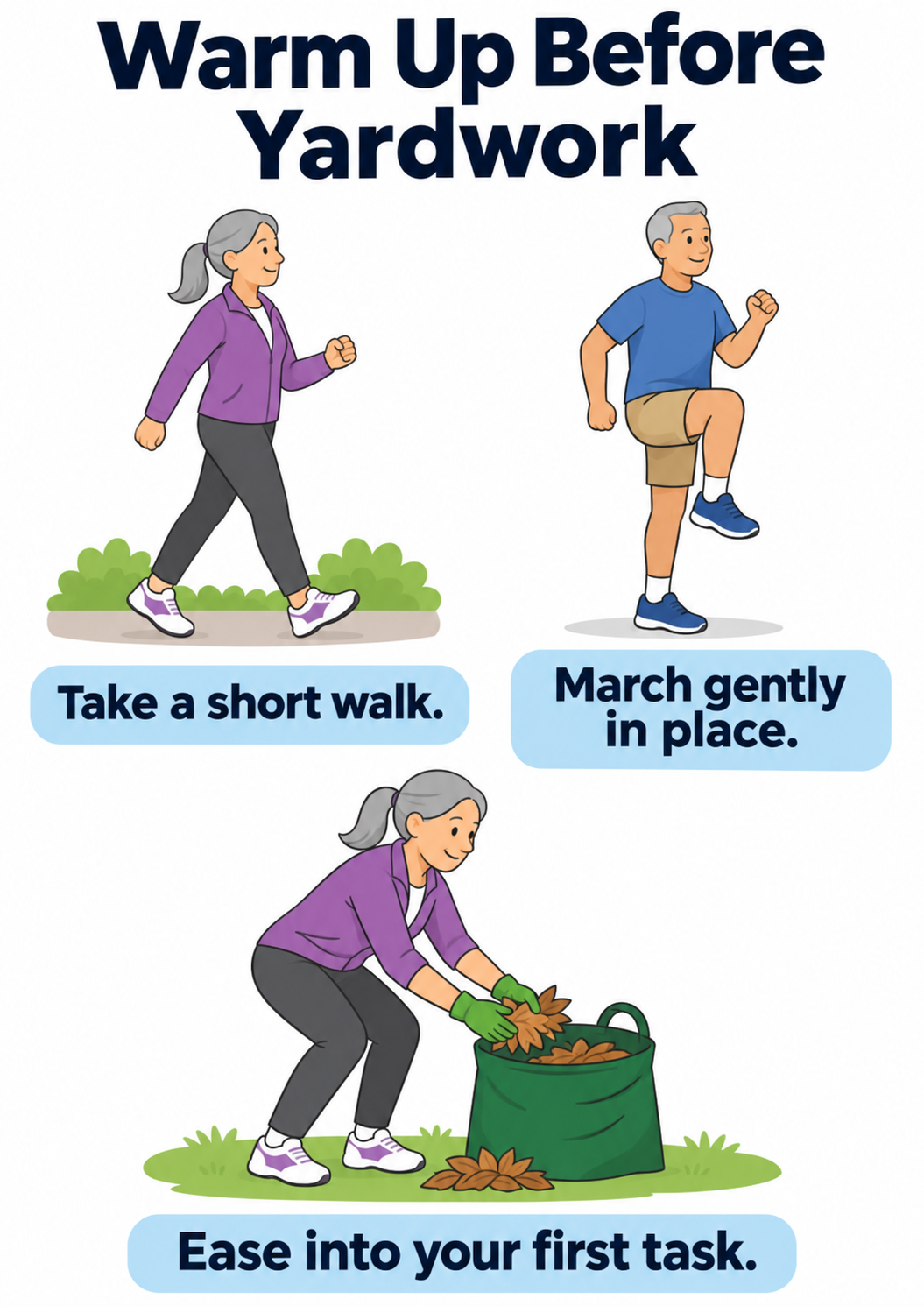
Cold, stiff muscles do not tolerate bending and twisting well. A five-minute warm-up raises blood flow and prepares your hips for the work ahead. You do not need a gym routine; simple movement is enough.
- Walk briskly around the yard for two to three minutes
- Do ten slow standing hip circles in each direction
- Perform ten gentle bodyweight squats, holding a stable surface if needed
- March in place while swinging your arms for one minute
- Stretch your hip flexors and hamstrings briefly without bouncing
If you have an existing hip condition, ask a physiotherapist or your doctor which warm-up movements suit you. General routines are a starting point, not a personal prescription.
Use Good Body Mechanics for Every Task
Most hip strain during yardwork comes from bending at the waist with straight legs and twisting while holding weight. Changing those two habits removes a large share of the risk.
Follow these principles for lifting and moving:
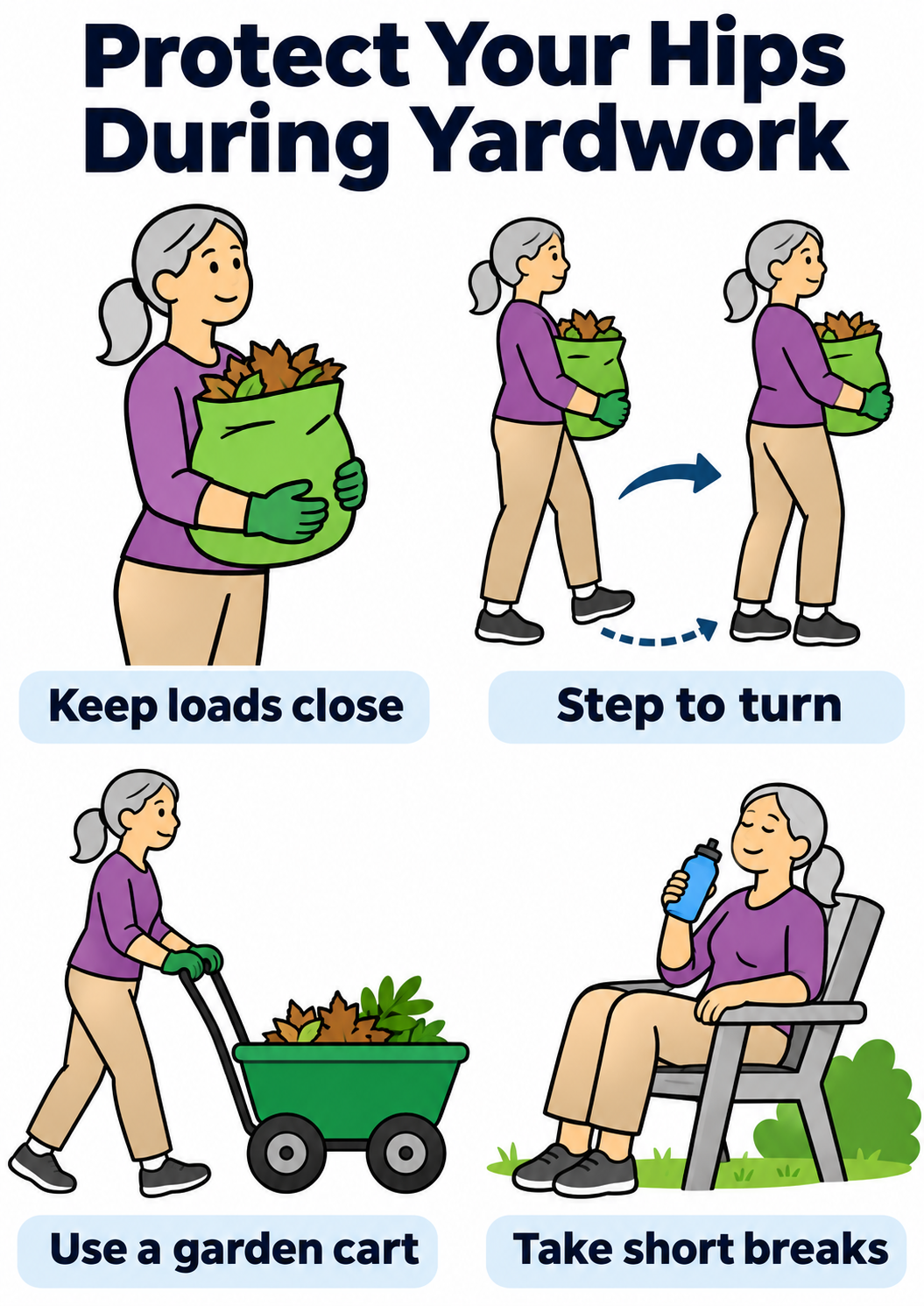
- Bend at the knees and hips, not the lower back, and keep the load close to your body
- Point your feet and hips in the direction you are lifting toward
- Turn your whole body instead of twisting at the waist when carrying something
- Split heavy loads into smaller ones or use a cart
- Keep your feet shoulder-width apart for a stable base
- Set loads down on a raised surface rather than the ground when possible
For raking and hoeing, stand with one foot slightly forward and shift your weight gently rather than wrenching your torso. Take small steps as you work along a row instead of stretching to reach.
Choose Tools That Reduce Hip Strain
The right equipment lets your hips stay in neutral positions more often. Long-handled tools are especially helpful because they reduce bending and squatting.
- Long-handled weeders, pruners, and cultivators keep you more upright
- A garden kneeler with side handles makes standing up easier and protects your knees and hips
- A wheelbarrow or garden cart replaces carrying heavy loads by hand
- A raised garden bed reduces deep bending and squatting
- A rolling garden seat lets you work low without kneeling
- Lightweight tools with padded grips reduce hand and forearm fatigue, which affects your whole posture
Check that your tools are in good repair. A loose handle or a wobbly wheel can force sudden, jarring corrections that your hips have to absorb.
Pace Yourself and Take Breaks
Hip pain during yardwork often builds gradually rather than appearing suddenly. Breaking the work into shorter sessions gives your muscles time to recover and helps you notice early warning signs.
A practical rhythm looks like this:
- Work in blocks of 20 to 30 minutes, then pause for a few minutes
- Change tasks regularly so you are not repeating the same movement for hours
- Sit or stand tall during breaks and gently move your hips through their range
- Drink water, especially in warm weather
- Stop for the day if you feel sharp pain, catching, or a sudden loss of strength
Spread big jobs such as digging over a bed or moving a pile of mulch across several days. Your hips will handle moderate, varied effort far better than one long, repetitive push.
Build Hip Strength and Mobility Between Yard Days
Strong hips tolerate yardwork better. A short routine two or three times a week can make a real difference over time. These exercises are general suggestions; a physiotherapist can tailor them to your body.
- Chair squats: stand up and sit down slowly from a chair, ten to fifteen times
- Side-lying leg lifts: strengthen the outer hip muscles
- Bridges: lie on your back, lift your hips, and lower slowly
- Standing hip extensions: hold a chair and extend one leg back gently
- Step-ups onto a low, stable step
- Gentle hip flexor and hamstring stretches after activity
Consistency matters more than intensity. Start with small numbers and increase gradually. If an exercise causes hip pain, stop and seek advice rather than pushing through.
Protect Your Hips When You Have Weaker Bones
Some readers need more than general ergonomics advice. Osteomalacia is a condition in which bones soften because of poor bone mineralization, usually related to vitamin D deficiency. Softened bones are more prone to pain and fracture, so yardwork needs to be approached with extra caution.
People with osteomalacia or similar bone-weakening conditions should discuss physical activity with their doctor before starting heavy yard tasks. The National Institute of Arthritis and Musculoskeletal and Skin Diseases overview of osteomalacia explains the condition and why medical management matters. The Office of Dietary Supplements vitamin D fact sheet provides detailed information on vitamin D, which is central to bone health.
General precautions for readers with weaker bones include:
- Avoid lifting heavy bags and pots alone; ask for help or use a cart
- Choose raised beds and long-handled tools to minimize bending
- Work on stable, level ground and avoid ladders where possible
- Take frequent breaks and stop at the first sign of bone or joint pain
- Follow your treatment plan, including any prescribed vitamin D or calcium supplementation
Your doctor can advise on safe activity levels for your situation. This article offers general guidance and does not replace individual medical advice.
Watch for Warning Signs in Your Hips
Some discomfort after unaccustomed activity is normal and usually settles within a day or two. Other symptoms need attention. Seek medical advice if you notice any of the following:
- Sharp or persistent hip pain that does not ease with rest
- Pain that wakes you at night or continues for more than a week or two
- Sudden pain after a fall, twist, or heard pop
- Inability to bear weight on one leg
- Groin pain that limits walking or climbing stairs
- Numbness, tingling, or weakness in the leg
Hip pain is sometimes felt in the groin or thigh rather than the outer hip. Do not assume pain in those areas is unrelated. A prompt assessment can catch problems early, when they are usually easier to manage.
Quick Comparison: High-Risk and Lower-Risk Approaches
The table below summarizes how common yardwork habits compare in terms of hip strain.
| Task or Habit | Higher Hip Strain | Lower Hip Strain |
|---|---|---|
| Lifting soil bags | Bending at the waist with straight legs | Squatting with the load close, or using a cart |
| Raking leaves | Twisting the torso while reaching far | Stepping along the row with small weight shifts |
| Weeding | Deep squatting for long periods | Kneeler, rolling seat, or raised bed |
| Carrying tools | One heavy armful across the yard | Tool bag, cart, or several light trips |
| Work session length | Several hours without a break | 20–30 minute blocks with short rests |
| Preparation | Starting cold and stiff | Five-minute warm-up and gentle stretching |
Simple Everyday Habits That Help
Small choices add up over a season of yardwork. Keep these in mind:
- Wear supportive shoes with good grip, not sandals or worn trainers
- Keep pathways clear so you are not stepping over obstacles while carrying loads
- Store heavy items at waist height in the shed or garage
- Ask someone to help with the heaviest jobs instead of doing them alone
- Plan the heaviest tasks for when you are fresh, not at the end of the day
If you are returning to yardwork after a hip injury or surgery, follow your rehabilitation team’s guidance on lifting limits and gradually increase activity.
Conclusion
Protecting your hips during yardwork comes down to preparation, technique, sensible tools, and pacing. Warm up, lift with your legs, avoid twisting under load, use long-handled tools and carts, and break big jobs into shorter sessions. If you have a condition such as osteomalacia, talk to your doctor before heavy tasks and build in extra precautions. Listen to your hips: pain that persists or limits walking deserves a medical review rather than another weekend of pushing through.
Frequently Asked Questions
What is the most common cause of hip pain after yardwork?
Muscle strain from repeated bending, twisting, and lifting is the most common cause. Hip and core muscles tire during long sessions, and form deteriorates. Most mild strain settles with rest, but persistent or severe pain should be assessed by a clinician.
Should I stretch before or after yardwork?
Do a light warm-up before you start, such as walking and gentle hip circles, and save longer stretches for afterward when muscles are warm. Static stretching a cold muscle is less useful and can feel uncomfortable.
Can I do yardwork if I have osteomalacia?
Many people with osteomalacia can do light yardwork, but softened bones increase the risk of pain and fracture. Discuss activity levels with your doctor, avoid heavy lifting, and use tools that reduce bending. Follow your treatment plan for vitamin D and any other prescribed care.
How heavy is too heavy to lift in the garden?
There is no universal safe weight, because it depends on your strength, age, and health. A practical rule is to use a cart or ask for help with anything you cannot lift comfortably with good form. If you feel strain in your back or hips, the load is too heavy for you.
Why does my hip hurt when I squat to weed?
Deep squatting compresses the hip joint and loads the surrounding muscles for long periods. Kneelers, rolling seats, and raised beds let you work lower without holding a deep squat, which usually eases the strain.
Is it normal for hips to ache the day after gardening?
Mild achiness after unaccustomed activity is common and usually fades within a day or two. Pain that worsens, lasts more than a week or two, or limits walking is not typical and should be checked by a doctor.
What shoes should I wear for yardwork?
Choose supportive shoes with a firm sole and good grip. They improve stability on uneven ground and reduce the jarring that travels up through your hips. Avoid open sandals and worn-out trainers.
Can a wheelbarrow help protect my hips?
Yes. A wheelbarrow or garden cart replaces carrying heavy loads by hand, which reduces the load on your hips and back. Keep loads balanced and push rather than pull where possible.
How long should a yardwork session last?
There is no fixed limit, but working in blocks of 20 to 30 minutes with short breaks is a sensible pattern for most people. Spread large jobs across several days rather than completing them in one long session.
When should I see a doctor about hip pain from yardwork?
See a doctor if pain is sharp, persistent, or worsening, if you cannot bear weight, if you heard a pop or had a fall, or if pain continues beyond a week or two. Early assessment makes many hip problems easier to treat.