Preparing for knee replacement surgery involves more than showing up at the hospital. This guide covers the essential medical tests you need, how to set up your home for a safe recovery, and a complete checklist to follow before your procedure. By covering these steps in advance, you reduce stress and improve your outcome.
Understanding the Pre-Surgery Medical Tests
Your surgeon will order several tests to confirm you are ready for the operation. These tests check your heart, lungs, blood, and overall health. Completing them early helps avoid last-minute delays.
Common Tests Before Surgery
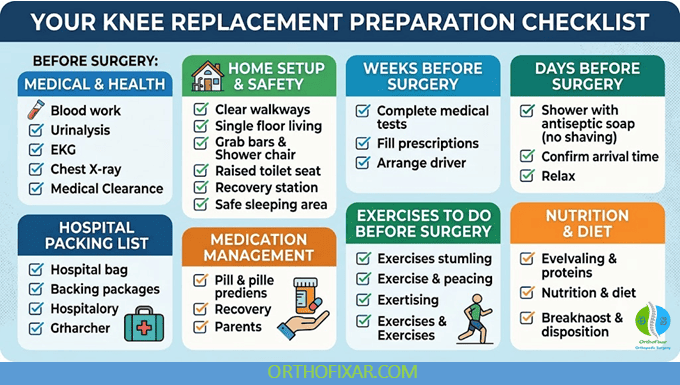
- Blood work: A complete blood count checks for anemia or infection. A metabolic panel checks kidney and liver function.
- Urinalysis: This screens for a urinary tract infection, which can increase surgical risks.
- Electrocardiogram: This records your heart rhythm and can detect hidden heart conditions.
- Chest X-ray: Your doctor uses this to see your lungs and heart size.
- Cardiac clearance: If you have a history of heart issues, a cardiologist may need to approve the surgery.
- Medical clearance from your primary care doctor: This one visit confirms all chronic conditions are stable.
“The single best predictor of a smooth recovery is how well you prepare your body and home before you ever enter the operating room.” – Dr. Anne Carter, orthopedic specialist
Home Setup for a Safe Recovery
Your home needs to be ready before you arrive. You will have limited mobility for several weeks. Setting up your space now prevents falls and unnecessary strain.
Essential Home Modifications
- Clear all walkways: Remove loose rugs, cords, and clutter from every room you use.
- Create a main living area on one floor: Move your bed, chair, and essentials to the ground floor if you have stairs.
- Install grab bars: Place them in the shower and next to the toilet. A shower chair is also highly recommended.
- Raise toilet seat height: A raised toilet seat or a commode chair makes getting up much easier on your new knee.
- Prepare a recovery station: Place your phone, TV remote, water bottle, medications, and snacks within arm’s reach of your bed or chair.
- Set up a safe sleeping area: Sleep on your back or on your non-surgical side with a pillow between your legs to keep your knee aligned.
The Complete Pre-Surgery Checklist
Use this checklist to track your progress in the weeks and days before your procedure. Checking off each item builds confidence.
| Timing | Action Item | Status |
|---|---|---|
| 4 weeks before | Complete all blood work, EKG, and chest X-ray | Done |
| 4 weeks before | Obtain medical clearance from primary care doctor | Done |
| 3 weeks before | Fill all prescriptions for pain and anti-nausea medication | Done |
| 2 weeks before | Install grab bars and raised toilet seat | Done |
| 2 weeks before | Stock pantry with easy-to-prepare meals | Done |
| 1 week before | Arrange for a friend or family member to drive you home | Done |
| 1 week before | Wash all bedding and prepare recovery station | Done |
| 1 day before | Shower with antiseptic soap as directed by surgeon | Done |
| Day of surgery | Wear loose, comfortable clothing and slip-on shoes | Done |
What to Pack for the Hospital
Your hospital stay may last one to three days. Pack only what you truly need. Overpacking creates clutter in a small room.
- Comfortable, loose-fitting shorts or pants that can fit over a bulky bandage
- Slip-on shoes or non-slip socks
- Your own phone charger with a long cord
- Entertainment such as a book, tablet, or headphones
- List of current medications with dosages
- Small pillow to place between your knees or under your ankle
- Personal toiletries including a toothbrush and glasses
“Patients who pack a small pillow for the car ride home report significantly less discomfort during the first few miles.” – Recovery nurse Linda Torres, RN
Managing Medications Before and After Surgery
Your medication routine will change temporarily. Some common medications must be stopped before surgery to reduce bleeding risk.
Medications to Discuss with Your Surgeon
- Blood thinners: Warfarin, apixaban, rivaroxaban, and clopidogrel are often stopped several days before surgery. Never stop these without direct instruction from your prescribing doctor.
- NSAIDs: Ibuprofen, naproxen, and aspirin should be stopped at least 5 to 7 days before surgery.
- Diabetes medications: Your dose may need adjustment on the day of surgery. Ask your surgeon for specific instructions.
- Supplements: Fish oil, vitamin E, ginkgo biloba, and garlic supplements can increase bleeding. Stop them at least 7 days prior.
Physical Preparation: Exercises to Do Before Surgery
Strengthening your muscles before surgery speeds up recovery. Focus on exercises that do not cause pain. Your physical therapist can provide a tailored program.
- Quadriceps sets: Sit or lie down, tighten your thigh muscle, hold for 5 seconds, and release. Repeat 10 times, three times a day.
- Heel slides: While lying on your back, slowly slide your heel toward your buttock, then straighten. Go only as far as comfortable.
- Ankle pumps: Point your toes away from you, then toward you. This prevents blood clots and keeps your calf muscles active.
- Straight leg raises: Lie on your back, tighten your thigh, and lift your leg a few inches. Lower slowly. Only do this if it does not cause pain.
Nutrition and Diet Before Surgery
Good nutrition supports healing and helps prevent infection. Focus on whole foods in the weeks leading up to your procedure.
- Increase protein intake: Chicken, fish, eggs, beans, and tofu help your body build new tissue after surgery.
- Stay hydrated: Drink plenty of water. Avoid sugary drinks and alcohol, which can impair healing.
- Increase vitamin C and zinc: These nutrients support wound healing. Eat citrus fruits, bell peppers, nuts, and seeds.
- Follow fasting instructions carefully: Your hospital will tell you when to stop eating and drinking. Typically, you cannot eat or drink anything after midnight the night before surgery.
Mental and Emotional Preparation
Knee replacement recovery is a process. Setting realistic expectations reduces anxiety and frustration.
- Understand that you will need help for the first one to two weeks. Accept offers from family and friends.
- Plan for a period of limited activity. You may not drive for 4 to 6 weeks after surgery.
- Communicate with your surgical team. Write down any questions you have and bring them to your pre-operative appointment.
- Consider talking to someone who has already had a knee replacement. Their firsthand experience can be very reassuring.
Final Steps the Day Before Surgery
The last 24 hours before your procedure are about rest and hygiene.
- Shower with the antiseptic soap your surgeon provided. Pay special attention to your leg and groin area.
- Do not shave your leg. Shaving can cause small cuts that increase infection risk.
- Set out your clothes for the next day. Choose loose-fitting pants and easy-to-put-on shoes.
- Confirm your arrival time with the hospital and arrange your ride.
Conclusion
Preparing for knee replacement surgery is a step-by-step process that you can manage with careful planning. Complete all medical tests early, modify your home for safety, and follow your pre-surgery checklist. When you take these actions seriously, you set yourself up for a smoother procedure and a faster return to daily activities. Your effort before surgery pays off after surgery.
Frequently Asked Questions
How long before knee replacement surgery should I start preparing?
Begin your preparation about four weeks before the scheduled surgery. This gives you enough time to complete medical tests, make home modifications, and build your strength with exercises.
Can I take my regular blood pressure medication on the day of surgery?
Yes, in most cases. Take your blood pressure medication with a small sip of water the morning of surgery, unless your surgeon or anesthesiologist tells you otherwise.
Do I need to stop taking vitamins before knee replacement?
Yes, some vitamins and supplements can increase bleeding risk. Stop taking fish oil, vitamin E, and herbal supplements at least one week before surgery. Multivitamins are usually safe but confirm with your surgeon.
How long will I stay in the hospital after knee replacement?
Most patients stay one to two nights in the hospital. Some people go home the same day if they meet specific criteria, but this is less common.
What is the most important thing to have at home after surgery?
A raised toilet seat or commode chair is often cited as the most helpful item. It reduces the distance you need to bend your new knee and makes bathroom visits much safer.
When can I drive after knee replacement surgery?
You can typically drive after four to six weeks, but only if you have stopped taking narcotic pain medication and you can safely press the brake pedal. Your surgeon will give you specific clearance.
Should I do physical therapy before surgery?
Yes, pre-habilitation or pre-surgery physical therapy can strengthen the muscles around your knee. This leads to faster recovery and less pain after surgery.
Will I need a walker or crutches after surgery?
Yes. You will use a walker for the first two to four weeks after surgery. Your hospital will provide one, or you can rent one from a medical supply company.
How do I prevent blood clots after knee replacement?
Your doctor will prescribe blood thinners for several weeks after surgery. You also need to do ankle pump exercises and walk short distances several times a day as directed.
What should I do if I feel anxious before the surgery?
Talk to your surgeon or a member of your care team about your anxiety. Many hospitals offer resources such as relaxation techniques, counseling, or medication to help you feel calm before the procedure.