Weight-bearing exercise is one of the most effective ways to slow bone loss and even build new bone density, but doing it safely is critical—especially for patients with osteoporosis or low bone mass. This guide explains which movements stimulate bone strength, how to start without risking injury, and what to watch for as you progress. You will find practical examples, a simple comparison table, and answers to common questions so you can exercise with confidence and protect your skeleton.
Understanding Bone Density and Why It Matters
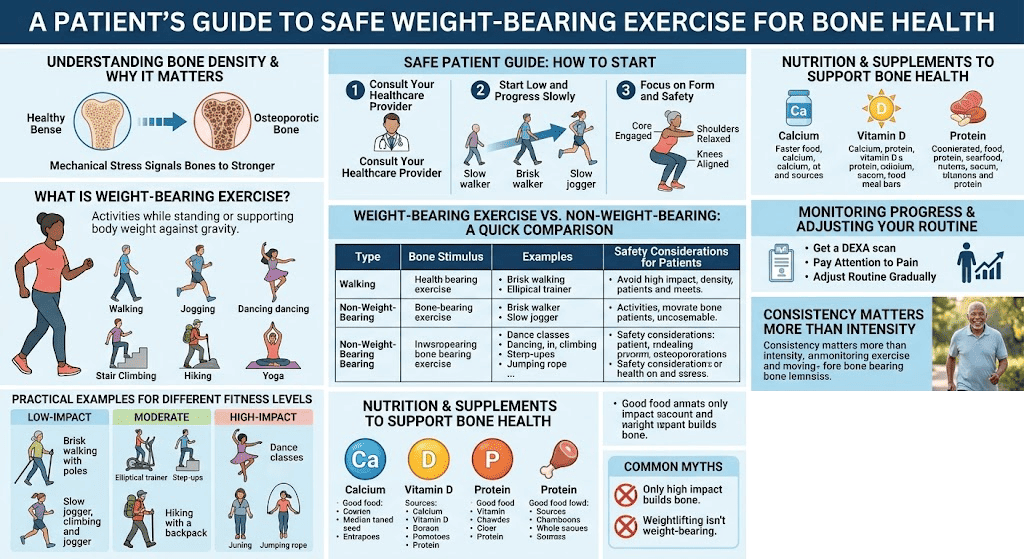
Bone density refers to the amount of mineral content in your bones. When density drops, bones become porous and fragile – a condition called osteopenia or osteoporosis. Fractures of the hip, spine, and wrist become much more likely. Weight-bearing exercise works by placing mechanical stress on the skeleton. Your bones respond by increasing mineral deposition and remodeling, which can slow or reverse bone loss. The key is consistent, appropriate loading over time.
What Is Weight-Bearing Exercise?
Weight-bearing exercise means any activity you perform while standing or supporting your body weight against gravity. The impact through your feet and legs sends signals to your bones to get stronger. Non-weight-bearing activities like swimming or cycling do not produce the same skeletal stimulus.
Examples of Weight-Bearing Activities
- Walking (brisk pace)
- Jogging or running
- Stair climbing
- Dancing (ballroom, Zumba, hip-hop)
- Hiking on uneven terrain
- Tennis, pickleball, badminton
- Jumping rope
- Step aerobics or body‑weight squats
- Yoga and Pilates (standing poses, not all)
Safe Patient Guide: How to Start
If you are new to exercise or have been diagnosed with low bone density, follow these steps to protect yourself while building bone strength.
Consult Your Healthcare Provider
Before beginning any new routine, talk to your doctor or physical therapist. They can review your bone density scores, history of fractures, and overall health to recommend appropriate intensity levels and any modifications you may need.
Start Low and Progress Slowly
Begin with lower‑impact activities like walking on flat ground. After a few weeks, increase duration, then add gentle inclines or slightly faster pace. Progress to moderate‑impact moves such as jogging only after you have built a solid baseline without pain.
Focus on Form and Safety
Proper alignment reduces the risk of falls and stress fractures. Keep your core engaged, shoulders relaxed, and knees aligned with toes. Avoid twisting movements at the spine – for example, when dancing or doing lunges, turn your whole body rather than rotating your back.
Include Variety
Repetitive stress can cause overuse injuries. Mix different weight-bearing exercises each week. For instance, walk on Monday, dance on Wednesday, and climb stairs on Friday. Variety also challenges your bones from multiple angles and directions.
Weight-Bearing Exercise vs. Non-Weight-Bearing: A Quick Comparison
| Type | Bone Stimulus | Examples | Safety Considerations for Patients |
|---|---|---|---|
| High‑impact weight‑bearing | Strong (jumping, running) | Jumping rope, jogging, plyometrics | Risk of fracture if bones are very weak; start only with medical clearance |
| Moderate‑impact weight‑bearing | Moderate (stepping, jogging lightly) | Stair climbing, brisk walking, hiking | Safer for most patients; watch for balance issues on uneven ground |
| Low‑impact weight‑bearing | Moderate (standing, walking) | Walking on treadmill, elliptical (if bearing weight), standing yoga poses | Lowest risk; good starting point for everyone |
| Non‑weight‑bearing | Minimal to none | Swimming, cycling, seated chair exercises | Excellent for cardiovascular fitness but does not improve bone density |
Practical Examples for Different Fitness Levels
Low Impact Options (Best for Beginners or Those with Fragile Bones)
- Brisk walking: Aim for 30 minutes daily at a pace that feels slightly breathless. Use walking poles to improve stability.
- Elliptical trainer: If you use it while standing and pushing through your legs, it provides weight‑bearing load.
- Step‑ups on a low platform: Use a 4‑ to 6‑inch step. Hold a railing for balance. Alternate legs.
Moderate Impact Options (Once You Build Confidence)
- Jogging on a track or treadmill: Start with one minute jogging, two minutes walking, and repeat for 10 cycles.
- Dance classes: Zumba or ballroom dancing includes lateral and rotational movements that stimulate hip and spine bones.
- Hiking with a backpack: Uneven terrain forces your bones to adapt to multidirectional forces. Keep the pack light (5-10 pounds).
High Impact Options (For Those with Normal Bone Density or under Specialist Guidance)
- Jumping rope: Three minutes of jumping can create significant bone‑building stimuli. Land softly on the balls of your feet.
- Box jumps or plyometrics: Only attempt if you have no fracture history and your doctor approves. Use a low box (12 inches) initially.
“Weight‑bearing exercise does not have to be punishing to be effective. A daily brisk walk can improve hip bone density by up to 1 percent per year when combined with adequate calcium and vitamin D.” – National Osteoporosis Foundation guidelines (adapted for general reference)
Common Myths About Weight-Bearing Exercise and Bone Density
Myth 1: Only high‑impact activities build bone.
Fact: Low‑impact weight‑bearing exercises like walking and stair climbing also stimulate bone formation, especially when performed consistently and with proper progression. Moderate impact is often safer for patients with existing bone loss.
Myth 2: Weightlifting with machines is not weight‑bearing.
Fact: If you perform a squat, deadlift, or standing shoulder press, you are supporting your own body weight and adding external load. These compound movements are excellent for bone density, provided you use correct form and avoid spinal flexion under load.
“You do not need to run marathons or jump out of planes to protect your bones. The most important thing is to move your body in ways that load your skeleton regularly and safely.” – Physical therapist and bone health educator
Nutrition and Supplements to Support Bone Health
Exercise alone cannot compensate for poor nutrition. Make sure you consume enough calcium (around 1,000–1,200 mg daily from food or supplements), vitamin D (600–800 IU daily, higher if deficiency is known), and protein (about 1.2 g per kg of body weight). Magnesium, vitamin K2, and zinc also play roles in bone metabolism. A balanced diet with dairy, leafy greens, nuts, seeds, and fortified foods covers most needs. Discuss any supplements with your healthcare provider.
Monitoring Progress and Adjusting Your Routine
Bone density changes slowly. Get a DEXA scan every 1–2 years as recommended by your doctor to track progress. Pay attention to how your body feels during and after exercise. New joint pain, back pain, or a noticeable loss of height could signal a fracture or poor adaptation. If you experience these, reduce impact and consult a professional. Adjust your routine gradually – increase duration before intensity, and always warm up for five minutes with dynamic stretches such as leg swings and arm circles.
Conclusion
Weight-bearing exercise is a cornerstone of bone health for patients at any stage of bone loss. By starting gently, choosing activities that match your current fitness and fracture risk, and pairing movement with proper nutrition, you can strengthen your skeleton without unnecessary danger. Remember that consistency matters more than intensity – a moderate routine you stick with for months beats a high‑impact program you abandon after a few weeks. Use this guide as your starting point, listen to your body, and celebrate every step you take toward stronger bones.
Frequently Asked Questions
What is the best weight‑bearing exercise for bone density?
There is no single best exercise. A combination of walking, stair climbing, dancing, and resistance training (while standing) works well. The most effective exercise is one you enjoy and can do regularly without injury.
Can I perform weight‑bearing exercise if I have osteoporosis?
Yes, but you must choose low‑impact options and avoid activities with high fall risk or spinal twisting. Walking, gentle hiking, and standing exercises with light weights are typically safe. Always get clearance from your doctor first.
How often should I do weight‑bearing exercise?
Aim for at least 150 minutes per week of moderate‑intensity activity, which translates to about 30 minutes on most days. Include two to three sessions of strength training weekly that involve standing exercises.
Is walking enough to improve bone density?
Walking alone can slow bone loss and may increase hip bone density by about 1 percent per year, especially if you walk briskly or on varied terrain. However, adding other weight‑bearing activities yields better overall results.
Can I do weight‑bearing exercise if I have joint pain or arthritis?
Yes. Low‑impact choices like walking on a soft surface, using an elliptical, or doing water‑based weight‑bearing exercises (such as walking in a pool) can reduce joint stress while still loading your bones.
Do I need to jump to build bone?
Jumping is not necessary for most people. Moderate‑impact activities such as jogging, stair climbing, and dancing provide enough stimulus. Jumping is only recommended for those with good bone density and no fracture history.
How long does it take to see results from weight‑bearing exercise?
Bone density changes slowly. You may not notice a measurable difference for 6 to 12 months of consistent exercise. However, improvements in balance, strength, and posture often appear within a few weeks.
Can I combine weight‑bearing exercise with resistance training?
Absolutely. Standing resistance exercises (squats, lunges, push‑ups) are also weight‑bearing and provide additional bone‑strengthening benefits. Use proper form and start with light weights or body weight only.
What should I do if I feel pain during weight‑bearing exercise?
Stop immediately. Pain can indicate a stress fracture, muscle strain, or poor technique. Rest for a few days, then try a lower‑impact version of the exercise. If pain persists, see a healthcare professional.
Do I need special equipment for weight‑bearing exercise?
Not necessarily. Walking shoes and comfortable clothing are enough for many activities. Stairs, a hiking trail, or a simple step platform can add variety. If you have balance concerns, walking poles or a sturdy chair for support can help.