Facet joint syndrome is a common source of back and neck pain that develops when the small joints between the spine’s vertebrae become inflamed, stiff, or worn. The condition can feel frustrating, but it is manageable with the right combination of conservative care, targeted treatments, and practical daily habits. This guide explains what facet joint syndrome is, how it feels, how doctors diagnose it, and which treatment options may help you return to comfortable movement.
What Is Facet Joint Syndrome?
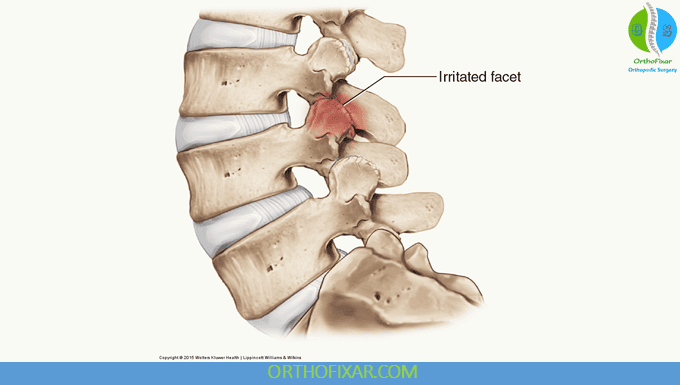
Facet joints are small paired joints located at every level of the spine. They connect the vertebrae, guide motion, and prevent excessive twisting or sliding. Like other joints in the body, they contain cartilage and fluid that keep movements smooth. Over time, everyday wear, injury, or arthritis can damage the cartilage, causing the facet joints to become painful and swollen. When this happens, it is called facet joint syndrome.
- Facet joints are found on the back of the spine, in the neck, mid-back, and lower back.
- The most commonly affected area is the lumbar spine, but the cervical spine can also be involved.
- Facet joint syndrome is often age-related, but it can also follow a whiplash injury or repetitive strain.
- Pain can be local or referred to nearby areas, such as the buttock, hip, or shoulder.
- It is a leading cause of chronic low back pain, especially in older adults.
Because facet joint syndrome feels similar to other spinal problems, it is important to get an accurate diagnosis before starting treatment.
Common Symptoms of Facet Joint Syndrome
Symptoms usually begin gradually, but they may flare up suddenly after an awkward movement or prolonged position. The pain is often described as a deep ache or stiffness rather than a sharp, shooting nerve pain.
- Pain in the lower back or neck that worsens when leaning backward or rotating the spine.
- Stiffness in the morning or after sitting for a long time.
- Pain that eases when you bend forward or change position frequently.
- Referred pain in the buttock, hip, thigh, shoulder, or base of the skull.
- Muscle spasms near the affected area.
- Feeling like the spine is unstable or “catching” during certain movements.
| Symptom | Typical Pattern |
|---|---|
| Pain location | Usually centered over the spine, often with referred pain into the buttock or hip. |
| Worse with | Extension (leaning back), twisting, prolonged standing, or sitting in one position. |
| Better with | Bending forward, changing positions, lying down, or gentle walking. |
| Pain quality | Deep ache, stiffness, or a dull burning sensation. |
| Morning pattern | Significant stiffness that loosens up within 20 to 30 minutes. |
If you have these symptoms, it may be helpful to keep a simple diary for a week. Note which movements worsen your pain and which activities help. This information is valuable for your doctor and can guide your treatment plan.
How Is Facet Joint Syndrome Diagnosed?
There is no single test that confirms facet joint syndrome. Doctors use a combination of your medical history, physical examination, imaging studies, and often a diagnostic injection. The goal is to find the exact source of your pain and rule out other conditions such as herniated discs, spinal stenosis, or sacroiliac joint problems.
- Clinical examination: Your doctor will press on the spine, ask you to move through different directions, and assess your posture. Pain that worsens with backward bending often points toward the facet joints.
- Imaging: MRI or CT scans help show joint inflammation, arthritis, or bone spurs. X-rays can reveal narrowing of the joint space.
- Diagnostic injection: A small amount of anesthetic is injected into the suspected facet joints. If your pain drops significantly for a short period, the injection confirms those joints are the source.
- Nerve blocks: Sometimes a medial branch block targets the nerves that send pain signals from the facet joints, which can both diagnose and guide future treatment.
“Many patients tell us that a diagnostic block is the most useful step they take, because it gives clear answers and helps us plan the right treatment.”
Remember, an MRI finding of joint wear does not always mean the facet joints are causing your pain. The diagnostic injection is often the most reliable tool.
Non-Surgical Treatment Options for Facet Joint Syndrome
Most people with facet joint syndrome improve without surgery. Conservative care focuses on reducing pain, improving mobility, and strengthening the muscles that support the spine. Treatment is most effective when you stay active and work closely with your healthcare team.
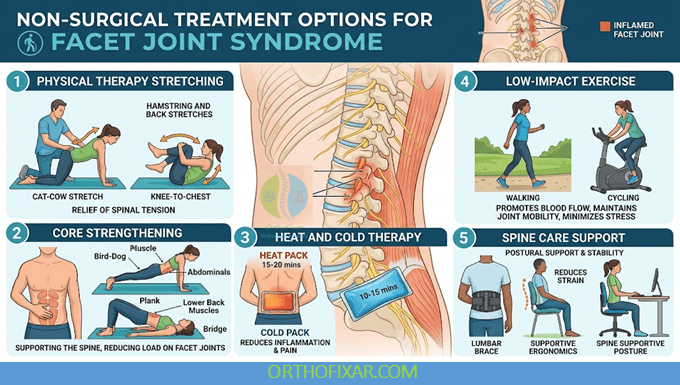
- Physical therapy: A personalized program that includes gentle stretching, core strengthening, and postural retraining.
- Pain relievers: Over-the-counter anti-inflammatory medications, such as ibuprofen, can help during acute flare-ups. Your doctor may prescribe stronger medication if needed.
- Heat and cold therapy: Use a heating pad for stiffness and a cold pack for acute pain and swelling. Each can be applied for 15 minutes, several times a day.
- Spinal injections: Corticosteroid injections into the facet joints can reduce inflammation and provide weeks of relief. They are not a cure but can create a window for exercise.
- Activity modification: Avoid deep backward bending, high-impact sports, and sitting in soft, low chairs. Choose activities like walking, swimming, or cycling instead.
- Manual therapy: Skilled physiotherapists or chiropractors can use gentle joint mobilization to improve movement and reduce muscle tension.
“I avoided surgery by sticking to my physical therapy plan and learning how to move without straining my back. It didn’t eliminate the pain completely, but it gave me control.”
Consistency is key. Many treatment plans take four to six weeks before you notice significant improvement. Patience and regular practice are essential.
When Conservative Care Isn’t Enough: Advanced Procedures
If you have tried conservative treatments for at least a few months without enough relief, your doctor may discuss advanced procedures. These are minimally invasive techniques that target the nerves or joints responsible for pain. They are not first-line options, but they can be very effective for selected patients.
- Radiofrequency ablation (RFA): This procedure uses heat energy to disable the tiny nerve branches that carry pain from the facet joint. Relief can last from six months to a year or more.
- Facet joint injections: These can be repeated for flare-ups, but they should not be used too often due to potential effects on cartilage.
- Pulsed radiofrequency: A newer form of RFA that uses short bursts of energy. It is considered safer because it damages less tissue, although research is still ongoing.
- Minimally invasive surgery: In rare cases, a procedure called facet rhizotomy or endoscopic facet denervation may be considered. Surgery to remove the joint is rarely recommended.
These treatments work best for people whose pain has been confirmed to come from the facet joints. Your doctor will help you weigh the benefits, risks, and expected outcomes before any procedure.
Everyday Tips for Managing Facet Joint Syndrome
Living with facet joint syndrome means making small adjustments to your daily routine. You do not need to avoid movement, but you do need to move thoughtfully. A few simple changes can reduce pressure on your facet joints and prevent flare-ups.
- Use good posture: Sit and stand with your spine in a neutral position. Use a lumbar roll or rolled towel when sitting in a chair.
- Move regularly: Do not sit for longer than 30 minutes. Stand, stretch, or take a short walk throughout the day.
- Sleep smart: Sleep on your side with a pillow between your knees, or on your back with a pillow under your knees to keep your lower back supported.
- Lift carefully: Always bend at your knees and keep the object close to your body. Avoid twisting while lifting.
- Strengthen your core: Gentle abdominal and back-strengthening exercises protect the facet joints. A physiotherapist can show you safe options.
- Manage your weight: Carrying excess weight adds stress to the spine. Even a small weight loss can improve symptoms.
- Stay mentally active: Chronic pain can affect your mood. Relaxation techniques, mindfulness, or talking with a counselor can help you cope.
For example, a person who works at a desk may set a timer to stand and stretch every 30 minutes. Another person who enjoys gardening might use a kneeler instead of bending forward repeatedly. Small changes like these can make a big difference.
Conclusion
Facet joint syndrome can affect your daily comfort and mobility, but it does not have to define your life. With an accurate diagnosis, a step-by-step treatment plan, and a positive approach to self-care, most people see meaningful improvement. Focus on gentle movement, posture, and conservative treatments first. If pain persists, talk to a spine specialist about more advanced options. The key is to stay involved in your care and remind yourself that progress often happens gradually.
Frequently Asked Questions
Is facet joint syndrome the same as arthritis?
Not exactly. Facet joint syndrome can be caused by osteoarthritis, where the cartilage in the joint wears down. However, arthritis can affect many joints. When arthritis specifically affects the facet joints and causes symptoms, it is called facet joint syndrome or facet joint osteoarthritis.
How long does a facet joint flare-up last?
A flare-up can last several days to a few weeks. With rest, activity modification, and anti-inflammatory medication, most unstable episodes settle down. Chronic cases may cause persistent low-grade pain that requires ongoing treatment.
Can facet joint syndrome cause sciatica-like leg pain?
Yes, it can. Pain from facet joints in the lower back may refer into the buttock, thigh, and sometimes below the knee. However, this referred pain is usually described as a deep ache rather than a sharp, shooting electric sensation that is typical of nerve root irritation from a herniated disc.
Is exercise safe with facet joint syndrome?
Yes, regular exercise is usually safe and encouraged. Low-impact activities such as walking, swimming, and stationary cycling are excellent options. Avoid high-impact sports and exercises that require deep backward bending or loaded twisting. A physiotherapist can create a safe program for you.
What happens if facet joint syndrome is left untreated?
Untreated facet joint syndrome may lead to persistent pain, muscle weakness, reduced mobility, and compensatory changes in posture. In some cases, it can contribute to other spinal problems, but it is not life-threatening. Early treatment can prevent symptoms from becoming chronic.
Can facet joint syndrome affect the neck?
Yes, facet joints are present in the cervical spine. Symptoms in the neck include stiffness, headache at the base of the skull, and referred pain into the shoulder or upper arm. The same diagnostic and treatment principles apply.
Are facet joint injections painful?
Most patients feel a brief sting or pressure. Doctors use local anesthetic and sometimes light sedation to keep you comfortable. The pain usually subsides quickly, and you may feel temporary numbness or weakness in the area.
What is the difference between radiofrequency ablation and steroid injections?
Steroid injections reduce inflammation in the joint and can provide short- to medium-term relief. Radiofrequency ablation disables the nerve carrying pain signals from the joint, which can offer longer-lasting relief. RFA is a more targeted procedure and is done after a diagnostic block confirms the pain source.
Can I avoid surgery for facet joint syndrome?
Most people can. Studies show that many patients find adequate relief with conservative treatments, lifestyle adjustments, and minimally invasive procedures. Surgery is rarely needed for facet joint syndrome and is usually reserved for severe cases with spinal instability or nerve compression.
How long does it take to see improvement with physical therapy?
Some patients notice an improvement in stiffness and comfort within two to three weeks. Significant muscle strengthening and posture changes usually take four to six weeks of consistent practice. Full improvement may take several months, depending on your starting point and the severity of the condition.