Peroneal tendonitis is a common cause of pain along the outside of the ankle and foot. It often affects runners, athletes, and people who spend long hours standing or walking. Early treatment usually leads to full recovery, but ignoring symptoms may increase the risk of tendon tears or chronic ankle instability.
What Is Peroneal Tendonitis?
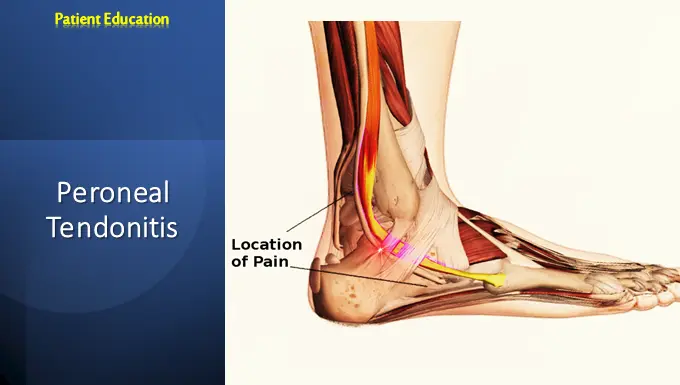
Peroneal tendonitis is inflammation or irritation of the peroneal tendons, which run behind the outer ankle bone (lateral malleolus) and attach to the foot. These tendons help stabilize the ankle and support foot movement during walking, running, and balance activities.
The two main tendons involved are:
- Peroneus longus tendon
- Peroneus brevis tendon
When these tendons become overloaded or injured, pain and swelling can develop along the outer side of the ankle.
Anatomy of the Peroneal Tendons
The peroneal tendons originate from muscles on the outside of the lower leg and travel behind the fibula before attaching to the foot.
Main Functions
- Stabilize the ankle
- Prevent repeated ankle sprains
- Assist with foot eversion (turning the foot outward)
- Support walking and running mechanics
Problems with these tendons can significantly affect mobility and athletic performance.
Causes of Peroneal Tendonitis
Peroneal tendonitis usually develops from repetitive stress or overuse. It may also occur after an ankle injury.
Common Causes
- Repetitive running or jumping
- Sudden increase in exercise intensity
- Ankle sprains
- Poor footwear
- High arches (cavus foot)
- Tight calf muscles
- Walking or standing for long periods
- Uneven training surfaces
- Weak ankle muscles
Athletes involved in soccer, basketball, tennis, and trail running are at increased risk.
Risk Factors
You may be more likely to develop peroneal tendonitis if you:
- Are over age 40
- Have chronic ankle instability
- Have flat feet or high arches
- Smoke
- Are overweight
- Have inflammatory arthritis or diabetes
- Previously injured your ankle
Symptoms of Peroneal Tendonitis
Symptoms usually develop gradually but may appear suddenly after an injury.
Common Symptoms
- Pain on the outside of the ankle or foot
- Swelling behind the ankle bone
- Tenderness over the tendons
- Pain that worsens with walking or running
- Weakness or instability of the ankle
- Stiffness in the morning
- A snapping sensation around the ankle
Severe or untreated cases may progress to tendon tears or tendon subluxation (slipping out of place).
How Is Peroneal Tendonitis Diagnosed?
Diagnosis begins with a medical history and physical examination.
Your healthcare provider may check for:
- Tenderness along the tendons
- Swelling
- Pain during resisted foot eversion
- Ankle instability
- Snapping or clicking around the ankle
Imaging Tests
Imaging may be ordered to rule out fractures or tendon tears:
- X-rays — evaluate bone problems
- Ultrasound — dynamic tendon assessment
- MRI — best for tendon inflammation or tears
Peroneal Tendonitis Treatment
Most patients improve with conservative (non-surgical) treatment.
RICE Method
Rest
Avoid activities that worsen symptoms.
Ice
Apply ice for 15–20 minutes every 2–3 hours.
Compression
Use an ankle wrap or compression sleeve.
Elevation
Keep the foot elevated above heart level when possible.
Medications
Nonsteroidal anti-inflammatory drugs (NSAIDs) may help reduce pain and swelling.
Examples include:
- Ibuprofen
- Naproxen
Always follow dosing instructions and consult a healthcare professional if symptoms persist.
Physical Therapy for Peroneal Tendonitis
Physical therapy is one of the most effective treatments.
Common Exercises
- Calf stretching
- Ankle strengthening
- Balance training
- Resistance band eversion exercises
- Gait correction
Therapy focuses on reducing tendon load while restoring ankle stability.
Bracing and Footwear
Supportive footwear and ankle braces can reduce stress on the tendons.
Helpful options include:
- Stability running shoes
- Orthotics for high arches
- Lateral heel wedges
- Ankle braces during sports
When Is Surgery Needed?
Surgery is uncommon but may be necessary if:
- Symptoms last several months
- Tendon tears develop
- Tendons repeatedly dislocate
- Conservative treatment fails
Procedures may include:
- Tendon repair
- Synovectomy (removal of inflamed tissue)
- Groove deepening procedures
Most patients recover well after surgery with rehabilitation.
Recovery Time
Mild cases often improve within 3 to 6 weeks with proper treatment. Chronic cases or tendon tears may require several months of recovery.
Factors affecting recovery include:
- Severity of inflammation
- Activity level
- Compliance with rest and therapy
- Presence of tendon tears
Possible Complications
Without treatment, peroneal tendonitis can lead to:
- Chronic ankle pain
- Tendon tears
- Tendon subluxation
- Ankle instability
- Recurrent ankle sprains
How to Prevent Peroneal Tendonitis
Prevention Tips
- Increase training gradually
- Wear supportive shoes
- Warm up before exercise
- Stretch calf muscles regularly
- Strengthen ankle stabilizers
- Avoid overtraining
- Rest after intense activity
When to See a doctor
Seek medical care if you experience:
- Severe ankle pain
- Inability to bear weight
- Persistent swelling
- Ankle instability
- A popping or snapping sensation
- Symptoms lasting more than 2–3 weeks
Prognosis
Most people recover fully with early diagnosis and conservative treatment. Persistent symptoms should be evaluated because chronic tendon irritation can lead to tearing or ankle instability.
Frequently Asked Questions (FAQ)
Is walking good for peroneal tendonitis?
Light walking may be acceptable if pain is minimal, but excessive walking can worsen inflammation. Rest and activity modification are usually recommended initially.
Can peroneal tendonitis heal on its own?
Mild cases may improve with rest and reduced activity, but untreated cases can become chronic or progress to tendon tears.
What exercises should I avoid?
Avoid activities that increase pain, including:
– Running
– Jumping
– Cutting movements
– Uneven trail running
Is peroneal tendonitis the same as an ankle sprain?
No. An ankle sprain involves ligament injury, while peroneal tendonitis affects the tendons along the outside of the ankle. However, the two conditions can occur together.
References & More
- Walt J, Massey P. Peroneal Tendon Syndromes. [Updated 2023 May 23]. In: StatPearls [Internet]. Treasure Island (FL): StatPearls Publishing; 2026 Jan-. Available from: Pubmed
- Knupp M, Hintermann B. Behandlung akuter und chronischer Verletzungen der Peronäalsehnen [Treatment of acute and chronic peroneal tendon disorders]. Orthopade. 2010 Dec;39(12):1158-62. German. doi: 10.1007/s00132-010-1695-0. PMID: 21061115. Pubmed
- Peroneal Tendon Tear – ClevelandClinic