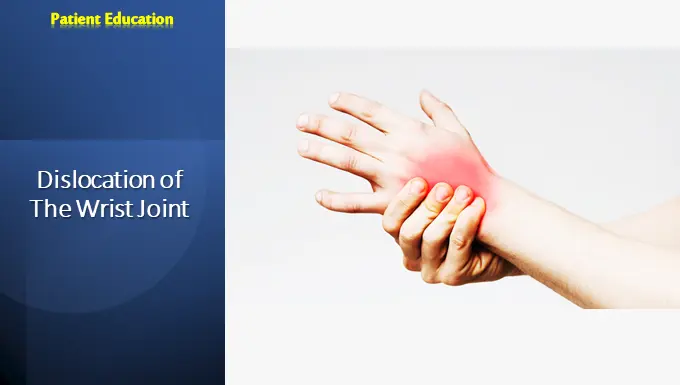
A Dislocation of The Wrist Joint occurs when the bones forming the wrist (carpal bones) are forced out of their normal alignment. This injury may involve different joints of the wrist, including:
- Radiocarpal joint
- Midcarpal joint
- Distal radioulnar joint
In many cases, wrist dislocations are associated with ligament injuries or fractures, making them complex injuries requiring urgent care.
Types of Wrist Dislocations
Wrist dislocations are categorized based on the affected structures:
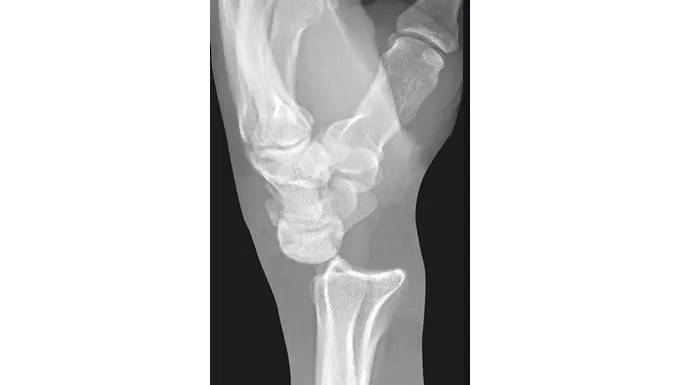
1. Lunate Dislocation
- The lunate bone shifts out of place
- Often compresses nearby nerves (especially the median nerve)
2. Perilunate Dislocation
- Surrounding bones dislocate while the lunate remains aligned
- Commonly missed on initial evaluation
3. Radiocarpal Dislocation
- Rare but severe injury involving the entire wrist joint
4. Distal Radioulnar Joint (DRUJ) Dislocation
- Often occurs with fractures (e.g., Galeazzi fracture-dislocation)
These injuries are uncommon but serious and may be overlooked in up to 25% of cases, especially in emergency settings.
See Also: Wrist Anatomy
Causes of Dislocation of The Wrist Joint
Most wrist dislocations occur due to high-energy trauma, including:
- Falling on an outstretched hand (most common mechanism)
- Sports injuries (e.g., skiing, snowboarding)
- Motor vehicle accidents
- Falls from height
The injury typically happens when the wrist is forced into hyperextension (bent backward) under load.
Symptoms of Wrist Dislocation
Patients may experience:
- Severe wrist pain
- Swelling and tenderness
- Limited or painful movement
- Weak grip strength
- Numbness or tingling (possible nerve compression)
- Clicking or instability in the wrist
Unlike other joint dislocations, visible deformity may be subtle or absent, making diagnosis more difficult.
When to Seek Medical Attention
Seek immediate medical care if you have:
- Severe wrist pain after trauma
- Numbness or tingling in the hand
- Inability to move the wrist
- Persistent swelling or instability
Early diagnosis is critical to prevent long-term complications.
Diagnosis
Doctors use a combination of:
Clinical Examination
- Assess pain, swelling, and stability
- Check nerve function
Imaging
- X-rays (primary diagnostic tool)
- CT or MRI (for complex injuries or ligament damage)
Special radiographic signs (like disrupted alignment lines) help detect subtle dislocations.
Treatment of Wrist Dislocation
1. Emergency Reduction
- Immediate repositioning of the bones
- Essential to relieve pressure on nerves and prevent damage
2. Immobilization
- Splints or casts to stabilize the wrist
3. Surgery
Often required in moderate to severe cases:
- Ligament repair
- Internal fixation (pins or screws)
- Open or arthroscopic procedures
4. Rehabilitation
- Physiotherapy to restore movement and strength
- Gradual return to daily activities
Early treatment significantly improves outcomes and reduces complications.
Recovery Timeline
Recovery depends on injury severity:
- Mild cases: 6–8 weeks
- Post-surgery: 3–6 months or longer
- Full recovery may take up to 6–12 months
Patients are often advised to avoid heavy lifting for several months.
Possible Complications
If untreated or delayed, wrist dislocations can lead to:
- Chronic wrist instability
- Post-traumatic arthritis
- Reduced range of motion
- Median nerve compression (carpal tunnel syndrome)
- Long-term pain
One common long-term condition is scapholunate advanced collapse (SLAC wrist), a degenerative arthritis pattern.
Prevention Tips
- Use protective gear during sports (e.g., wrist guards)
- Avoid high-risk falls when possible
- Strengthen wrist muscles through exercise
- Practice proper techniques in sports and activities
Key Takeaways
- Wrist dislocation is a serious but often missed injury
- Usually caused by high-energy trauma or falls
- Early diagnosis and treatment are essential
- Many cases require surgery and rehabilitation
- Delayed treatment increases the risk of chronic pain and arthritis
FAQ
Is a wrist dislocation the same as a sprain?
No. A sprain involves ligament stretching, while a dislocation means the bones are out of alignment, which is more severe.
Can a wrist dislocation heal without surgery?
Some mild cases may be treated without surgery, but many require surgical stabilization.
How long does pain last after wrist dislocation?
Pain improves gradually but may persist for weeks to months depending on severity.
References & More
- Bentley TP, Hope N, Mabrouk A, et al. Wrist Dislocation. [Updated 2023 Aug 14]. In: StatPearls [Internet]. Treasure Island (FL): StatPearls Publishing; 2026 Jan-. Available from: Pubmed
- Bentley TP, Hope N, Mabrouk A, Journey JD. Wrist Dislocation. 2023 Aug 14. In: StatPearls [Internet]. Treasure Island (FL): StatPearls Publishing; 2026 Jan–. PMID: 29939534. Pubmed